Home Authors Posts by Petko

Petko

218 POSTS 0 COMMENTS

Titanfall 2: An Entertaining Sequel to PS3 Legend with Familiar Thrills
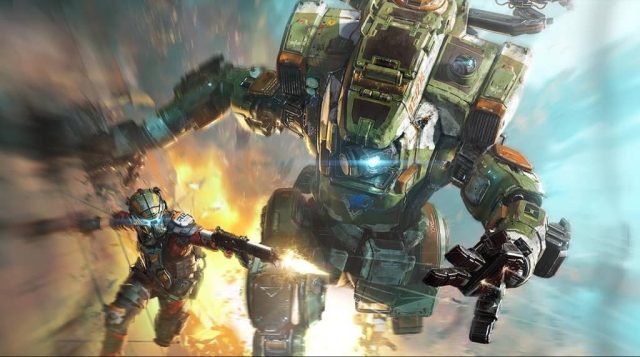
Titanfall 2 - Feature Picture

Title: Titanfall 2
Developer: Respawn Entertainment
Publisher: Electronic Arts
Released: October 28, 2016
Platforms Available: PlayStation 4, Xbox One, PC Game
Platform Reviewed: PlayStation 4
Article Reading Time: 6 minutes

Introduction

The first installment of Titanfall was a gem that blew many people’s minds. The new studio of the spiritual fathers of Call of Duty created a title that achieved a perfect compromise between a traditional shooter and innovative action, which makes the second installment all the more surprising as it lacks this level of imagination. It’s a safe bet that doesn’t offend but doesn’t impress.
A Safe Sequel

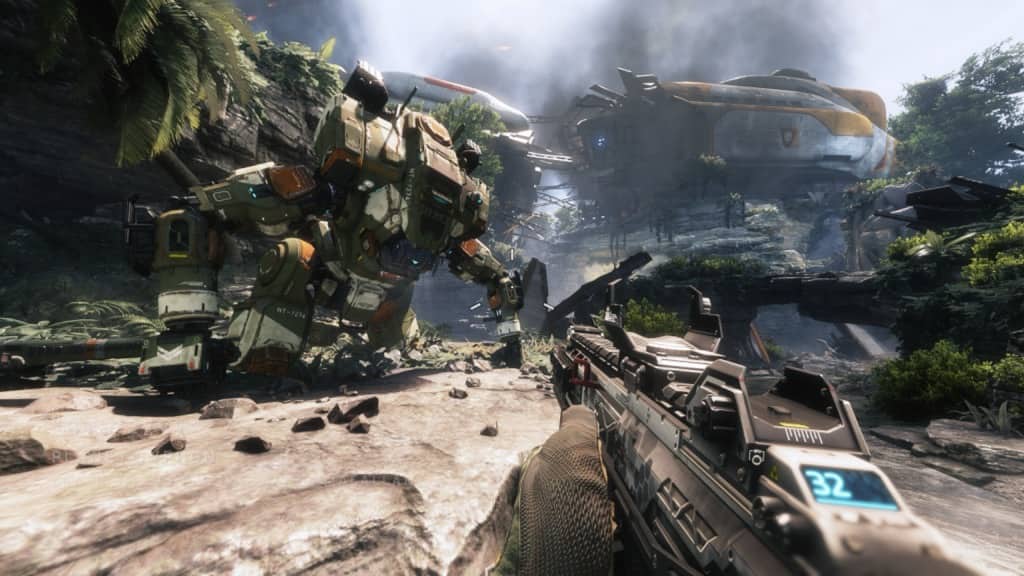
In short, it’s a safe sequel. The most significant new features in Titanfall 2 are the single-player campaign and the release of the PlayStation 4 version. The rest are rather cosmetic changes that could easily have been conveyed by an update to the first installment. Thus, the best benefit of the second installment was the expansion of the player base, which did not happen due to the unfortunate choice of release date. The title hit the shelves between Call of Duty: Infinite Warfare and Battlefield 1. And as they say, pride goes before a fall. As a result, the game sold worse than the first installment released in March 2014, which didn’t even come out in a PlayStation 4 version.

The Single-Player Campaign

Before release, the developers tried to convince the community that the solo game would be more than just a bombastic Call of Duty-style ride. However, the opposite is true, and the result resembles only a slightly more imaginative variation of the previous brand. The action is enlivened by a sophisticated movement system, allowing the developers to alternate between shooting passages and calmer moments that test your acrobatic skills. Titanfall 2, however, tries to set itself apart from the competition. As such, it only sometimes warns players which way the following path leads. While the hint can be activated via the assigned button, you can ignore it if you prefer to discover the progress yourself.
Sci-Fi Setting and Enemy Types

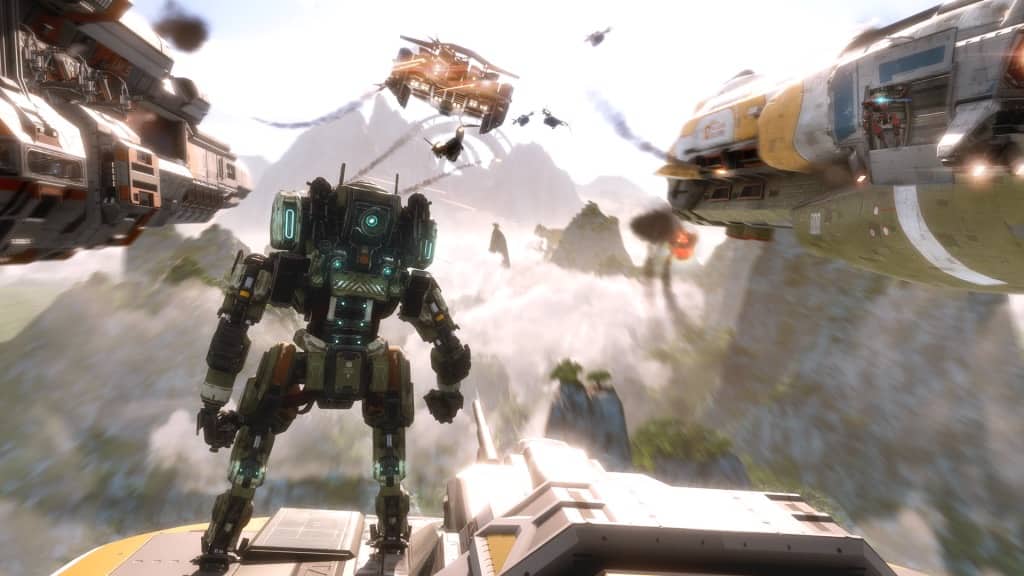
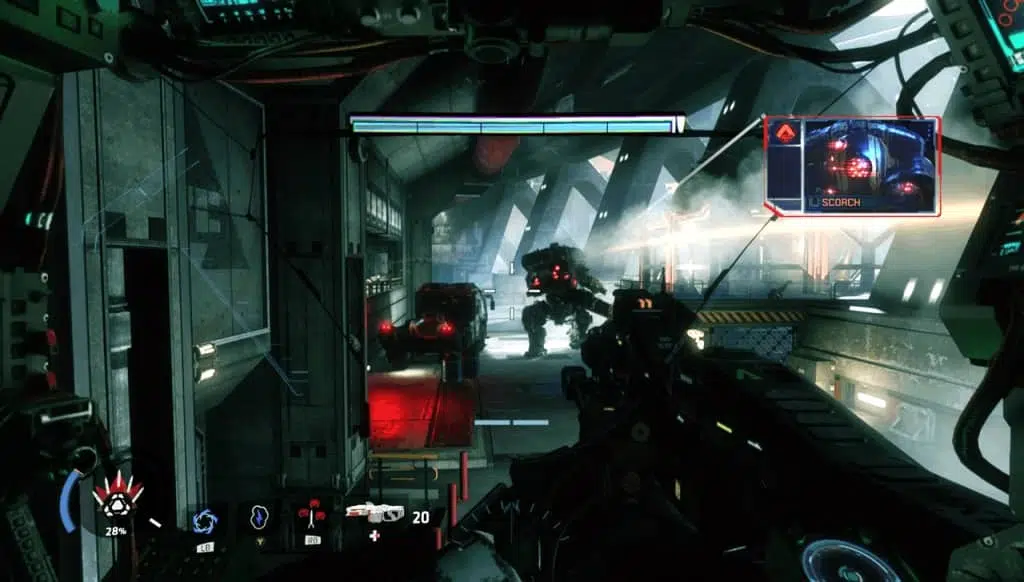
The sci-fi setting suits the game and makes for a more dynamic mix than most modern war action has been able to offer. In fact, the enemy types are more varied. Some have energy shields, others fire projectiles that fly in spirals, and there are exploding robots and melee-only opponents. Due to the imaginative nature of the fights, they are reminiscent of the second episode of Half-Life. A significant part of the story campaign are the titans, i.e. combat robots, which the player can mount and control. You also have one at your disposal, and its majesty is hinted at in scenes where swarms of enemies prefer to run away from it. Yours is called BT, and the story revolves partly around him. So you’re dealing with moments in the middle of the campaign when he disappears, and you have to search for him. Or you repeatedly repair it. It makes the game more varied. Sometimes, you take out opponents like a regular infantryman. Sometimes, they’re rained down by the titan’s volleys of missiles or crushed by his gigantic legs. BT is also a source of humorous moments. His brusque commentary, combined with an uncompromising pilot, leads to some charming dialogue.

Familiar Principles, New Dynamics

The solo part of the play feels like a compilation of tried and tested principles from foreign brands. Few surprises surprise and feel innovative. Most situations, on the other hand, make you feel like you’ve experienced them before. Still, the result works in a way that successfully avoids stereotypes. The game simply has the proper dynamics and momentum. One of the passages, for example, features imaginative games with gravity that obviously reference the film Inception. This is confirmed by the success the game gives you upon completion.

Multiplayer Excellence with Caveats

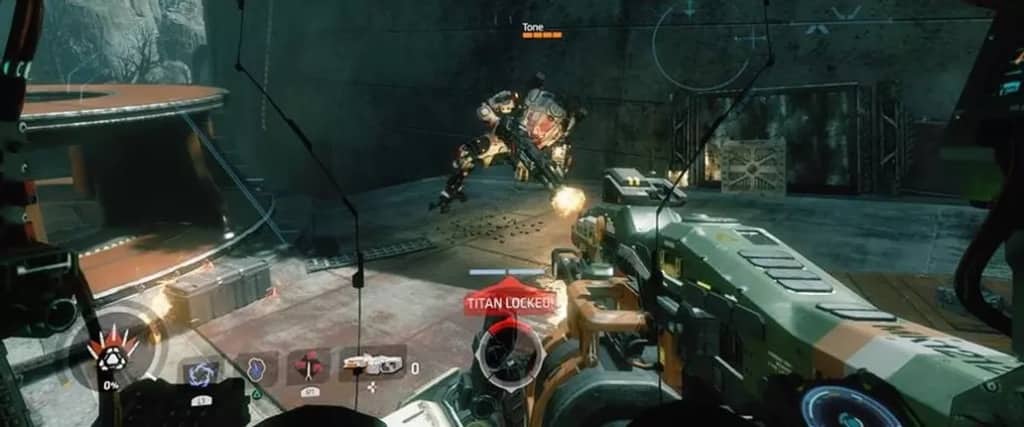
The multiplayer game is excellent. However, with one major caveat… Titanfall remains primarily a multiplayer experience. In that regard, the second installment delivers an addictive mix of gameplay principles and “one more game” moments. In other words, it’s tremendous fun. Titanfall 2 is thus a fantastic game in its own right, but it offers only minimal innovation over its predecessor. And not all of them are changes for the better. Once again, two teams are battling each other, and the action is made extra special by the presence of the titans. Again, an excellent movement system is present, with which you can run up walls perform double jumps and chain tricks with almost perfect grace. Once again, the primary mode is Hardpoint, where you take three key points and try to reach a pre-set score before the enemy team. New features include a tug-of-war rope, one of the optional extras. It makes moving around the environment even faster and perfectly complements the earlier movement elements.
Weapon Unlocks and Gameplay Tweaks

The weapon unlocking system has also changed. You can access your arsenal by gaining levels and then modify specific pieces after “leveling up” this or that piece. The gradual unlocking of weapons is spot on, thanks to a decent selection, and motivates you to explore the arsenal. However, the need to acquire individual upgrades is annoying and often forces you to play several matches exclusively with just one weapon. The result is usually a miserable score and a losing team. The rodeo, or cowboy jump on the enemy titan, also works differently. In the first game, this was a way of taking him down, but the opponent could leave the titan and shoot you down from the outside. This time, the rodeo is only used to steal a battery that can be used to boost a friendly robot. And as a result, it could be more helpful. The escape to the spaceship, which ends every match for one team, also works differently. In the first game, you had to jump into the transporter precisely, but in Titanfall 2, you only needed to get roughly close. For example, jumping twenty meters underneath to teleport into the craft. The original concept led to more fun action.

Visuals and Technical Observations

Titanfall 2 is a great game, but it only builds on the shoulders of the first installment. And without the slightest ambition to outshine it. The sequel came out a year and a half after the first installment, and it feels a bit rushed, whether due to the lack of significant innovations or the game’s optimization. Furthermore, closely examining the environment reveals some areas that feel stripped down. The sides of the buildings are often made of flat surfaces on which 3D details are merely simulated by graphical trickery. Moreover, many of the materials are reminiscent of the level of games from a few years ago. Titanfall 2’s visuals are inconsistent because of this. At times, it can conjure up impressive scenery. At other times, it looks miserable. In addition, textures are repeated in some rooms in a more reminiscent style of 1999. So, there is no significant graphical shift between the two works. On the other hand, the almost breathtaking character animation deserves to be highlighted. They often give a truly realistic impression.
Conclusion

As a result, Titanfall 2 is a title that can be recommended to two groups of players. The first are the die-hard fans of the first installment, whose player base has thinned out considerably. The other is people who missed the first game for whatever reason. For example, because it didn’t come out for PlayStation 4.

My impressions of the game are a little embarrassing, but I am glad I played it. If I disregarded the existence of the first installment, I was treated to an exceptionally entertaining action game. But after my experience with the previous title, Titanfall 2, apart from the story campaign, feels more like a first game but on asteroids.

Purchase Titanfall 2

  1. Steam (PC Game): Available for $29.99. You can purchase the game directly from Steam Store
  2. PlayStation Store (PS4): The game is priced at $19.99 (currently on sale for $4.99. Check it out on the PlayStation Store
  3. Xbox Store (Xbox One, Xbox Series X|S): Available for $19.99 . Purchase it from the Xbox Store

The Complex: Nanotech Crisis Exposed

The Complex - Feature Picture

Title: The Complex
Developer: Wales Interactive
Publisher: Wales Interactive
Released: March 31, 2020
Platforms Available: PlayStation 4, Xbox One, Nintendo Switch, PC Game, Mac Game, iOS, Android
Platform Reviewed: PlayStation 4
Article Reading Time: 5 minutes

The English independent company Wales Interactive has been on the scene for over ten years. For a relatively long time, their specialization in the production of interactive entertainment has settled in a rather specific genre of FMV. Thus, they produce purely cinematic projects of mostly predictable stories, where the player takes control over the main characters’ important but often less important decisions. Three years earlier, the popular crime drama Late Shift was released from their hands, which can be seen as an ideal example of what Wales Interactive can do.

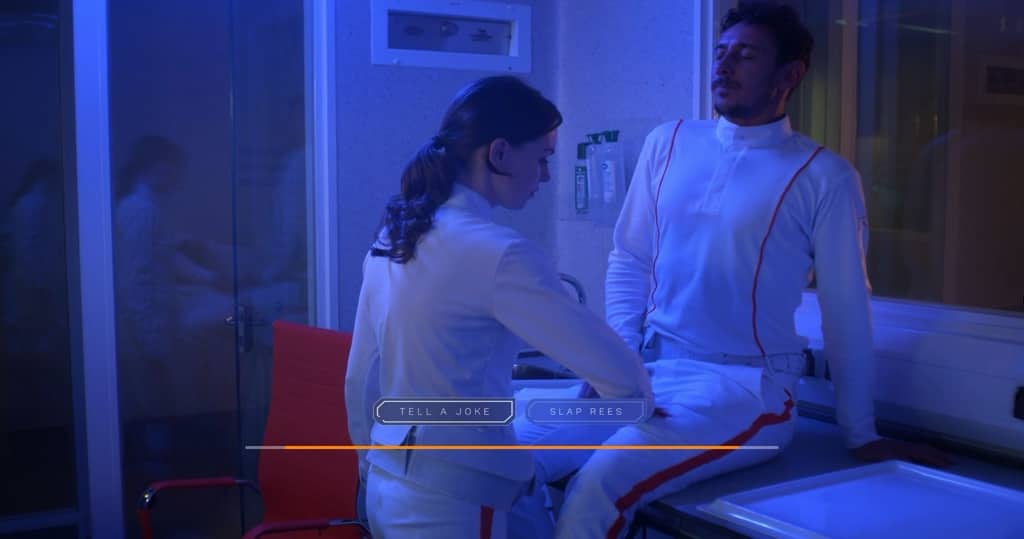
The Complex - Some situations are tense
The Complex – Some situations are tense

Setting and Plot

During less than an hour of The Complex story, the player can follow the fate of nine characters, i.e., real actors, dominated by the main heroine and the likable Miss Amy Tenant. The original name is Michelle Mylett, a native of Canada. In the story, Dr. Amy Tenant takes us to the city of London in the near future. There, she works as a research manager at the renowned Kensington Company, which focuses on the top-secret development of nanotechnology, supposedly capable of completely revolutionizing conventional medical procedures. But as these stories go, something goes wrong, and with nanotechnology, we suddenly have a deadly virus capable of pushing your eyeballs out your ass.

Acting Performances

Fans of the series adaptation of the Game of Thrones universe should also be delighted by the presence of actress Kate Dickie, who, in this case, played the role of a resolute and uncompromising boss. I don’t want to make myself an expert on acting performances here. Still, after having run through this cinematic adventure three times in a row (after the first time, one can skip the repeated passages to essential decisions), I found the performance of the only well-known personality in this project rather unconvincing and lackluster. As was the performance of the rest of the cast, who needed to be helped by the below-average story. But let’s move on to the main points of gameplay.

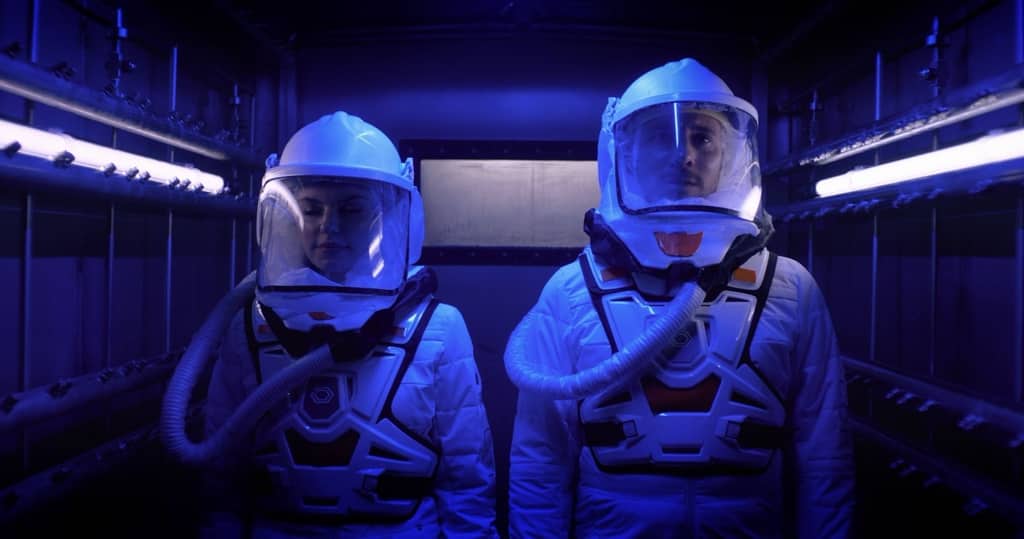
The Complex - Space suits
The Complex – Space suits

Gameplay and Choices

Suppose you have ever played at least one project from Quantic Dream and are aware of the plot development scheme against the background of a purely cinematic adventure game. In that case, this FMV affair will bring you almost nothing. While the choice to help one at the expense of the other is logical, in the case of The Complex, it’s more of a forced ending to an often awkward situation where the chemistry between the characters is minimal. It’s a great pity that the creators didn’t give a little more attention to the complexity of the storyline and made everything conditional on three crucial endings, the point of which you will understand in the first playthrough.

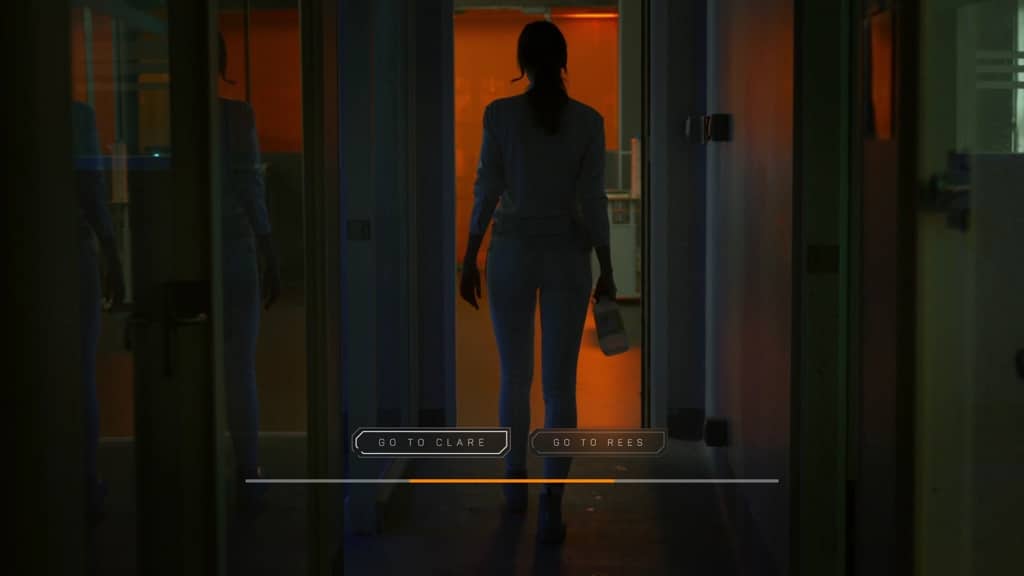
The Complex - Usual Decisions
The Complex – Usual Decisions

Critical Assessment

To the question; can everyone in the game die, including you? I answer in the affirmative. But will it bother you? Not at all! This whole spectacle wouldn’t even work as a stand-alone film, no matter which of the scripts provided. Although it is difficult to judge the quality of a “play” of this type, I must, at the end of this review, reach for my feelings and drop the new play by the English authors. I can imagine a situation where the game would have gotten a better number. However, the script would have to be freed from the obviously illogical cracks, allowing us to make at least some contact with the main characters. Because this is precisely the principle on which interactive projection is supposed to work, the fact that someone has just died is supposed to tear your veins as a viewer with a real influence on the development. The Complex was rather disappointing and, therefore, received an average rating. Guys, try harder next time. We still have hope and trust in you!

Where to Buy The Complex

  1. Steam (PC, Mac): Available for $12.99. Purchase it directly from Steam.
  2. Epic Games Store (PC): Priced at $12.99. Available on the Epic Games Store.
  3. PlayStation Store (PS4): The game is available for $14.99 on the PlayStation Store.
  4. Xbox Store (Xbox One): Purchase it for $12.99 from the Xbox Store.
  5. Nintendo eShop (Switch): You can find it on the Nintendo eShop.
  6. App Store (iOS): Get it here on App Store.
  7. Google Play Store (Android) : Grab the game on Google Play

Erica: An Engaging Interactive Thriller with High Replayability

Erica Feature Picture

Title: Erica
Developer: Flavourworks
Publisher: Sony Interactive Entertainment
Released: August 19, 2019 (PS4), May 25, 2021 (PC)
Platforms Available: PlayStation 4, PC Game
Platform Reviewed: PlayStation 4
Article Reading Time: 6 minutes

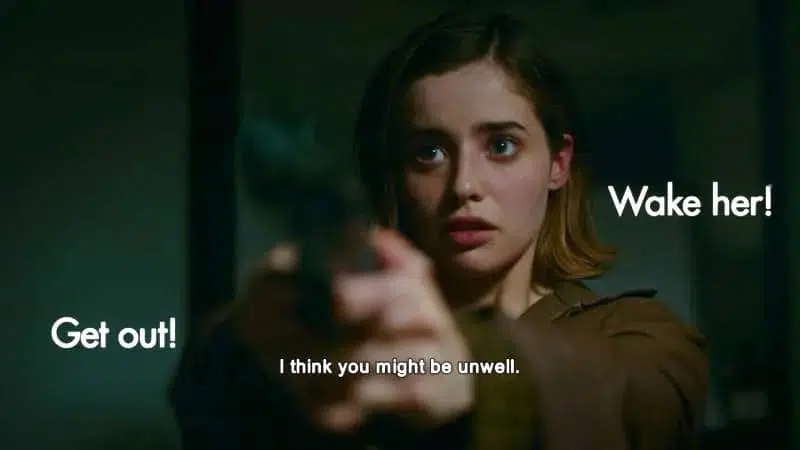
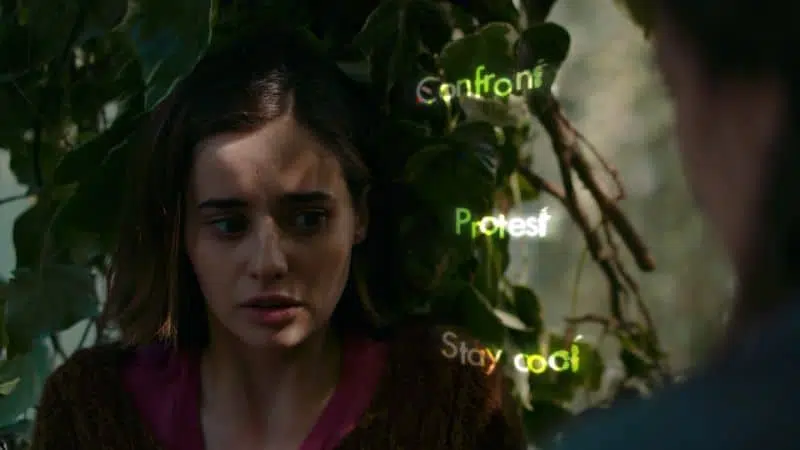
Games like Until Dawn, Hidden Agenda, Heavy Rain, and Detroit Become Human have shown that console gamers are also interested in games where they can control the story and shape the fate of the main characters. The new Erica game tries to build on the abovementioned games, although it can’t boast such ambition or budget. But it makes up for it all with a distinctive and not-so-hackneyed style. It is not a game but rather an interactive film in which you control the main character’s actions. You can already tell this by the fact that the whole game is acted, has real actors and environments, and everything is handled in a completely believable way, which is greatly influenced by the excellent performances of the hired actors. The player is not just a passive spectator but directly intervenes in the game or instead in the story because he interacts with the objects, makes important decisions, and influences the events and fates of the characters, including the main character.

Story and Setting

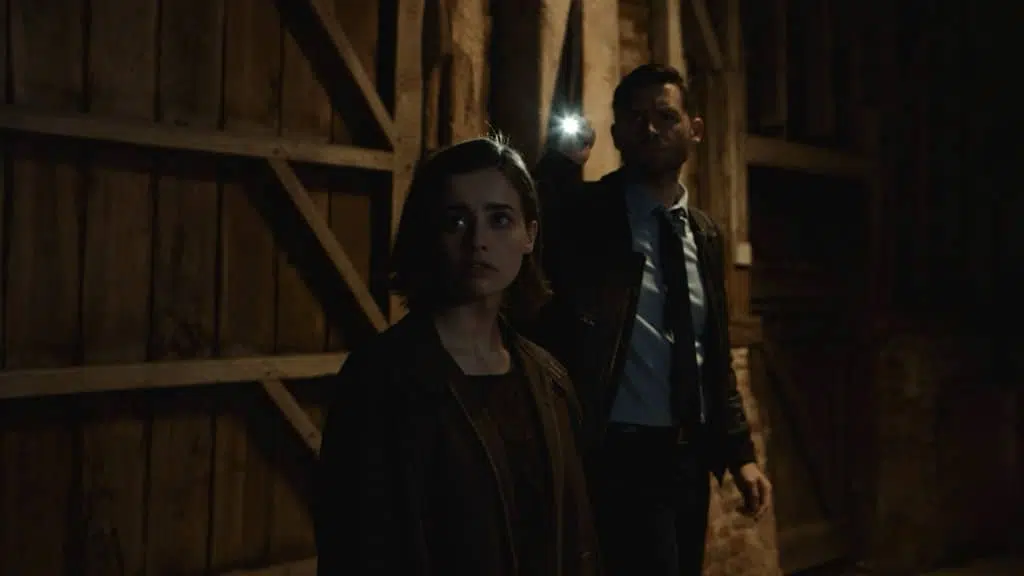
The most important thing with Erica’s play is the story, which decides what it will be and how much she will like it. Story-wise, this is a classic B-grade thriller that doesn’t offend at all. It is exciting and well-written, keeping you hooked until the very finale. The main character is a young girl, Erica. She went through literally hell in her childhood when she found her father dead, with a mysterious bloody mark on his chest. When she grows up, she still suffers from nightmares, but little does she know that the worst is yet to come when she finds a box outside her apartment door containing the hands of a murdered man, which also has a mysterious mark on them. So, for her own safety, she is taken to the asylum where her parents also worked, but that’s when all hell breaks loose because everything is connected. I won’t reveal more because, of course, the game builds on Erica’s story, and it’s definitely better to enjoy it with a minimum amount of information. Considering the game’s focus, it’s definitely a shame that it’s not localized into English, as Sony’s habit lately has been. On the other hand, English is average, so if you know a little English, you shouldn’t have a problem.

FMV Genre Revival

Erica is a so-called FMV game. These have appeared in the past, especially in the 1990s. The attempt was to connect the world of video games with the world of film. Still, everything needed to be improved by the technology used and several obstacles back then. Nowadays, of course, the situation is entirely opposite, and everything works as it should, thanks to advanced technology. Especially the transitions between the film and the interactive parts are smooth and almost unnoticeable, which only adds to the overall experience. The developers had to put much work into this, but it was worth it.

Acting and Soundtrack

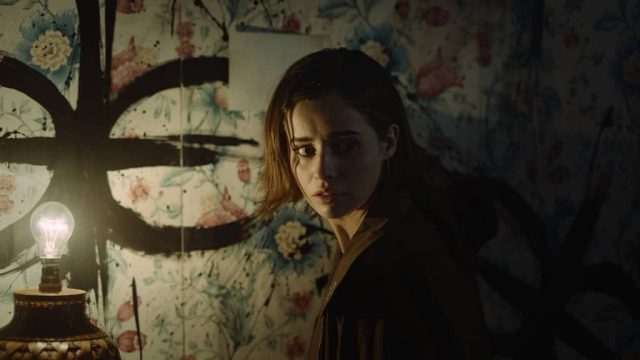
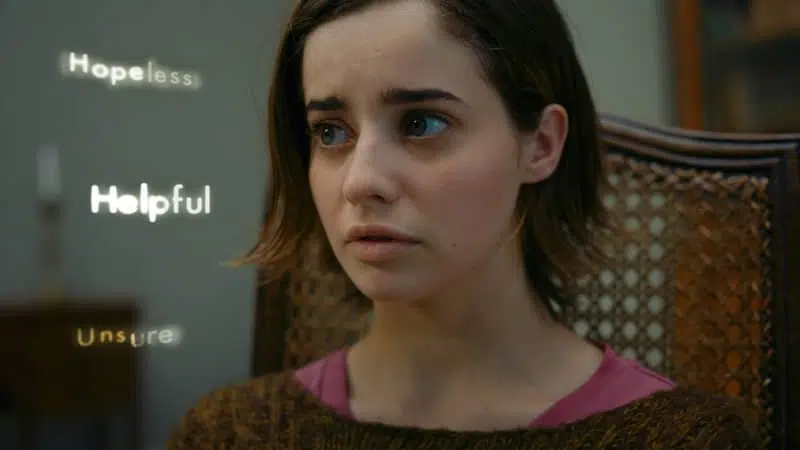
As did the performance of the actors. The unknown actress Holly Earl plays Erica perfectly. Her performance is compelling. You can see the constant fear and fright in her eyes as she gradually reveals her not-so-happy past. But it wasn’t just Holly Earl who played her character well. Every actor handled their roles professionally. What also helps the game is the quality soundtrack provided by composer Ten, who has a rich history with games. He has composed the soundtrack for Assassin’s Creed Syndicate, Journey, and Abzû and contributed to the opening track for The Order: 1886. The tracks for Eric’s games complement each scene well. They make it even scarier or more suspenseful.

Control and Accessibility

PlayLink games like Erica have been built so that anyone can play them. Although they could be controlled using the classic Dualshock 4, they also supported control via the touch screen of a mobile phone. Still, you had to download a particular app to that first. Although Erica doesn’t belong in the PlayLink program, you can still see her roots and the fact that she was planning for it. On iOS or Android, you can download the app to your smartphone and control the game through it. In fact, the game is only controlled through the touchscreen, where you have to swipe your finger around it or select different options during conversations. This is definitely the best option. It’s true, though, that you can use the Dualshock 4, which is sufficient and a decent alternative. Still, the touchpad is sometimes tiny and needs to be more reasonably responded to appropriately. If you don’t have your phone handy, the Dualshock 4 serves relatively well, but it’s not the best choice for controlling a game.

Replayability and Final Thoughts

The first playthrough took me just under two hours, during which I didn’t get bored for even a tiny moment. It is, therefore, the perfect entertainment for an evening out. Moreover, I ran everything a few more times after finishing it because of the platinum trophy and because you need a chance to discover and discover everything during the first playthrough. Moreover, I wanted to test how much the situations will vary according to the different options, which are significant. They lead to several endings, so it’s definitely worth playing through everything again. The replayability is enormous in this case, just like with Quantic Dream’s games. You won’t regret the money spent.

Erica may lack the big ambitions we see in Quantic Dream’s games, but its quality is still intact. The story is intriguing, the blend of interactive passages with the cutscenes is practically flawless, and your decisions really matter, making the game worth playing more than once. If you like this type of game or enjoy trying something new, you will go right with your purchase. Erica deserves your attention; it is one of the best FMV affairs in years.

Where to buy Erica

  1. Steam (PC): Available for $11.99. You can purchase the game directly from Steam Store
  2. PlayStation Store (PS4): The game is priced at $9.99 or included for free in PlayStation Plus Plan. You can find it on the PlayStation Store

Senua’s Saga: Hellblade II: A Visual Feast Shackled by Past Success

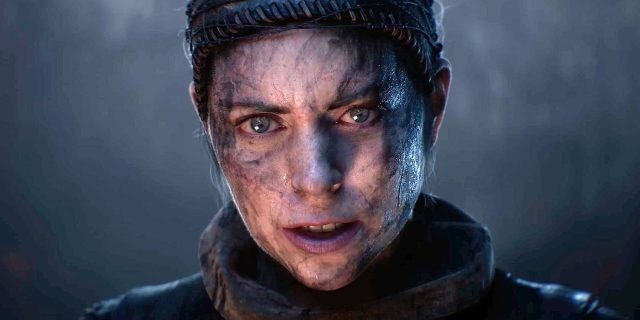
Senua's Saga: Hellblade II - Is it still a game? Or a movie...

Title: Senua’s Saga: Hellblade II
Developer: Ninja Theory
Publisher: Xbox Game Studios
Released: May 21, 2024
Platforms Available: Xbox Series X|S, PC Game
Platform Reviewed: Xbox Series X|S
Article Reading Time: 11 minutes

Sequel Expectations: A Titan Among Titles

Hellblade II is in a difficult situation; it is currently in the unflattering role of a significant and reasonably expected title, belonging to the list of the biggest exclusives of Microsoft Studios. Meanwhile, Senua’s Saga: Hellblade II is anything but an enticing title for the hungry hordes of gamers, attracting more Game Pass subscribers or breaking sales records. In fact, I think that the inclusion of Game Pass is why many players won’t even make it past the game’s introduction.

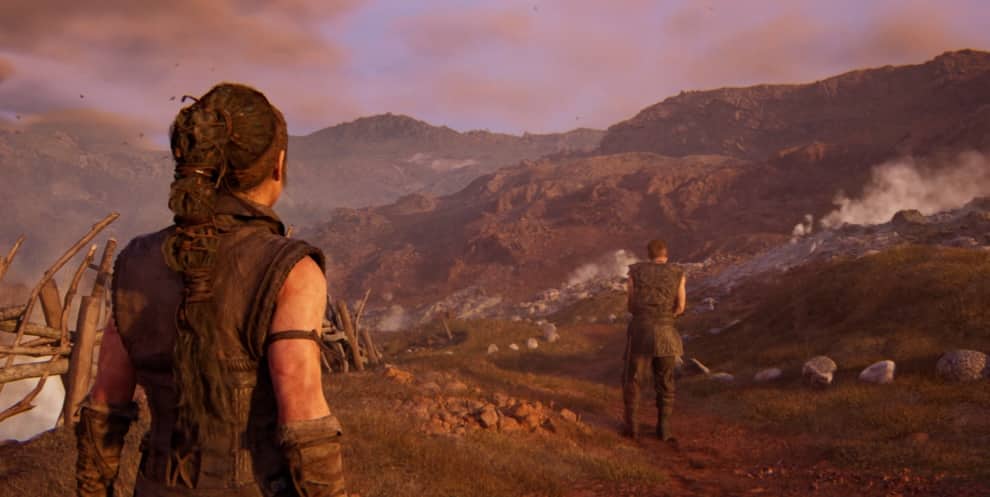
Senua's Saga: Hellblade II- Iceland forms an amazing backdrop for the game
Senua’s Saga: Hellblade II- Iceland forms an amazing backdrop for the game

Stepping into Senua’s Shoes: A Familiar Journey

If I wanted to save myself the trouble, I’d refer you to someone’s seven-year-old review of the first game – Hellblade: Senua’s Sacrifice, adding that the new game is as similar to it as an egg is to an egg. It wouldn’t be entirely fair, though. Hellblade II does, after all, have considerably more production values, panache, and a few ideas of its own. However, I was almost surprised that after all these years, I was once again graduating to a relatively small, quasi-independent interactive experience (I hesitate to use the term game; I’ll explain later) trying to win with the same tropes for the second time.

There would be nothing so unique about that, by the way; a series like Assassin’s Creed could tell you how much “success” can be achieved by recycling the groundwork laid. It’s just that when the first interactive moment in Hellblade II is once again that botched search for broken ornaments in the environment, the appetite for playing drops. To do a little recap: Senua is a warrior who has inherited several unpleasant mental illnesses from her mother. These manifest themselves primarily in the virtually never-silent voices in her head and frequent hallucinations that make you unsure if the supernatural moments on screen are actually happening or just a figment of the heroine’s mind. Senua’s life is full of trauma, the foundations of which were laid by her authoritarian father and then completed by the brutal death of her beloved Dillion at the hands of the Northmen and a pilgrimage to the depths of Hel to petition the local grim monarch to revive her beloved (whose head she carried in a sack behind her waist the whole time).

Senua is again in a very uncomfortable situation at the beginning of the sequel. We meet her in the middle of a storm on a slave ship that is taking her, chained, to Iceland. Fortunately, she manages to escape, but she can tack another harrowing experience onto her already long list of traumas and more guilt for failing to protect those who relied on her. Soon enough, however, she will get her chance to make amends, for 9th century Iceland is plagued by a multitude of problems, aggressive draugr, and destructive giants.

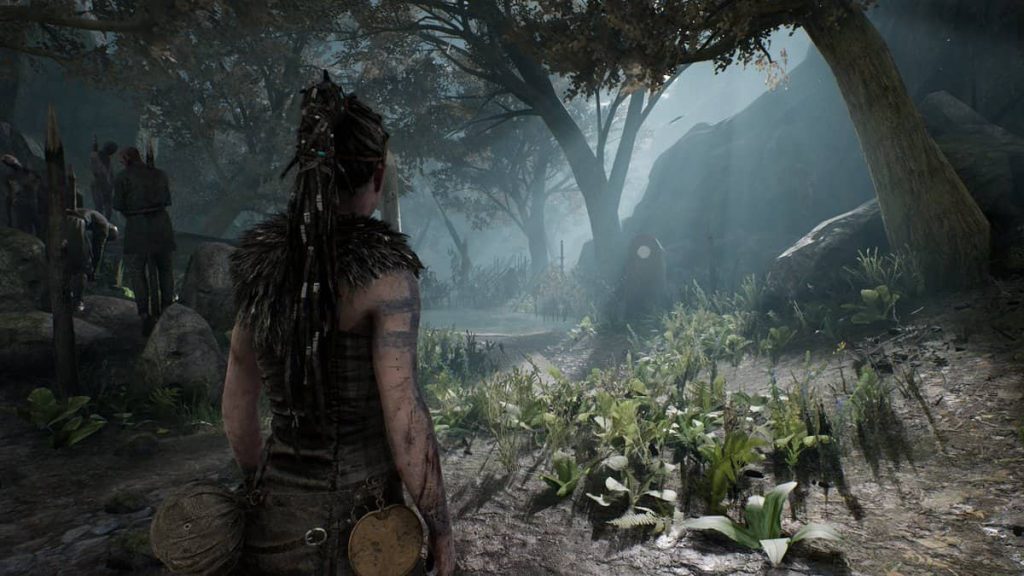
Senua's Saga: Hellblade II - The environment is processed in maximum details
Senua’s Saga: Hellblade II – The environment is processed in maximum details

Combat and Conundrums: Gameplay Dynamics

But if you suspected that the second installment had suddenly turned into a mythical God of War-like action epic where you’d face powerful enemies with the help of nimble reflexes, forget it. Senua’s Saga: Hellblade II is first and foremost, an atmospheric romp with the occasional logic puzzle or duel. The saddest thing for me was discovering that it doesn’t particularly excel in any of these aspects.

But good grief. The fights already felt a bit redundant in the first installment. After Ninja Theory’s action chops like the old Heavenly Sword or their own take on the Devil May Cry series, they were simply meant to show that Senua’s journey involves a real fight for her life in addition to her inner demons. And even though the developers promised that they had significantly improved the combat for the new installment, it’s still tough to classify Hellblade II in the “action-adventure” genre. Even though you have both fast and heavy attacks, parrying, and feints at your disposal, the action gave me a strange impression throughout, as if it was actually just another kind of puzzle…

The fights are strangely static and strictly scripted, and even in the meatier scenes, you’ll never have to deal with multiple opponents simultaneously. The game locks you into a clash with a single foe each time, whose defenses need to be thrown off, and, if necessary, a special mirror that can slow down time can be used to shower that poor guy with a barrage of blows he can’t breathe. The battles are completely trivial, practically impossible to die in on medium difficulty and unfortunately, paradoxically, have little effect on gameplay. Again, it’s really just a demonstration of fighting for life, but without the threat. I often felt that the authors created them just to give the players at least some action. By the way, remember that “gameplay” trailer showing the fight with the giant on the beach? Well, that’s a pure script where you can just run forward and occasionally press a button to have Senua throw a spear without aiming. If it were a non-interactive movie, nothing would happen. And this is unfortunately true for much of Hellblade II.

Another key interactive element is the puzzles. Ninja Theory came up with several pretty good ideas in the second installment. The puzzles are often linked to the transformations of the surrounding world; the aforementioned search for symbols in the environment is repeated only a few times. Unfortunately, the puzzles are also relatively trivial, as if the authors were afraid that somehow they would spoil the pace for the players, and so the solution in all cases is evident at first glance. It’s a shame because even though the puzzles aren’t very well thought out, with a bit of care and more demands on the player, something resembling an actual game could have been made out of the original idea.

And now to the central, most important aspect, the “atmospheric walking simulator” as I boldly call it. I can’t think of a more accurate term, however, because it’s the walking you’ll spend most of your game time doing. I don’t blame the authors because they created a wonderful environment for Hellblade II, and logically, they want you to enjoy literally every stone. The problem for me, however, comes when you spend long minutes enjoying it, during which nothing extraordinary happens, and the game sometimes gives the impression of a mere demonstration of the potential of Unreal Engine 5.

Navigating the Mental Maze: Psychological Depth and Complexity

You might argue that Hellblade II is, after all, a psychological thriller, a journey into the depths of a lost mind, scattered into a thousand pieces and only temporarily patched back together. But here I see the last and, frankly, probably the biggest problem with the new game. This ace-up of the sleeve, which the authors put on the table with such success seven years ago, just doesn’t cut it anymore. I may sound cynical now, and I certainly don’t mean to offend anyone who struggles with mental health issues in real life. From my perspective, the trouble with Hellblade II is that it plays that card all the way, but it needs to be better.

Maybe I’m actually kind of insensitive to the game. Still, even within such a short, multi-hour experience (it’ll take you around 6-8 hours), I found myself repeatedly rolling my eyes toward the ceiling and saying to myself, “Yes, Senua, yes, Ninja Theory, I GET IT. You’re in trouble. You’ve been traumatized; your life is one big mess. But I don’t need to hear about it every step of the way…” It’s certainly commendable that Ninja Theory has once again brought up the subject of mental health, which is not overly represented in games, and that they’ve brought in some experts to address this issue, trying to portray mental health issues respectfully and as faithfully as possible. But, again, very cynically speaking, to that extent, it’s really not interesting but rather annoying…

Because of this, Senua is ultimately a completely flat character despite the many voices in her head. Instead of deepening her motivations or giving greater depth to the trio of characters that gradually accompany her on her journey, the writers’ work often makes it seem like Senua, without her problems, is an empty vessel. And that’s a great shame. Because in the finale, the oppressive and sad motif that was so original and worked so well in the first volume becomes an eight-hour snuff film in which the writers drill into your head, “Hey, how bad is it when there’s something wrong with you?” After a while, any urgency must inevitably wear off, especially when the voices in your head, however masterfully dubbed, are basically saying the same thing over and over again, like Ralph Ineson’s very harsh voice as Shadow, who constantly haunts Senua and mocks all her efforts.

The Art of Atmosphere: Audiovisual Mastery

Ultimately, the game’s biggest calling card is its audiovisual treatment across both platforms (PC and Xbox Series S/X) where it is currently available. I played Hellblade II on the Xbox Series X. The console version is locked at 30 FPS, and as much as I initially approached this fact with displeasure, I eventually found that it’s not such an abysmal problem in this game’s case, and my biggest aversion to such a low frame rate, stemming from the jerky horizontal camera movement when rotating, is still manifested here to a somewhat tolerable degree. At the same time, the game looks absolutely gorgeous, even on a console. Hellblade enchants with beautiful and detailed environments (albeit strictly linear; at most, you can find a hidden detour behind which lies one of two types of collectibles), superbly crafted character models, and often utterly disarming lighting of individual scenes.

Even for nitpickers like me, there’s not much to criticize here, except perhaps that sometimes the sea waves don’t behave quite realistically or that the flames of the fire could flicker a little more smoothly at certain moments. Still, those are extreme details I only notice because the rest is so gorgeous. My biggest criticism in terms of graphics is directed at the cinematic bars, which take up a significant portion of the screen and remind the player repeatedly at every moment that this could have been a movie. On the one hand, I understand that this is a way to save performance, and of course, I don’t take away from the authors the ability to express themselves creatively, but I really wish we could get the option to play in real fullscreen as those bars are not pleasant, especially for a game on such a high audiovisual level, and you constantly feel that you are being robbed of this ornate aspect of the game, which is a great shame.

Melina Juergens, of course, is suitably acceptable in the central role, and her “list” of facial expressions is vibrant. The stark contrast between the beautiful, sun-drenched countryside and the eerie, desolate forests, dirt, overgrown settlements, and grey coastlines works brilliantly. Once again, the developers took great care with the sound design, so you’ll definitely want to play Hellblade II with headphones to enjoy the voices in your head to the fullest. You can also enjoy them with localised subtitles. The folk group Heilung provides the musical accompaniment, whose signature is audible in all the vibrating guttural screams. Still, the music is generally subdued, and you’ll only notice it occasionally.


Senua’s Conclusion

The preceding text may make you believe I suffered through my time with Hellblade II. That’s not the case; I sadly don’t walk away as pleased as I did with the first installment, and I don’t really count on remembering anything after a while like I do remember the scary passage with the monsters in near-perfect darkness. As much as the novelty tries as it can, it fails to awaken terror or anxiety in me.

Ultimately, though, I want to commend Ninja Theory for clearly executing their creative intent without compromise, just as Remedy was praised for doing last year with Alan Wake II. Hellblade II is definitely only for some, and it is suitable for some moods or characters. In the end, I hope that now that the studio has been approved for another project, it can go ahead with it. I don’t think we need another Senua.

Senua’s Saga: Hellblade II is more of an interactive experience than a game. Unfortunately, the bigger budget and flashier visuals don’t cover up the sad fact that what worked so well once may not be enough a second time around. Still, it’s a feat worth at least watching if not playing and possibly finishing.

Where to Buy Senua’s Saga: Hellblade II

  1. Steam (PC): Available for $49.99. You can purchase the game directly from Steam
  2. Xbox Store (Xbox Series X|S, PC): The game is priced at $49.99 or it’s for free with the Game Pass. Check it out on the Xbox Store

The Bunker: A Cinematic Depths of Isolation

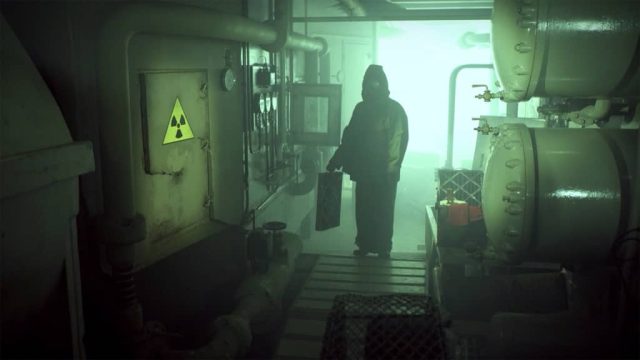
The Bunker - Front
The Bunker - Front Pictrure

Title: The Bunker
Developer: Splendy Interactive
Publisher: Wales Interactive
Released: September 20, 2016
Platforms Available: PlayStation 4, Xbox One, Nintendo Switch, PC Game, Mac Game
Platform Reviewed: PlayStation 4
Article Reading Time: 5 minutes

Setting the Stage: Inside The Bunker

Thanks to its name, it is easy to guess what environment The Bunker is set in. Yes, it is indeed a nuclear shelter in which we follow and shift a bit to the exploits of young John, played by actor Adam Brown. Indeed, the name is familiar to you, as Brown portrayed Ori, one of the dwarves in The Hobbit film trilogy. Young John lives alone in the atomic shelter, going about his day-to-day routine and clearly suffering from various mental problems. The answer to why he is alone in the shelter begins to emerge from oblivion just as John is forced to act outside his daily routine and explore other shelter areas. Something breaks here, and something flashes there. You know, something always goes wrong when you least expect it.

A Dual Perspective: Film vs. Game

There are two ways of looking at The Bunker. Either you approach it purely as a short, interactive film and thus expect it to not abound with many opportunities for interaction, or you ignore that fact and approach it as a game. This will influence how you evaluate the work. To begin with, the Bunker has a really oppressive atmosphere. This is mainly because the game was filmed in the real-life backdrop of the now-closed Kelvedon Hatch Secret Nuclear Bunker in Essex, England. Today, it serves as a museum, and it’s no problem to experience the atmosphere yourself.

Character Depth: Adam Brown’s Performance

Aside from the shelter, Adam Brown’s performance is also a considerable part of the whole atmosphere, as he comes across as quite clumsy and scared throughout and manages to convey these feelings to the viewer/player. As well as John, other characters appear in The Bunker, particularly in his memories, and the actors cast are not entirely unknown, having appeared in shows such as Penny Dreadful, Game of Thrones, and the Star Wars films. In short, the production costs for The Bunker were definitely on the higher end, and it shows.

Expectations vs. Experience: Gameplay Mechanics

The problem comes in when we expect greater freedom or choices from the work. This is certainly not the case. The entire gameplay, if we can even talk about such a thing, is limited to occasional clicks on pre-marked objects or a few clicktime events. From this point of view, it will be a sheer bore for specific people. Those who are not prepared for something like this might not be able to wait for the end credits, which take an average of 90 minutes to get through from the opening, which can be considered a slightly below average running time for today’s movies, but that’s perfectly fine, I certainly don’t try to take this into account as some sort of victory.

The Story’s Climax

It’s worth sticking around to uncover all of John’s memories, and it’s definitely worth it. I’m curious what he’s looking at at certain moments. What is hidden in the atomic shelter? A mutant demon, a deranged Nazi, or just the past shrouded in oblivion? You’ll find out, you’ll discover, you’ll learn… The Bunker won me over the most, besides the chilling atmosphere, through the main story twist at the very end of the game, which I did not expect at all, and thanks to that, The Bunker became one of the better FMV works I had the opportunity to try. I recommend it to you, too.

The Bunker – Conclusion

So how do I watch it? As someone unfamiliar with the genre, I might have turned up my nose and relegated The Bunker to mediocrity despite its qualities. As a film, it has high production values. It manages to work the tension through realistic sets or acting performances. As an interactive film? There is little interaction, limited to mere clicking, but what I wrote in the line above still applies. The clicking gives you a minor illusion that you’re actually controlling John’s actions, which makes the atmosphere a little more tense. However, I could appreciate the work more as a concise film without any interaction. Still, thanks to the atmosphere just mentioned several times. The breathtaking story twist, I can, for my part, allow this and still rank the title among the better ones within the genre.

Where to Buy The Bunker

  1. Steam (PC, Mac): Available for $14.99 (currently on sale for $2.24). You can purchase the game directly from Steam
  2. Epic Games Store (PC): Available for $14.99. You can buy it from the Epic Games Store
  3. PlayStation Store (PS4): The game is priced at $19.99. Check it out on the PlayStation Store
  4. Xbox Store (Xbox One): The game is available for $19.99. You can find it on the Xbox Store
  5. Nintendo Store: Available for $12.99. Purchase it from the Nintendo