Home Authors Posts by Petko

Petko

217 POSTS 0 COMMENTS

Battling Skynet Again in Terminator: Resistance

Terminator Resistance T-800 as We Know it

Title: Terminator: Resistance
Developer: Teyon
Publisher: Reef Entertainment
Released: November 15, 2019
Platforms Available: PlayStation 4, PlayStation 5, Xbox One, Xbox Series X/S, PC
Platform Reviewed: PlayStation 5
Article Reading Time: 10 minutes

Introduction to the Resistance

As we already know from the Terminator movie series, in one of the future wars, humanity will win over robots, and the shooter Terminator: Resistance will hint at how high the price we will pay for it is. Right at the beginning, I can say that it is worth giving it a chance if you are a fan of the famous movie prequel, which is enriched with a new look at the Resistance against Skynet and offers a pleasantly old-world, although not flawless action with a pinch of adventure. Go for it!

Nostalgia

Although the new game was released almost as soon as the feature-length Terminator: Dark Destiny, its theme harks back to the first two installments of the well-known Terminator saga and Terminator 2: Judgment Day. Their memories will be right at home in the virtual adaptation. The game is connected to iconic films through authentic sets, familiar time-space loops, and some key characters, although it tells the story of the AI-dominated world in its own way. It all starts in Pasadena, California, hit by a wave of terror in 2028.

A Soldier’s Life in Skynet’s Shadow

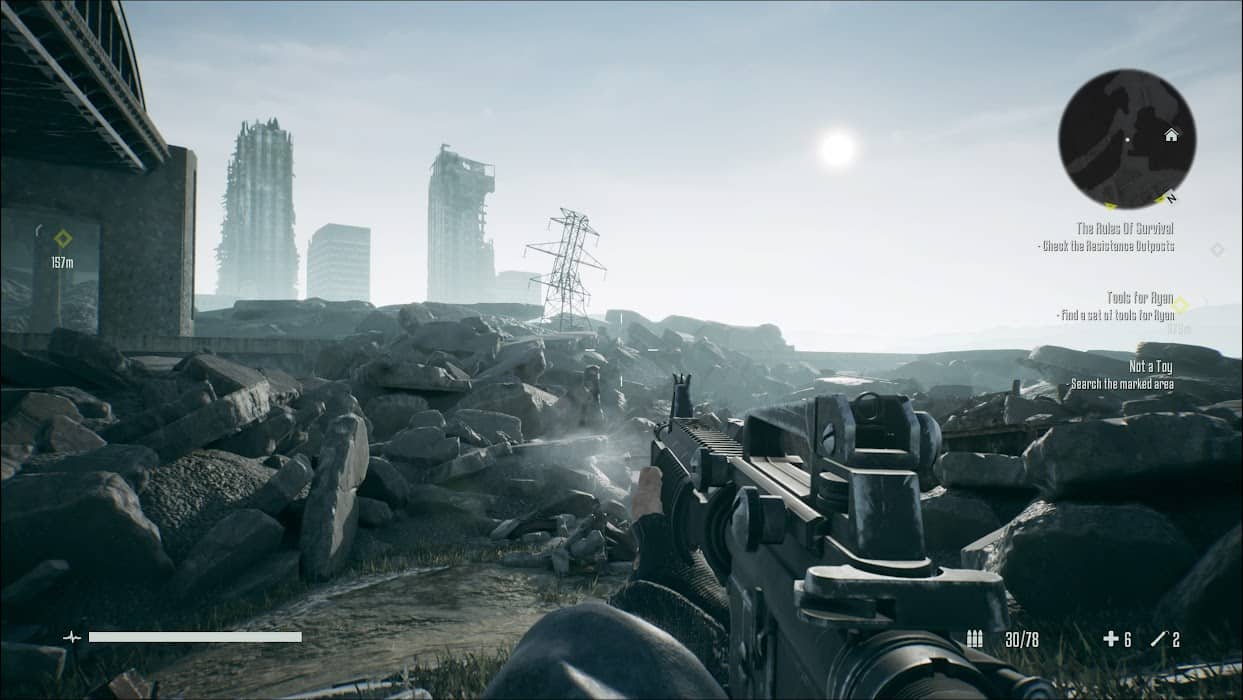
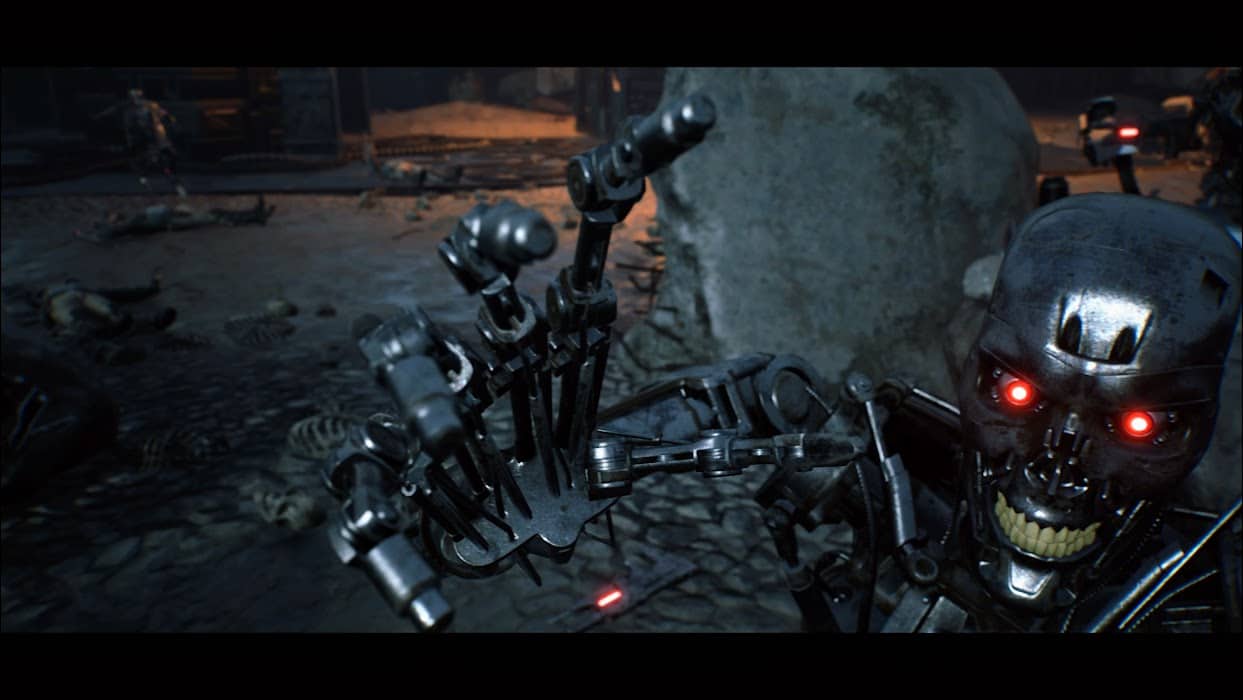
The ruins of the once glittering skyscrapers are now commanded by T-800 terminators, accompanied by another tin cavalry sent to the city near Los Angeles to cleanse it of all things human by the autonomous network Skynet. The red eyes of the merciless robots are usually the last thing one looks into before death. But the game’s central character, Private Jacob Rivers of the US military’s Pacific Division, has been pleasantly surprised by fate and left alive for a critical mission. Rivers managed to fight off the steel monster raid, as did several other Resistance heroes led by the legendary John Connor. The survivors will attempt to defeat the AI in a decisive battle with the remaining military units in the Pasadena area. Despite the makeshift conditions, they managed to mobilize their forces relatively quickly. The Allies gather supplies, upgrade weapons, spy on Skynet, and, with the experience gained, enter new battles to disable the AI’s computing headquarters. They won’t be without the Rivers, as mentioned earlier, who is unexpectedly high on Skynet’s blacklist for elimination, and everything you do as him will affect the course and outcome of the story.
Terminator Resistance Skycrappers
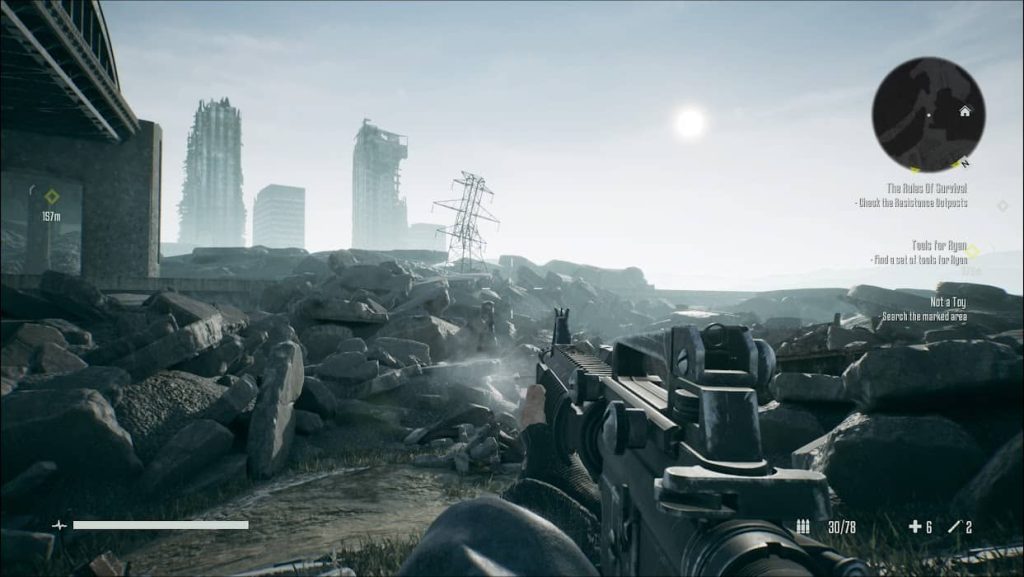
Terminator: Resistance Skyccrappers ruins

Stealth and Combat: Survival in the Ruins

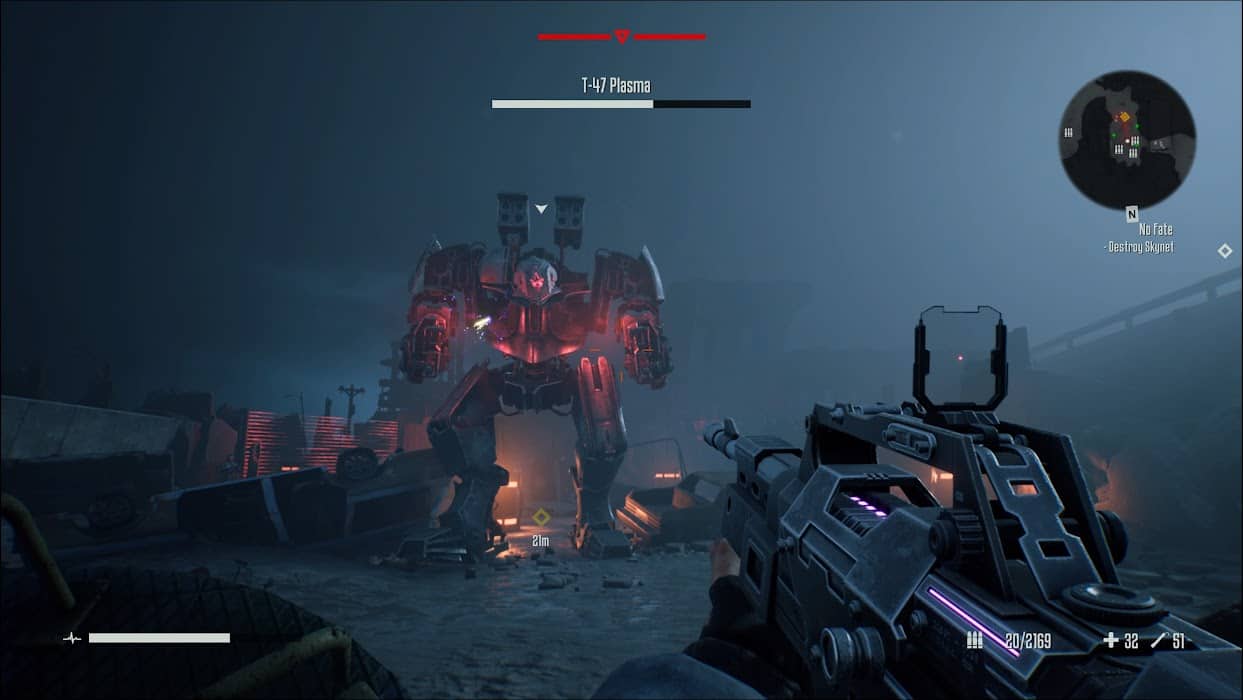
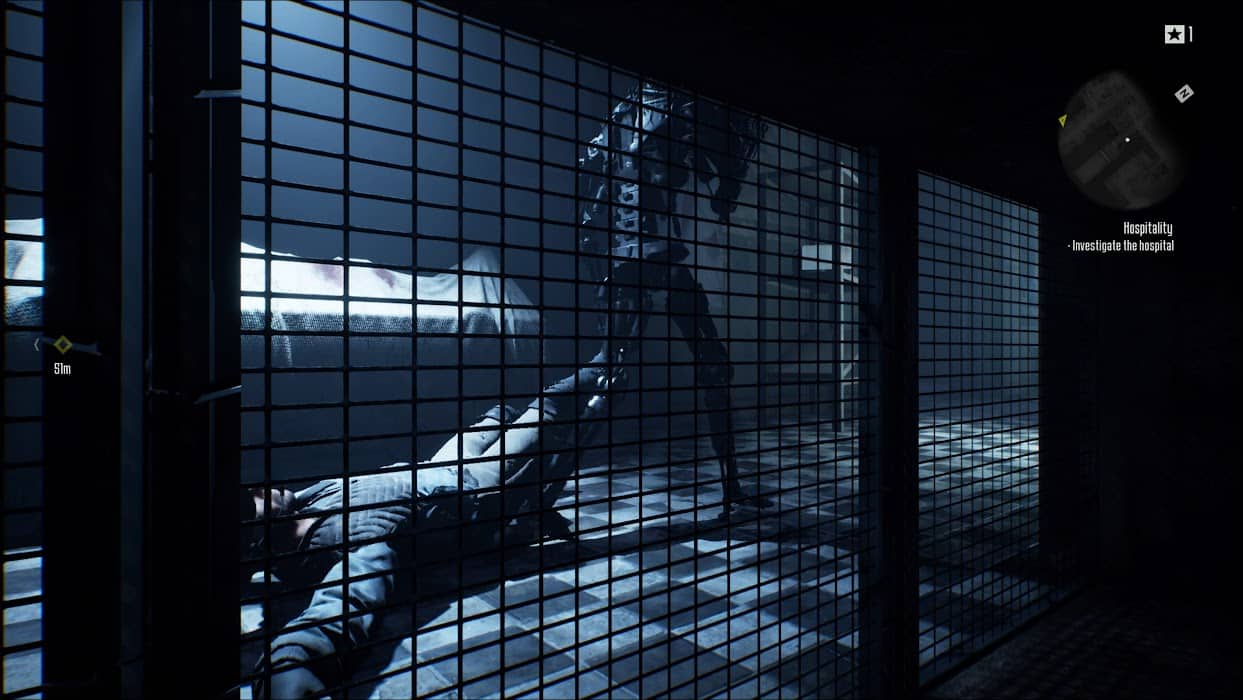
Terminator: Resistance starts cautiously and intimately. In fact, you just run through the ruins of Pasadena without directly confronting the enemy. However, even a glimpse of the typically red robot sensors gets your heart racing, and it beats like a race in the subsequent few stealth missions, where the dreaded Terminators pass you by a whisker. Since Rivers has been relatively unprepared for a direct confrontation with the T-800 for quite some time, any giveaway means death. The atmosphere of the game is quite unique, even more so if you equip the hero with special goggles for seeing through walls and give him a glimpse of several deadly enemies in range. But thanks to Rivers’ teachable nature, he begins to exploit Skynet’s technical weaknesses more and more effectively. By hacking various gates and portals, he not only makes his way through space through previously locked sectors and surprises enemies from ambush, but by reprogramming machine gun nests, he even sends them against each other. Soon, the time will come when he’ll start dispensing justice in Arnold Schwarzenegger’s style.

Exploring Tactical Diversity

When the slower style of play would have started to feel routine, the hero gets plasma weapons and suitably durable armor to his kit and becomes an even match for the tin monsters. Dark sci-fi suddenly turns into a brisk shooter, while the role of RPG elements is highlighted, opening up new gameplay possibilities. From time to time, Rivers is tasked with missions that don’t come without ingenious technical aids, such as advanced spy goggles for taking pictures of enemy troops. He’ll also often be breaking complex locks, hacking electronic devices, destroying booby traps, and, of course, continuing to hack into the Skynet network. Meanwhile, he could only do advanced activities while continuously improving his skills.

The hero increases his level with points gained by successfully completing main or optional missions. He also upgrades his weapons with self-built parts and makes explosives, healing, and support devices – in short, he is a handyman of all kinds. Through crafting and the experience system, Rivers gradually becomes a better soldier in the field and a more effective spy. What gameplay style he excels at is up to you, and what RPG elements you invest in is also up to you. Versatile characters are most valuable for each approach in the game, as the campaign regularly emphasizes both play styles.

The game environment is also prepared for a different concept of action. The creators have interspersed the relatively narrow corridor with many alternative paths, so despite the modest size, the map looks open and offers multiple options for getting to different places or overcoming obstacles.

Some options you won’t even notice at first, which you may regret later. For example, I spent several dozen minutes gathering materials for an explosive to blow up a wall at the following location. At the same time, a ventilation shaft leading to the exact location was hiding nearby. The game often gives you several options for traversing the map, with the more elegant options leading through more advanced activities (hacking, picking locks) and the less elegant ones through brutal action or rather tedious junk collecting. Often confrontation is inevitable, but unfortunately, the game picks its weaker moments in the duels due to its weaker technical design.

The Flawed Machinery of War

Skynet’s artificial intelligence isn’t as sharp in the game as on the silver screen, and fights with robotic units could have been more entertaining. The Terminators usually just loiter in their corridors and try to approach you through the air when confronted, naturally “tripping” over every obstacle in their path.

A Mixed Bag of Innovation and Obsolescence

Studio Tayon still needs to get the best out of Unreal Engine 4, which is also clearly visible in the graphics and physics, which have mistaken the time by a good ten years. Corresponding with the outdated image are the clumsy character movement animations, the lackluster weapon manifestation, or the unbelievably processed projectile materials. While reinforced concrete structures can be shot to death, no splinter can fly off wooden pallets.
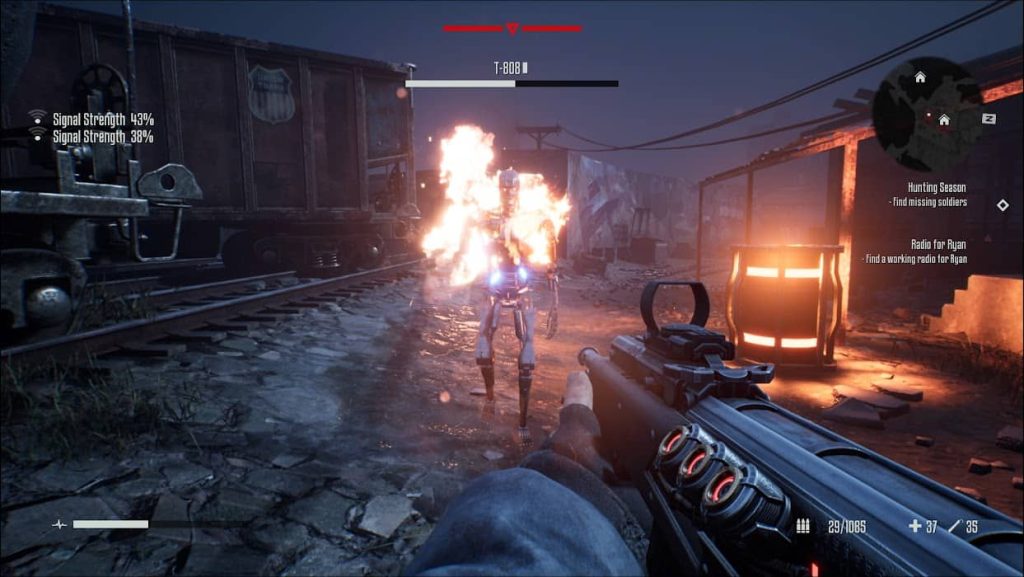
Terminator Resistance: Eliminating T-800 as a Hobby

The Legacy of the Resistance

Humanity’s fictional clash with the computer brain has become a pop culture phenomenon. It has been told through six science fiction films, countless book titles, and dozens of video games, the quality of which has fluctuated greatly over time. Terminator: Resistance is one of the better ones, though it is far from perfect.

Beyond the technical problems, the game is plagued by half-baked details resulting from a limited budget and poor creative decisions. One can have reservations, for example, about trading found objects, of which an absurdly large amount are lying around the map, and over time, there is practically nothing to spend the earned fortune on.

Some other RPG elements could be more problematic. For example, collecting materials to work at the ponk soon gets tiresome, as does picking locks, the mechanism of which follows no explainable logic, and the opening of each is de facto a work of chance. Also questionable is the story’s moral dilemmas and decision-making system, which branches into several alternative endings based on critical moments. However, your sub-decisions don’t have much visible influence on the course of the campaign, and the game will only calculate everything in the very finale when the consequences of your actions finally come into play. Despite some setbacks, the film’s gameplay brand has returned to a worthy form. The authentic setting has created an action shooter with an imaginative environment and a pleasantly variable campaign that allows you to make and act freely. And that great soundtrack with iconic themes by Brad Fiedel… No, Terminator: Resistance is not a licensing embarrassment but a gem that is new in some ways, but the roots are undeniable and come to the surface at every turn, and everything smacks of the 80s when the phenomenon started.

A Gem Amidst the Rubble

My conclusion is that a great atmosphere against crappy technology, ingeniously designed environments full of dumb monsters, and lots of good ideas but also bad ones make Terminator: Resistance, where we fight not only against Skynet not perfect but still one of the best games in the brand. For fans of this iconic brand, it’s a must-play that will make you feel right at home with the atmosphere. Hats off to the guys at Teyon!

Where to Buy Terminator Resistance

  1. Steam (PC): You can purchase Terminator: Resistance directly from Steam.
  2. Epic Games Store (PC): Find more details and purchase Terminator: Resistance here on Epic Games Store.
  3. PlayStation Store (PS4/PS5): The game is available for purchase and you can buy it from the PlayStation Store.
  4. Xbox Store: You can find Terminator: Resistance here on Xbox.
Lake: Meredith Weiss’s Quiet Journey in Providence Oaks

Lake Feature Image
Lake Feature Image

Title: Lake
Developer: Gamious
Publisher: Whitethorn Games
Released: September 1, 2021
Platforms Available: Xbox One, Xbox Series X/S, PlayStation 4, PlayStation 5, PC
Platform Reviewed: PlayStation 5

Meredith’s Escape

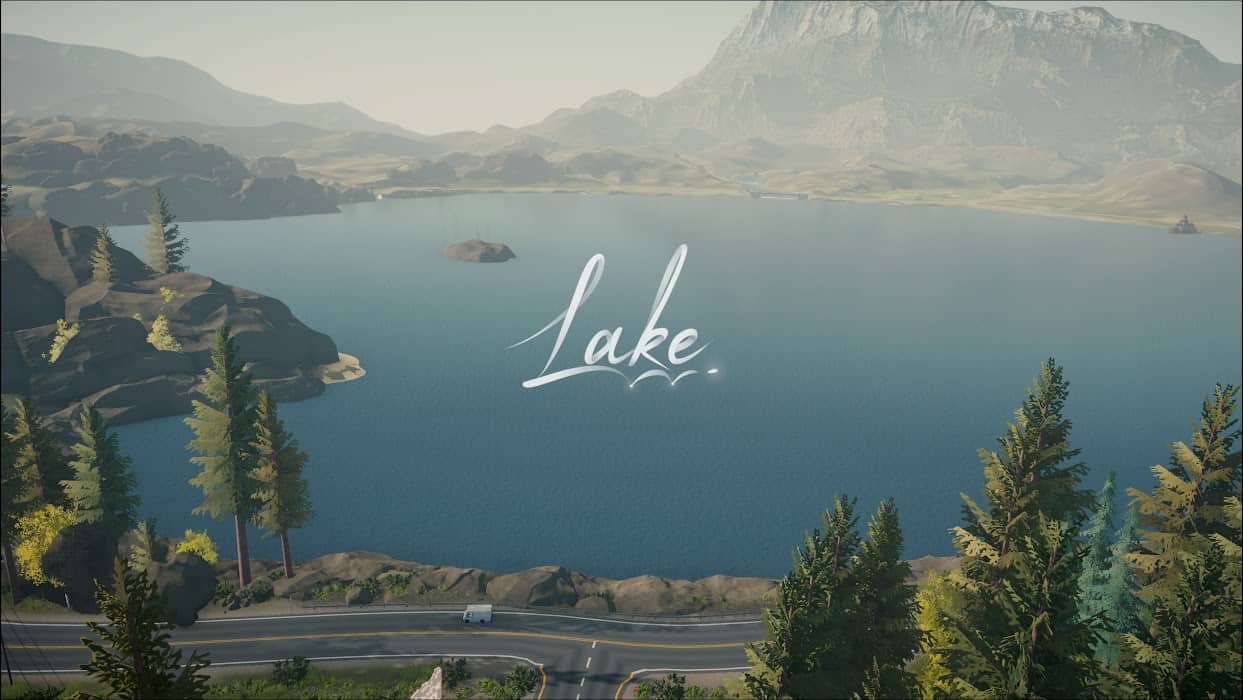
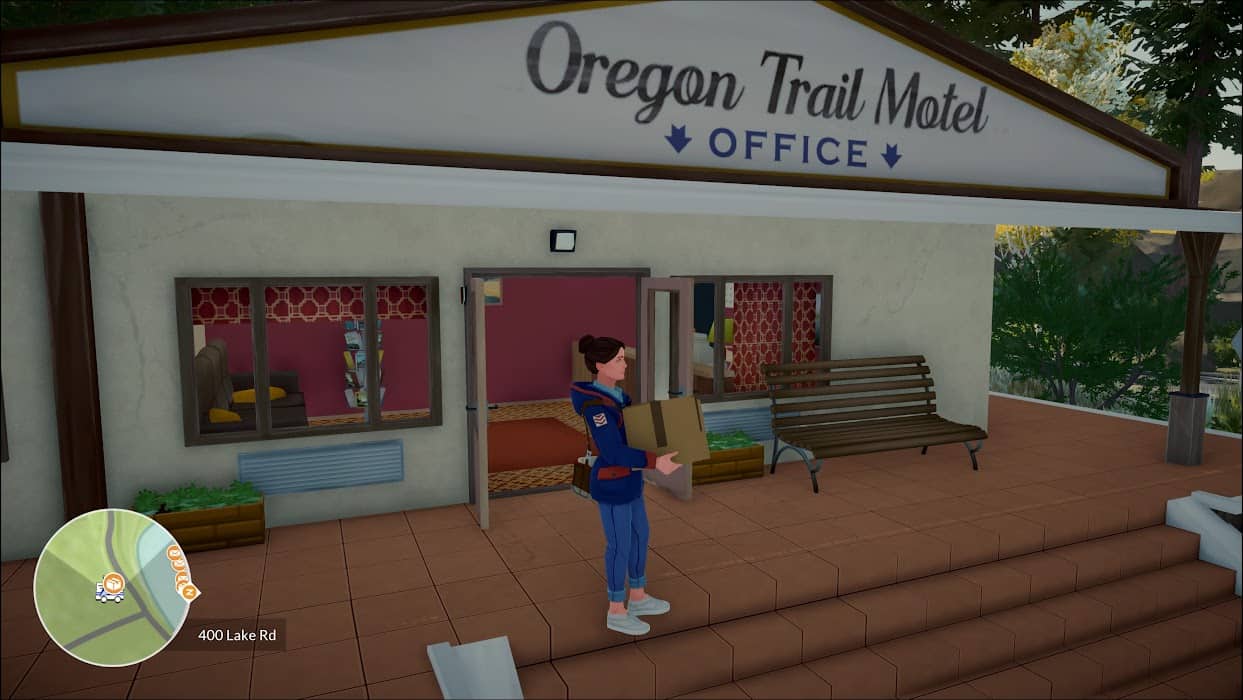
Have you ever considered leaving everything behind, going to the American countryside for a fortnight to try a different job and meet new people? That’s precisely what the main character of Lake, Meredith Weiss, did. A demanding job, an annoying boss, and an imminent burnout syndrome forced her to travel to her hometown of Providence Oaks in Oregon to take over the role of the local postmistress for her father, who had left to drink margaritas in sunny Florida.

Before I get into the review, I need to pass on the developers’ words and warn you that Lake is not the classic story-driven adventure game we know. The overwhelming story, the puzzles, the action… I wasn’t expecting any of that here, and I didn’t miss it. No murders, complex relationships, or life or death choices. The biggest problem with this small town is the construction of apartments at the expense of nature and the harmony of the surroundings. I would be lying if I said the game had no story. In fact, it does. So, if you come home from work every day angry and tired, make yourself comfortable, have a coffee, light a cigarette, transport yourself to the 1980s, and follow Meredith to a picturesque lake in the middle of the mountains. How her story unfolds over the next two weeks is up to you. The dialogue choices, which are the glitter on the diamond here, can change the storyline and allow you to reach a different ending. There are three of these in total.

A Window to Providence Oaks

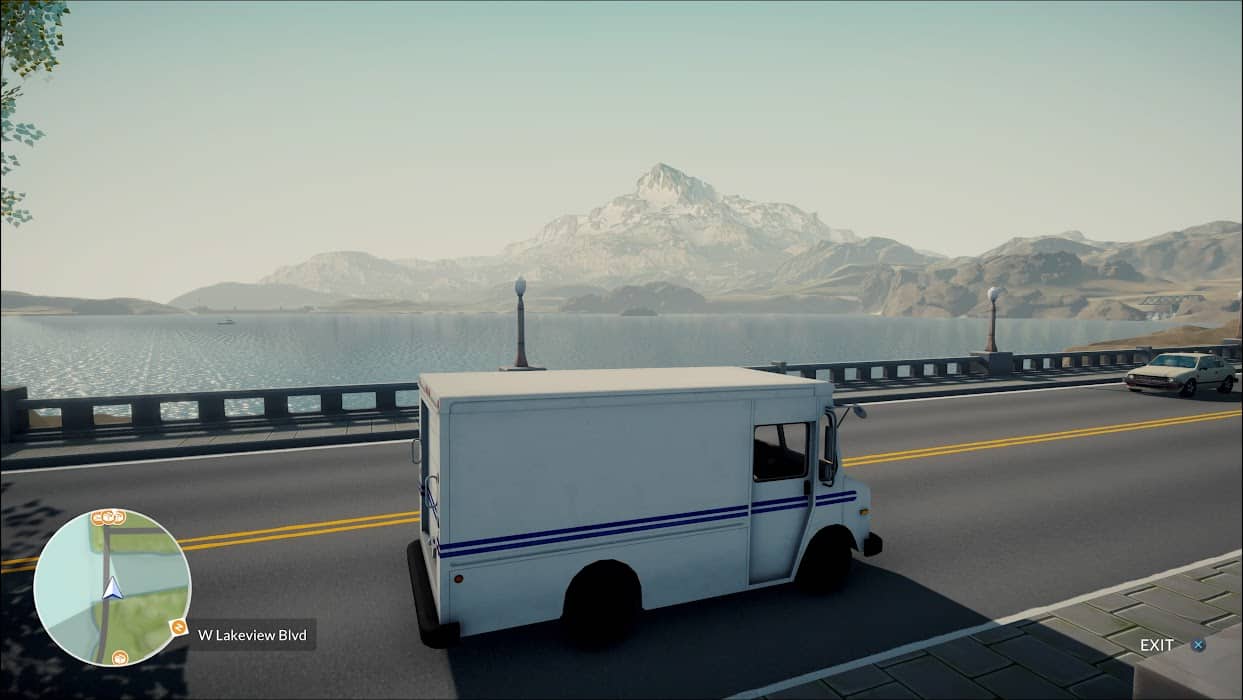
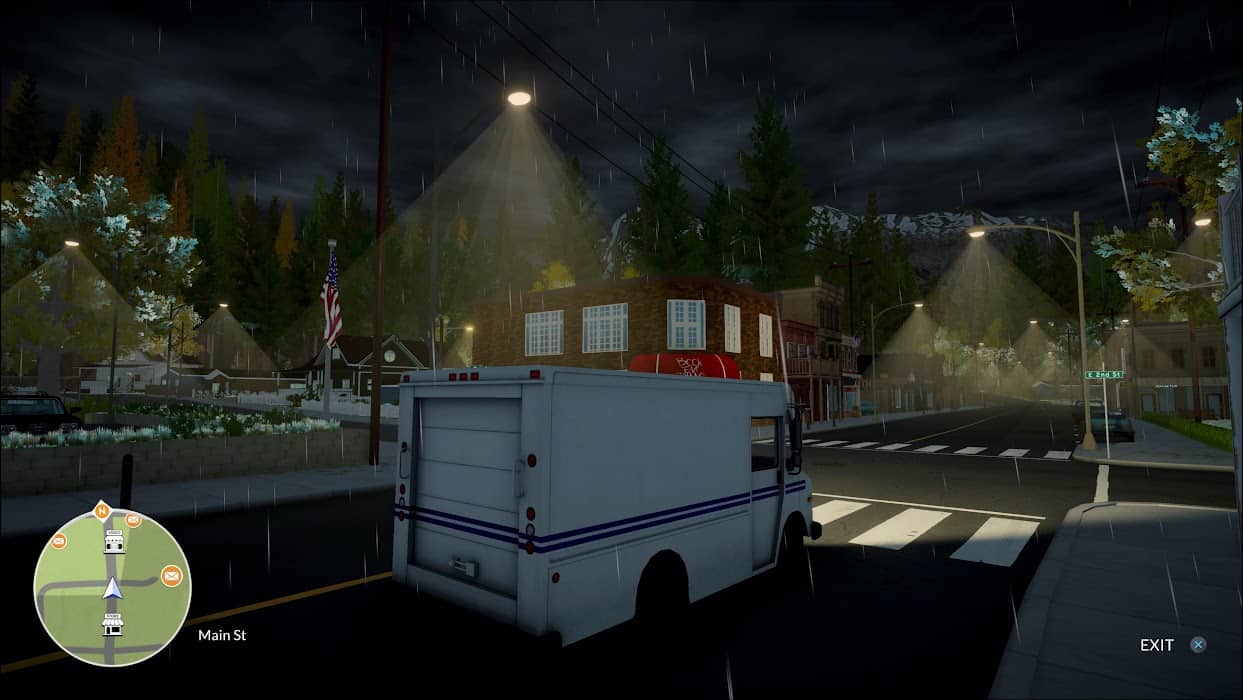
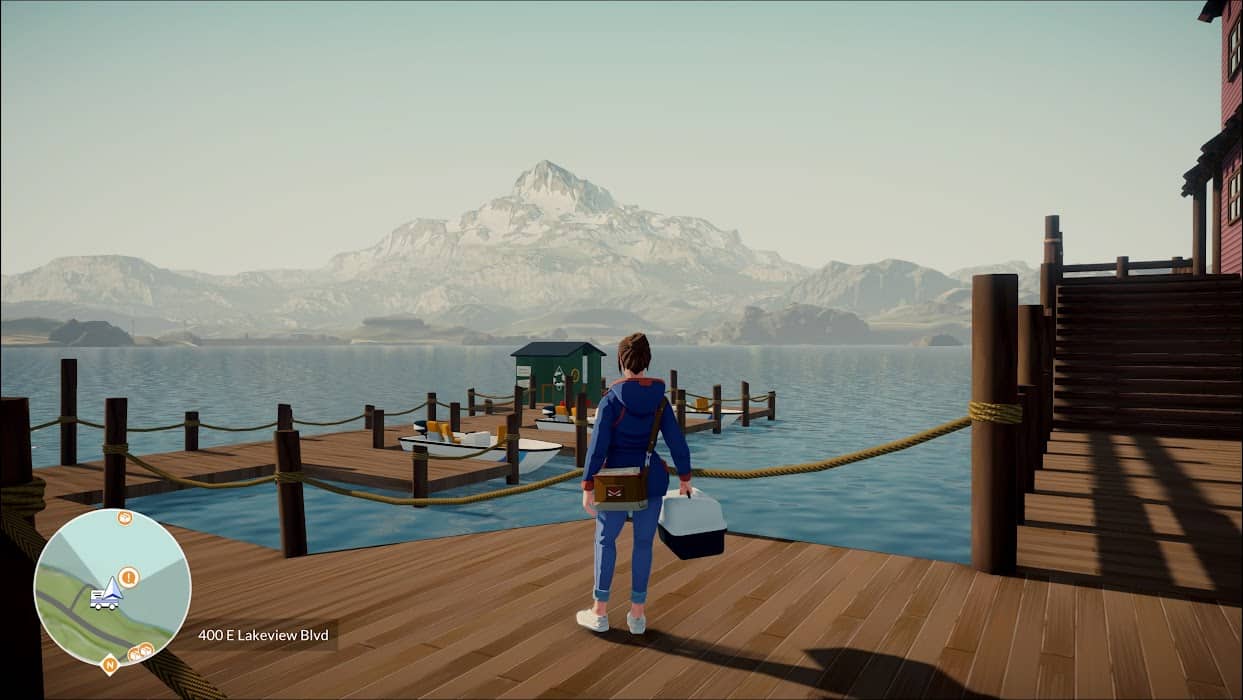
But it’s not all about the conversations, which are brilliantly written, though admittedly a little chaotic at times. The main focus is delivering the mail. Your day always starts in the morning when you get in the van, turn on the local radio station, and hurrah to work to the sound of pop country. The number of deliveries, whether parcels or letters, increases over time. It doesn’t matter in what order or how long it takes to deliver your correspondence. The game offers complete freedom in this respect and the opportunity to explore the entire game map. It’s up to you how long the working day will take. I’ll admit that even I sometimes veered off the planned route just to check out the view from the dam or left my car at the edge of the forest and went to the beach to see the whole Lake in the palm of my hand. Unless it was raining. It’s a shame that the opportunity to explore the world is gone after all the deliveries are made.

Character Encounters and Dialogue Choices

If you accept an invitation for lunch or a walk during the morning delivery, there is usually an afternoon activity waiting for you on the same day. However, if you feel uncomfortable with someone offering you an afternoon activity, you’ll appreciate the option to decline the invitation. However, I would definitely not recommend this. Aside from the script and dubbing, all the characters are engaging in some way, though it may not seem so at first glance. Whether it’s the initially annoying cat woman Mildred or the odd hippie couple Mickey and June. At the end of the day, you usually have the choice of reading a book, watching TV, or working on your project. Well, start the van again in the morning. When I dropped my last letter in the mailbox on Friday, I was relieved to have my work week over. I was then unpleasantly surprised to learn that mail is delivered on Saturdays in America. In truth, I didn’t mind it so much and was even looking forward to chatting with old friends or people I had met only yesterday. The relationships I was able to make with all the characters in nearly seven hours of play took me back to the days of the first Life is Strange.

The Aesthetics of the ’80s

If you find the van ride tedious, you’ll appreciate the autopilot option. It will drive you to your desired location, but you must carry the heavy packages yourself. I’ve used this more than once. And that’s either because I wanted to enjoy the comic 3D graphics, which the authors did well. Despite the slightly outdated models, they managed to capture the environment of a quiet small town to the smallest detail. Or simply because I wanted to soak up the atmosphere of the eighties, which was always beaming at me. But if the autopilot doesn’t suit you, several fast travel points can be moved with a single click. Personally, though, I would recommend using both options sparingly. The vehicle controls are stiff, but that didn’t stop me from enjoying the driving experience. Even if the character controls are of a good standard, I would only fault the sprinting. In fact, if you’re hoping that holding the shift key will put our protagonist into a run, you’d be mistaken. Her only response is a subtle increase in stride. You can’t blame the developers for that, though, as the intention is to emphasize to players that this is a calm, relaxing game.


What bothered me the most about the whole game were the stupid NPC characters that could stop in the middle of the road or block your door. Luckily, you only meet a few of them, though, as there’s not much activity in this quiet and sometimes dull town. And that’s the way it’s supposed to be. It doesn’t detract from the experience. The same goes for the graphics, where Xbox owners, in particular, complain about texture creep or flickering shadows. I only encountered the latter problem once on the PC version I reviewed. The great dubbing is worth mentioning, especially the character of Kay, our childhood best friend, played by Cassie Ewulu, known primarily to anime fans.

A Quiet Town’s Echo

If I ignore minor bugs like the fact that the brake lights don’t come on when braking, the dubious lip-sync (when the characters don’t open their mouths to the dub), or the repetitive soundtrack (which, by the way, you can complain to your local DJ about), I enjoyed everything. It must be taken into account that this is an indie title. Lake offers a rather unconventional experience that may only suit some. However, those who try the game will give me the benefit of the doubt that this is a good title.

Where to Buy Lake

1.  Steam (PC): Available for $19.99. You can purchase the game directly from Steam.
2.  Epic Games Store (PC): Also priced at $19.99. Find more details and purchase the game here on Epic Games Store.
3.  PlayStation Store (PS4/PS5): The game is available for purchase at $19.99. You can buy it from the PlayStation Store.
4.  Xbox Store: Lake is available for $19.99 on the Xbox platform. You can find it here on Xbox.
Gallery

Hello Neighbor 2: A Sequel’s Struggle with Ambition and Execution

Hello Neighbor 2 - Front

Title: Hello Neighbor 2
Developer: Eerie Guest
Publisher: tinyBuild
Released: December 6, 2022
Platforms Available: PlayStation, Xbox One, Xbox X/S, PC Game,
Platform Reviewed: Playstation 5

Expanding the Neighborhood: Quentin’s New Challenge

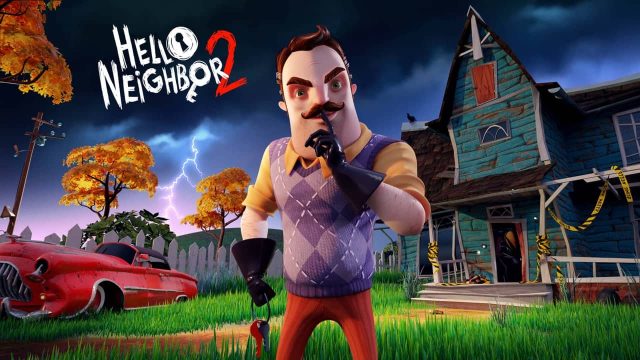
In the stealth puzzle horror game Hello Neighbor 2 from tinyBuild, you take on the role of investigative journalist Quentin as he tries to uncover the secrets of his neighbors. You’ll have to scour the homes of the other residents of the quaint town of Raven Brooks before shining a light on Mr. Peterson himself, the first game’s familiar antagonist. You’ll visit hunter and taxidermist Otto’s cozy log cabin, the giant mayor’s mansion, and the local baker Gerda.

Compared to its predecessor, Hello Neighbor 2 offers a more extensive and more varied game world. The first Hello Neighbor already boasted original graphics, largely retained in the sequel but have also been improved. The adventures of journalist Quentin can be enjoyed in a more colorful and generally more attractive graphic design. The creators’ creativity is then fully demonstrated in the detailed interior of the buildings, which also includes the puzzles themselves.

Enhanced Aesthetics, Overlooked Storytelling

While the game’s visuals have managed to move up a level, the story has yet to receive similar attention. Although the brand has introduced an original theme, the plot is still only told in hints in Hello Neighbor 2. The newly introduced characters of the inhabitants of Raven Brooks, the game only bothers to present them as villains to be shouldered. In doing so, the life stories of these remarkable characters could deepen Mr. Peterson’s intriguing lore. Unfortunately, the cutscenes don’t tell much about the character’s motivations. You’ll be left to fill in the gaps in the story, which, even after completing the game, at least in my case, are not closed. The developers have thus missed an opportunity to link new characters and puzzles (which currently function somewhat independently) through a tailored, full-fledged story that you won’t find in the game.

The genre identity of Hello Neighbor 2 is also debatable. The title is marketed as a stealth horror game, but you won’t be scared while playing it. Because of the overall flatness of the story, you ultimately won’t have any reason for the game’s negative characters to instill any sense of fear in you. Gerda, Otto, or Mr. Peterson himself function more as obstacles to slow you down in your puzzle-solving, but certainly not as characters whose presence will send chills down your spine.    

Puzzle Integration: A Step Forward in Intuitiveness

Hello Neighbor 2 has many puzzles. In each of the nine levels, you’re tasked with solving a few puzzles and getting a key to use in the following area. The leading role here is thus played by searching the corners of individual buildings, looking for parts of various mechanisms, following visual clues, and discovering the correct way to solve puzzles.

Suppose you prefer to avoid puzzle titles where you have to work out the right solution mainly by trial and error, which was partly the basis of the first game. In that case, you’ll probably like Hello Neighbor 2. In fact, the game offers a lot more nudges toward puzzle solving than its predecessor. The puzzles are more intuitive, and you’ll rarely find yourself needing help with how to proceed.

The correct order of the numerical code is indicated by the colored flags or a practically placed leaflet with a picture of a clock. When arranging the trophies on the shelf, you can rely on the photo next to them. What I enjoyed about Hello Neighbor 2, apart from the puzzles themselves, was their integration into the environment, where they are evenly placed so that you can explore almost every corner of the building or area while solving them.

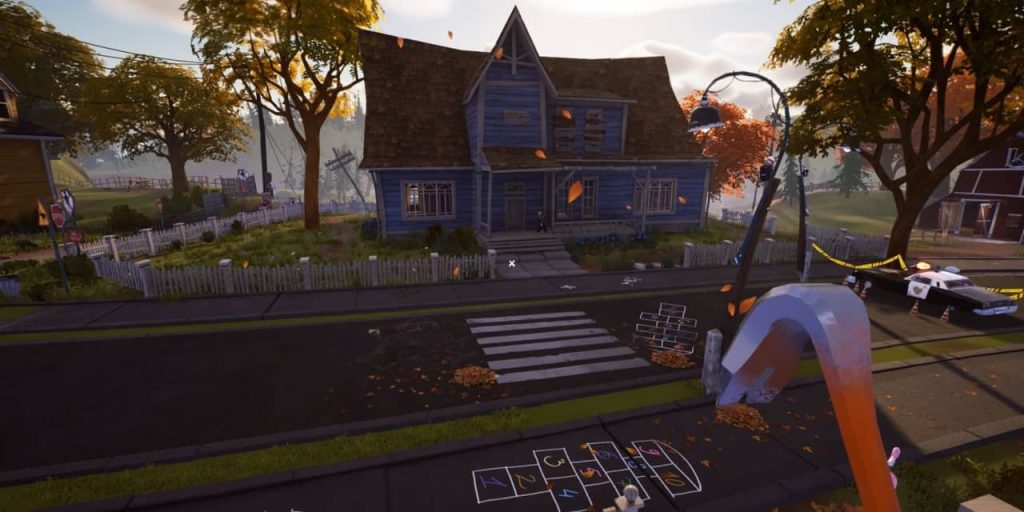
As you solve the puzzles, you’ll be constantly watched by the residents of Raven Brooks, who won’t let a snooping journalist in their house get to you. Quentin has no way to defend himself and the only chance is to escape or hide in one of the hiding places located at each level. We got to know the artificial intelligence, which was able to learn from the player’s actions and then predict his actions in the first Hello Neighbor, and it worked well. Mr. Peterson gradually learned your routes, and as you moved through his house you’d find bear traps or strategically placed cameras that alerted him to your every move. The developers promised an AI upgrade in the sequel, with the characters simultaneously pursuing the player to be controlled by several advanced AIs.

AI Downgrade and Sluggish Movement

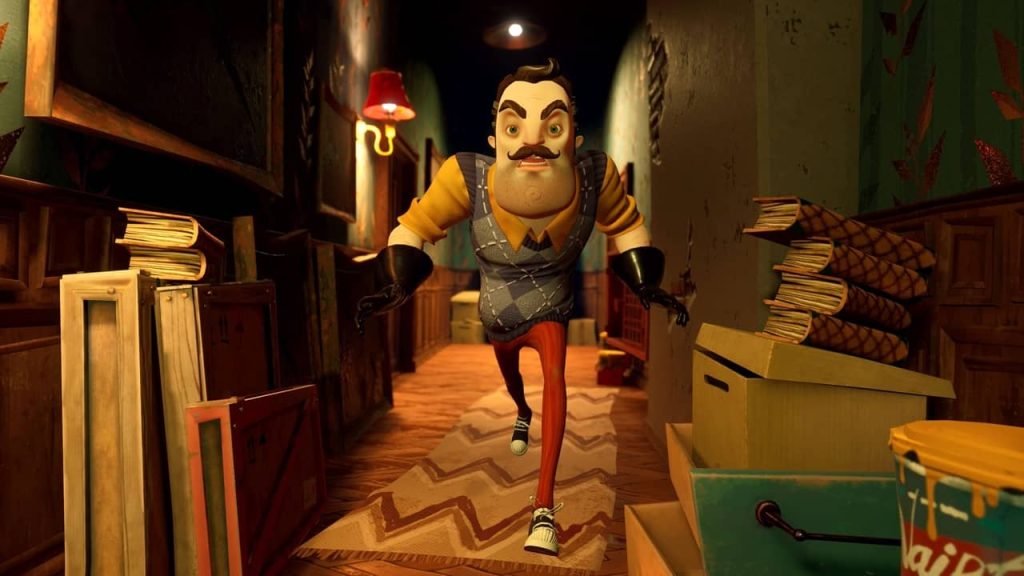
I don’t know where the mistake was made, but the AI in Hello Neighbor 2 needs to be improved. While it does happen that the AI will come after you, you’ll also encounter loose boards or a bell above a door in levels that will alert the AI. But you can get rid of it quickly – just sprint for a few seconds. Once you are far enough away from the AI (just a few metres), it will forget you even existed. For example, suppose you hide in one of the cupboards right under the nose of Otto the Hunter. In that case, his rage will immediately be replaced by an obnoxious “hmm,” and he’ll look for you at the other end of the house.

Hello Neighbor 2 - House of Events
Hello Neighbor 2 – House of Events

Unfortunately, apart from the AI, the controls have not seen any major improvements, as they are incredibly cumbersome in Hello Neighbor 2. A simple jump onto a ledge sometimes becomes a superhuman task that takes several attempts. Moreover, the game never gives you exact limits on where you can move and where your character can jump over obstacles.

Lost Potential: Fumbling on Familiar Grounds

As if the unpolished controls weren’t enough, I encountered countless bugs and lag in Hello Neighbor 2 that sometimes made the title unplayable. At one point, mis-loaded textures made it impossible to solve a puzzle. Five years after the release of the first Hello Neighbor, the creators at tinyBuild had the opportunity to capitalize on all the feedback and turn it into a great sequel. But we didn’t get to see that.

At the moment, you can already purchase Hello Neighbor 2 at a still relatively exorbitant price, or if you have a PlayStation Plus subscription so of the monthly games, the price also does not hide the fact that the creators most likely released the game mainly with the vision of high earnings. Unfortunately, Hello Neighbor 2’s technical incompleteness, awkward controls, virtually non-existent story, and underdeveloped AI overshadowed the good things about the game, which are the imaginative concept and visuals or the well-designed puzzles. A decent disappointment…

Hello Neighbor 2 - The Chase
Hello Neighbor 2 – The Chase

Where to Buy Hello Neighbor 2

You can purchase “Hello Neighbor 2” from various platforms for youe preferred gaming system:

  • Steam (PC): Hello Neighbor 2 is available on Steam for $39.99. The game, developed and published by Eerie Guest and tinyBuild, offers features like single-player mode and Steam Achievements. You can check it out and purchase it here on Steam.
  • Epic Games Store (PC): Also priced at $19.99 during a sale (regularly $39.99), available on the Epic Games Store. This version includes features like achievements and a self-refundable purchase option. Find more details and purchase the game here on Epic Games Store.
  • Xbox: On the Xbox platform, Hello Neighbor 2 costs $39.99 and is available with features such as Xbox Play Anywhere, Cloud-enabled, and optimized for Xbox Series X|S. Check it out here on Xbox.
  • PlayStation Store (PS4 and PS5): The PlayStation Store offers different editions of Hello Neighbor 2, including the Deluxe Edition, which offers additional content at higher prices. Visit the PlayStation Store to purchase or learn more. The Deluxe Edition is available for $39.99 on PlayStation.

Hello Neighbor: A Horror Puzzle Wrapped in Frustration

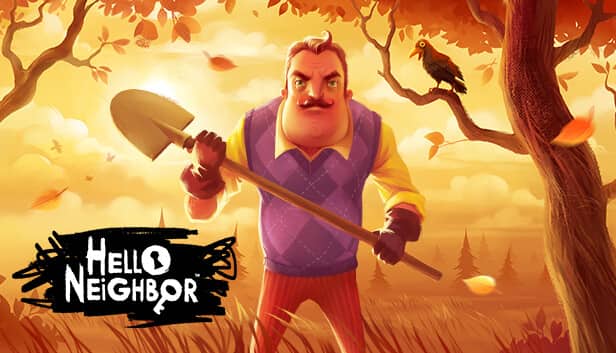
Hello Neighbor Front

Title: Hello Neighbor
Developer: Dynamic Pixels
Publisher: tinyBuild
Released: December 8, 2017
Platforms Available: PC Game, Xbox One, PlayStation 4, Nintendo Switch, iOS Game, Android Game
Platform Reviewed: PlayStation 4
Article Reading Time: 8 minutes

After Little Nightmares, I rethought my opinion about horror hopping and puzzle games in which the main character escapes from psychopathic enemies. In this genre, the game has to be flawlessly crafted and have a dense atmosphere. Otherwise, by its very nature, it has nothing to offer. Hello Neighbor’s graphical styling is so attractive that it could be another excellent addition to the genre’s roster.

Hello Neighbor Encounter

First Steps into Hello Neighbor

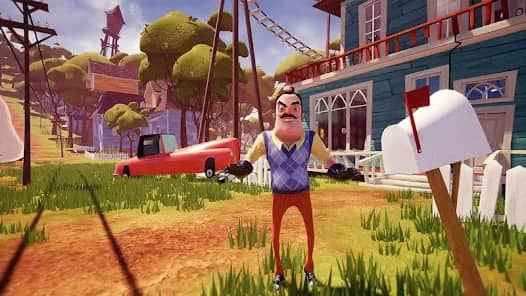
It starts innocently enough. The protagonist is a little boy who trips over a ball to his neighbors on a crowded street. All this while strange noises emanate from the Neighbor’s house. Curiosity gets the better of him, so he tries to peek inside. Something is going on, and all roads clearly lead to the basement. That’s when the mustachioed Neighbor shows up and kicks you off the property. The three-act game of trespassing begins.

The Whimsy and Woes of Visuals and Sound

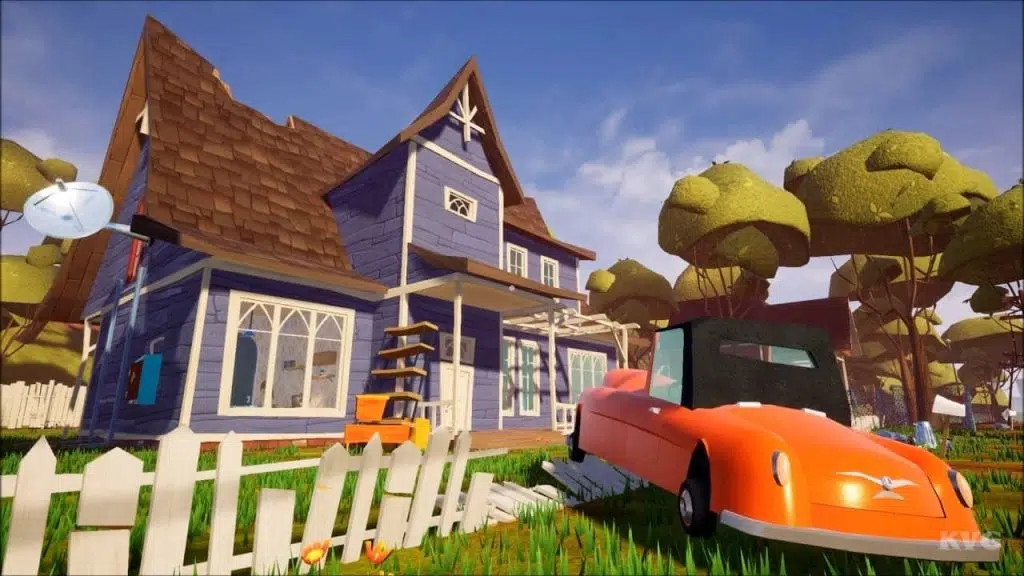
Hello Neighbor’s graphics and sound design attempt to set a whimsical yet eerie tone reminiscent of a child’s distorted nightmare. The game leverages a bright, cartoonish art style that contrasts sharply with the sinister undertones of the gameplay. This visual approach, combined with the ambient sounds and sudden audio cues, is meant to amplify the tension. However, the effectiveness of these elements varies, with some players finding them immersive and others feeling they detract from the overall experience.

From Playful Puzzles to Frustrating Failures

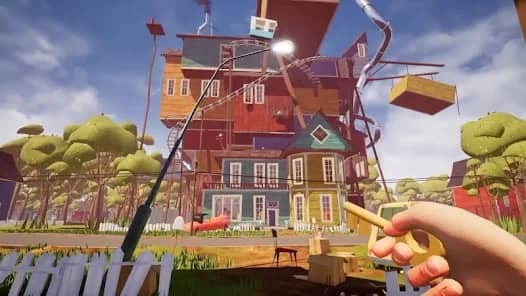
It’s pretty amusing that the authors decided to split the already relatively small game into three even smaller units, which are still about the same thing: getting into the cellar. Starting from the first act, which still seems somewhat believable, the play falls into a powerful abstraction and unremitting frustration in the following ones. The Neighbor’s house is growing, complicating the player’s path to the basement. Since there is nothing in the game to navigate by in any substantial way (other than one’s own memory), the biggest problem becomes returning to where you came from after solving the (not very) logical puzzles.

Intelligent Antagonism or Erratic Engagement?

One significant challenge in Hello Neighbor is the erratic behavior of the AI. While the developers boast about the Neighbor’s intelligence, which is capable of setting traps based on your previous actions, this often results in gameplay that could be more manageable. Players have reported that the Neighbor’s AI can be overly aggressive and oddly oblivious, leading to inconsistent and sometimes frustrating encounters. This inconsistency, combined with the game’s technical issues like bugs and unresponsive controls, can make the gameplay experience feel more like a chore than a thrilling challenge.

I found the paths to the end of the act unintuitive, to say the least, and even resorted to internet help to preserve the rest of my sanity as the time spent on the mind-numbingly stupid puzzles became unbearable. I say this not just because of my own ineptitude but also because of the bugginess. When you have an aggressive neighbor breathing down your neck, and you can’t pull a lever or turn a tap despite frantic pounding on the remote, it’s infuriating.

Neighbor Triggered on Higher Difficulties

Yet escaping from your Neighbor is the most crucial thing in this horror game. The creators have boasted about how intelligent the Neighbor is and how he can react to your behavior with traps and snares to complicate your path to your desired destination. Only part of this is true. The Neighbor likes to be actively involved in the action on higher difficulties. While the player can’t develop any meaningful insight into how the Neighbor operates, he is fine in your case. The chances of mapping his movements are thus close to zero, and you’ll probably get caught out when trying to stage how he moves. If this happens, the Neighbor will learn from his mistakes and your behavior and adapt. There’s nothing worse than a bear trap that foils an otherwise flawless plan. The game returns to the beginning of the level the moment the poor kid is captured by the Neighbor, and you’re off again.

Unfortunately, The silly thing is that the Neighbor often creates stalemates by actively engaging in the game. In fact, if he’s going to bypass your respawn point, and the player won’t even be able to get further into the level, this is an absolutely fundamental design flaw, in my opinion. It’s frustrating and, more importantly, makes it impossible to play. Another interesting feature is the strange interludes that can occur when starting a new act or when the game restarts after an unfortunate capture by a neighbor. The interludes look like normal levels, only smaller. While they again feel original, they are just as absurd as the rest of the game.

The Neighbor behaves completely erratically throughout the game. While cupboards are scattered around the premises to hide in and wait out the hot moments ahead of time, they’re rarely of any real help. Yet it would take so little to make Hello Neighbor a fun game that rewards players for patience, skill, and planning. 

The Promise and Pitfalls of Hello Neighbor

Whenever I write a review of a not-so-good game, I feel terrible for doing the developers wrong. They went into trouble to make something nice. Even with repeated playthroughs and gleaned knowledge, I can’t find an overriding positive about the game. That is, aside from the rather nice stylization, which invited a much more expansive game in a sufficiently varied environment. Like Little Nightmares, it would have benefited from smarter level design, even at the cost of the absence of puzzles, the solutions to which are sometimes almost silly. In fact, if we had just taken the original concept and put it into a scripted world where a little boy is trying to uncover the big secret, it might have turned out a lot better. It’s not for nothing that they say there’s power in simplicity.

So my verdict is that in an appealing package with an interesting concept of the whole work, there is, unfortunately, just a good dose of frustration and a poorly made game. Unfortunately, for a good horror adventure game, you have to look further. Or do developers fix the problems in the sequel Hello Neighbor 2?

Where to Buy Hello Neighbor Game

  1. Steam (PC): Available on Steam for $29.99. The game on Steam offers features like single-player mode, Steam Achievements, and Steam Trading Cards. You can find more details and purchase the game here on Steam.
  2. Epic Games Store (PC): Also priced at $29.99 on the Epic Games Store, where you can earn rewards and potentially get a refund if you’re not satisfied. Explore purchasing options on the Epic Games Store.
  3. Xbox: “Hello Neighbor” costs $29.99 on the Xbox platform and features 4K Ultra HD and Xbox Play Anywhere. Check it out here on Xbox.

  4. PlayStation Store (PS4): It also retails for $29.99 on PlayStation, with a bundle version available at a higher price. Visit the PlayStation Store to purchase or learn more.
DiRT 5’s Dynamic Weather Fuels Adrenaline-Packed Tracks

DiRT 5 - Street Chase

Title: DiRT 5
Developer: Codemasters
Publisher: Codemasters
Released: November 6, 2020
Platforms Available: PlayStation 4, PlayStation 5, Xbox One, Xbox Series X/S, PC Game
Platform Reviewed: PlayStation 4

First Impressions and Gameplay Mechanics

The fifth installment of the DiRT car series – the well-known series from “Codies” always impresses at first glance with nice visuals and action-packed races that are accessible to everyone thanks to the pure arcade driving model. The problem, on the other hand, is a relatively modest career and a relatively poor range of single-player modes, which the developers try to compensate for with more elaborate multiplayer and online options.

The DiRT brand, along with licensed Formula 1 titles, has, over time, become the most crucial series for the racing greasers at Codemasters. The first DiRT is still considered one of the best arcade racing games years later. But “Codies” also reaped success with simulation fans, who were served two DiRTs under the name “Rally” simultaneously. DiRT 5 is even more of an arcade in many ways than the old DiRTs. The driving model is very similar to what we know from TrackMania, the DiRT Showdown spin-off, and the Motorstorm series. The resemblance to Motorstorm is not accidental. Behind the new DiRT is a significant part of the former Evolution studio staff, who moved under Codemasters after parting ways with Sony.

The car’s steering is very responsive and direct, the acceleration is strong, and the use of brakes is less. Despite the initial surprise, I quickly got to grips with the driving model. The controls of the vehicles are not at all difficult to get to grips with quickly, making the game accessible even to players who don’t otherwise play racing games much. The driving is action-packed, fast-paced, and entertained me. I only struggled slightly with the overly responsive controls and extreme acceleration. Still, I made do with just the gamepad, but given the arcade concept of the game, this is fine.

Arcade Spirit and Vehicle Dynamics

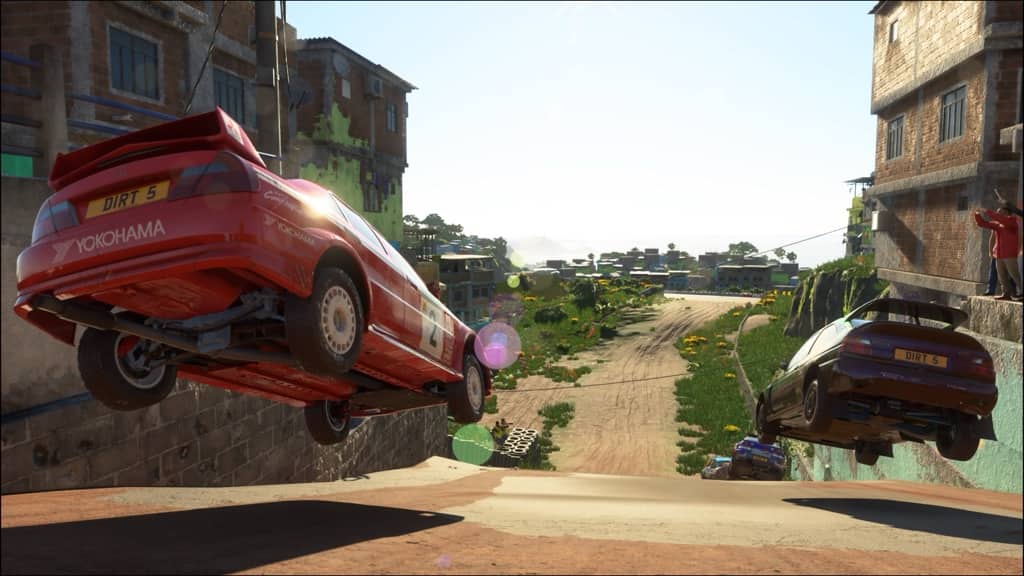
Along with the driving model, the overall physics of the game continues in a pure arcade spirit. This is most noticeable in the collision model. Especially after the start, hard collisions are the order of the day, as even computer-controlled opponents don’t precisely drive with two minds. Collisions, being pushed, being thrown off the track is a standard part of racing. The result is a more action-packed and frantic feel to the gameplay. The feeling of arcade gameplay is also evidenced by only cosmetic damage to the cars without affecting their handling or speed.

Diverse Vehicle Roster and Race Types

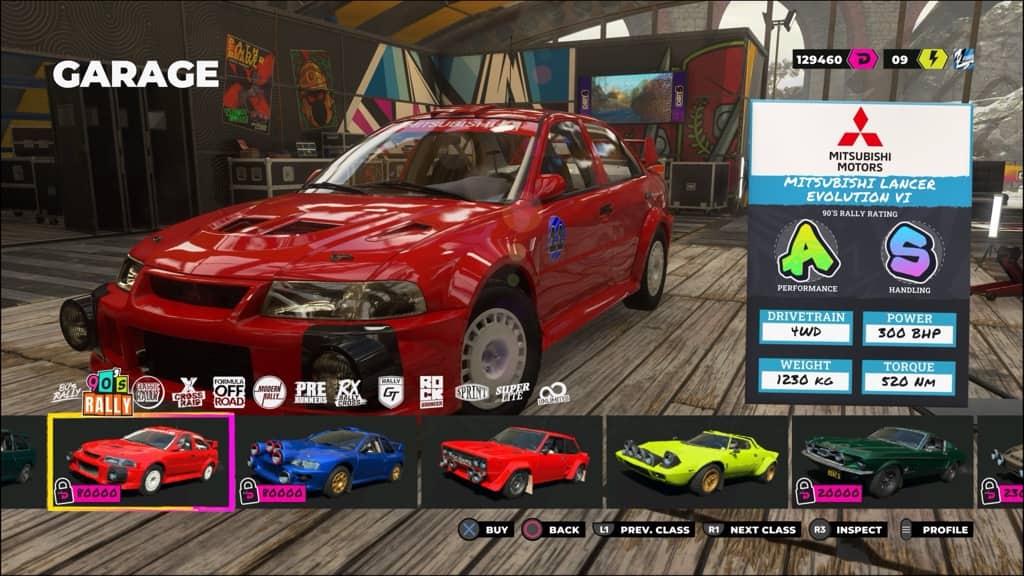
DiRT 5 features around 60 different vehicles divided into more than 10 categories. It’s a varied mix, featuring rally specials from different eras, off-roads familiar from the Dakar Rally, buggies of various sizes, production off-roaders, rallycross cars, and sports cars primarily designed for circuit racing. It combines the second and fourth DiRT cars with more unique vehicles.

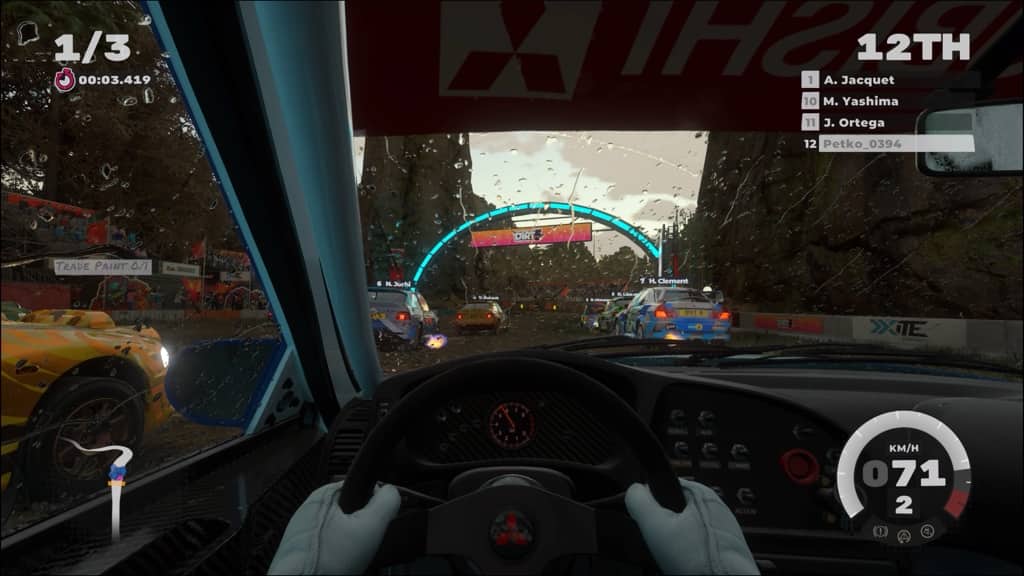
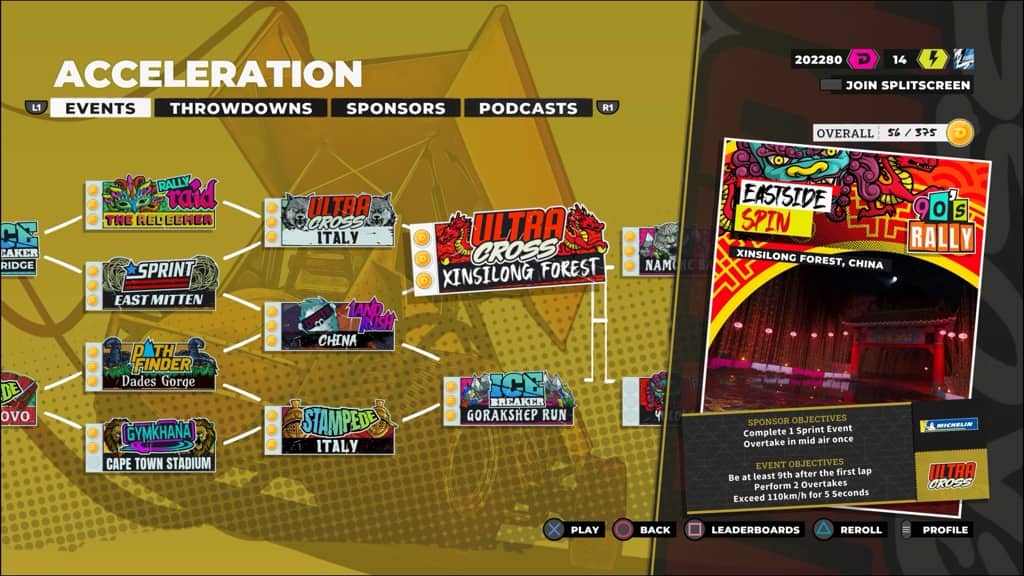
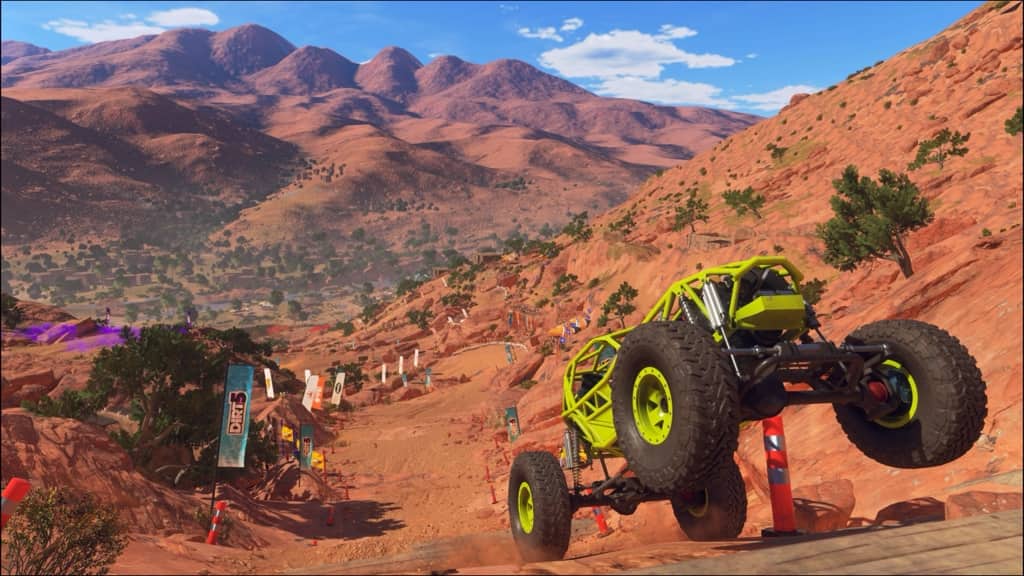
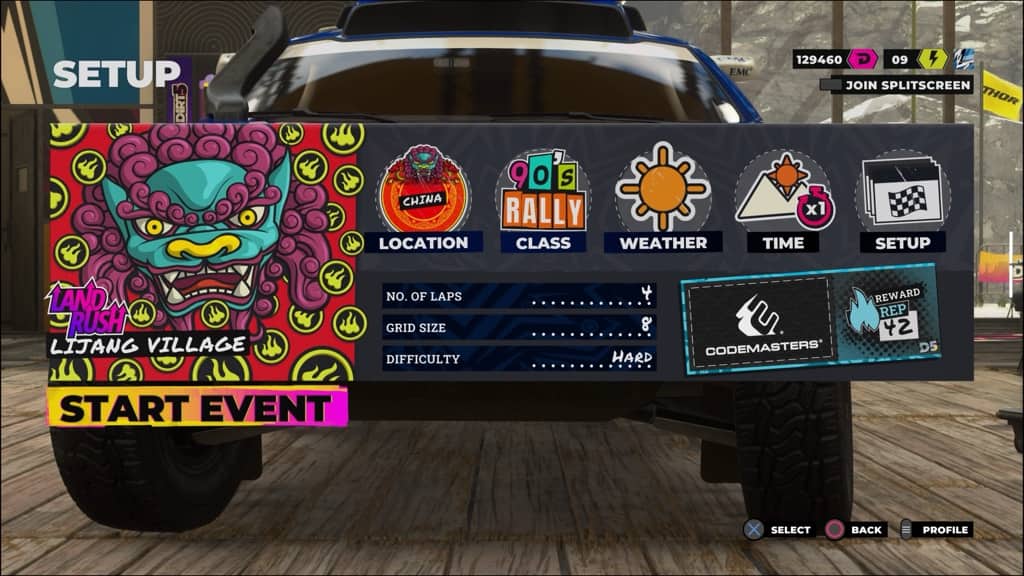
The move towards the arcade, amongst a lot of other things, has made the differences in the behavior of each car relatively small. There is still a noticeable difference between buggies and rally specials or rear-wheel drive-only vehicles, for example. However, within the same class, the differences are almost nil. Most races pit a dozen drivers against each other in a three-lap match. These are short but challenging races lasting only a few minutes each time. Only Pathfinder mode, where you try to drive to the top of a mountain in a unique vehicle, and good old Gymkhana, where you collect points for drifts and acrobatic stunts, break away from this template for a change.

Dynamic Racing Environments

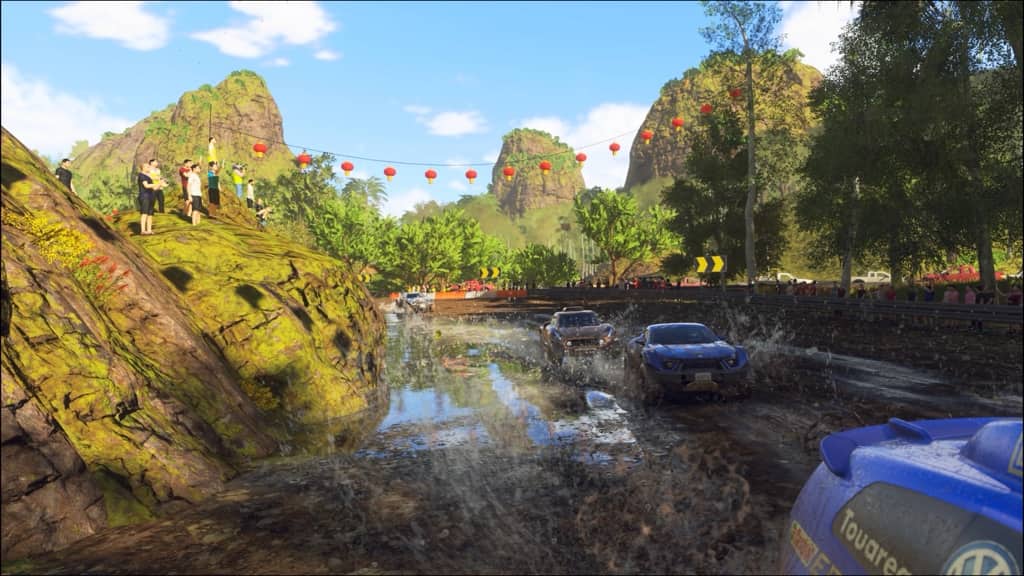
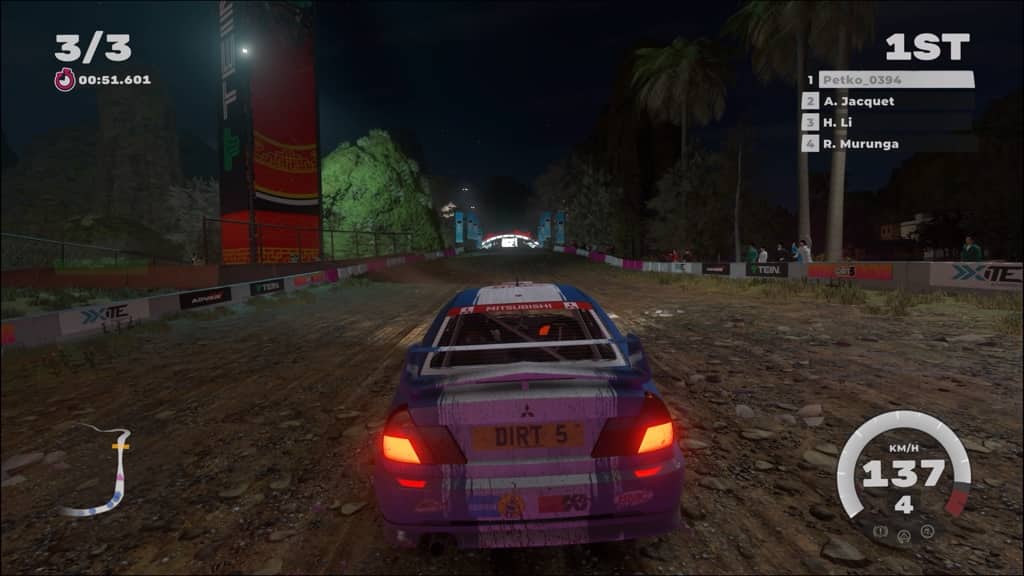
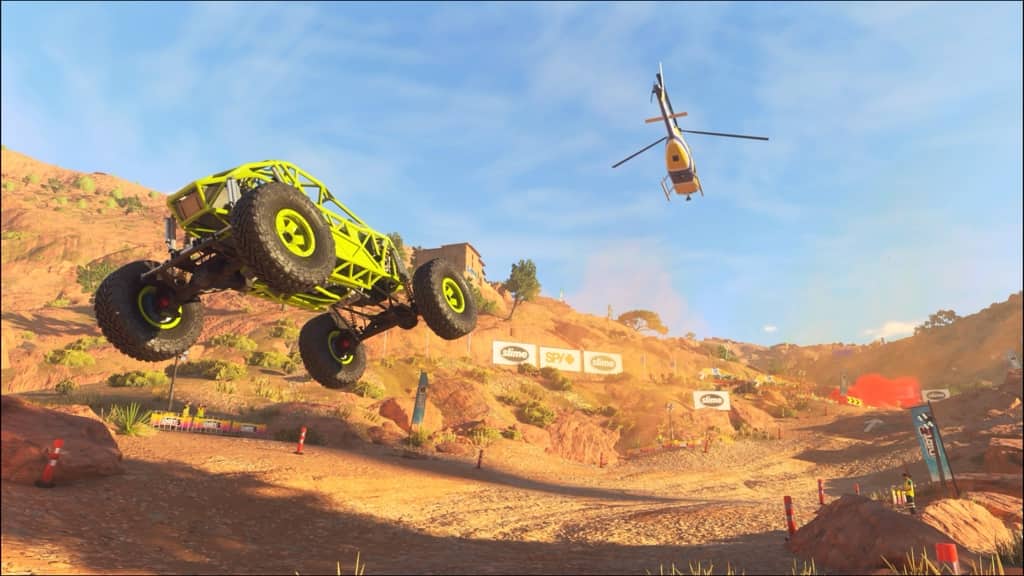
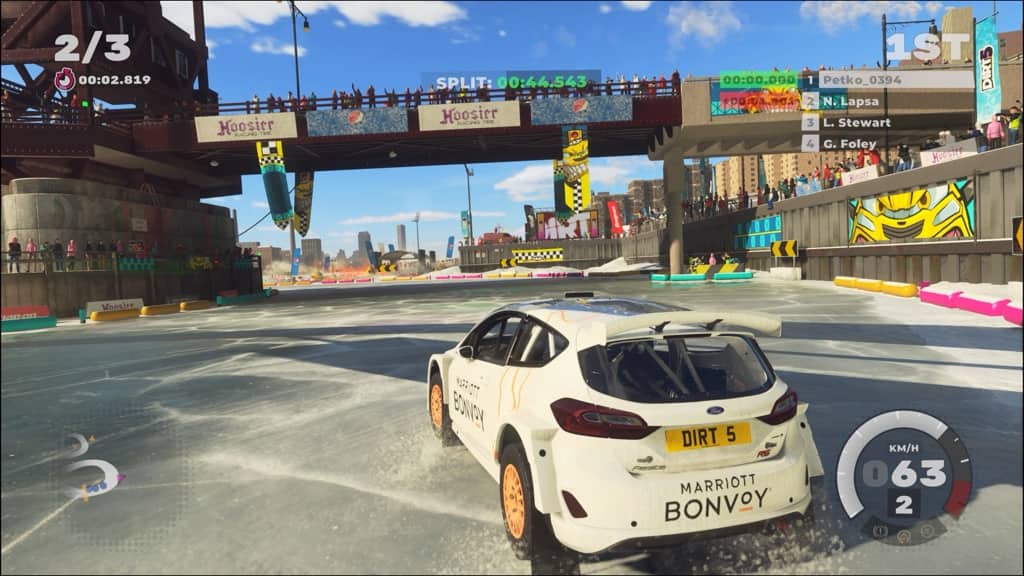
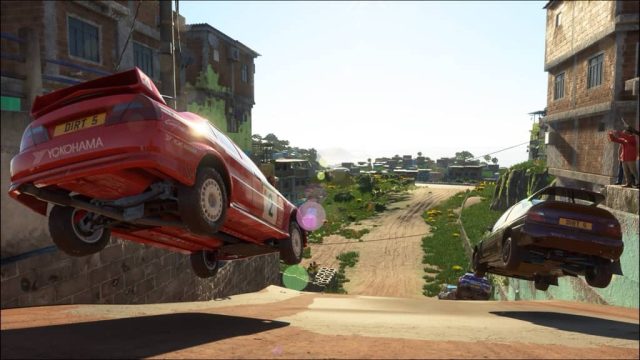
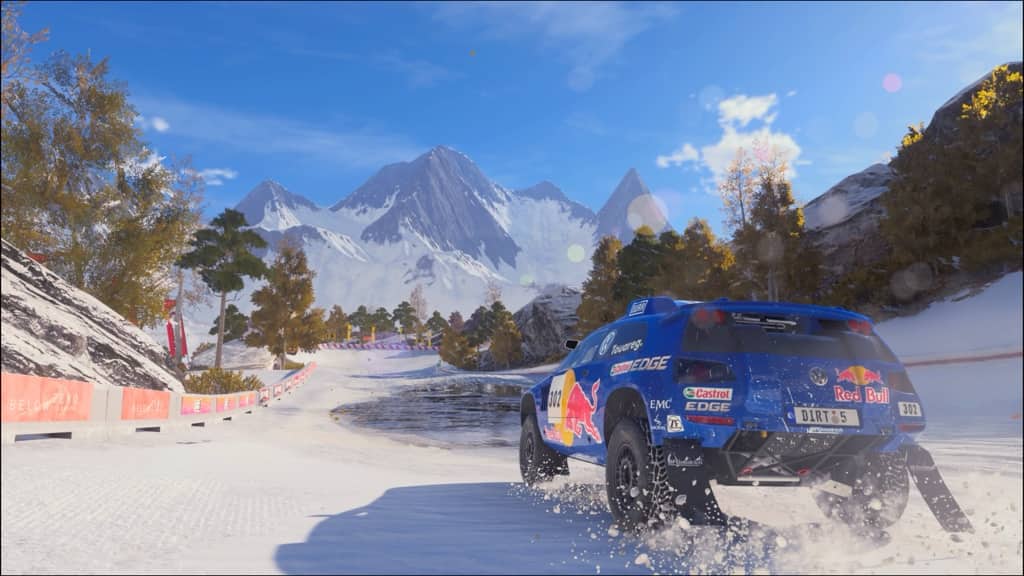
However, the classic rally with Erzettas is sadly missing from the game. The big attraction, however, is the tracks. The races occur in ten locations, including snowy Norway, rainy Brazil, mountainous Nepal, and arid American Arizona. Add up all the tracks and their variations, and you’ll see nearly eighty tracks. The number and variety of locations are very satisfactory. The dynamically changing weather conditions are also another of the many positives. Despite the races’ short duration, they can quickly change the weather, track surface, and time of day. In practice, you can do one lap during the day in sunny weather, another in a torrential downpour or sandstorm, and a third at night.

Audiovisual Impact

We have become accustomed to dynamic weather and time of day changes in racing games. However, they have never happened so quickly and with extreme variations, as in the fifth DiRT. If I had to single out one thing that makes DiRT at least worth trying, it’s the constantly changing conditions during the race. The ubiquitous particle effects of dust, smoke, flying pieces of mud, or falling snow or rain also sell the great atmosphere during the races. Especially in these moments, the game feels like the arrival of a new generation of consoles. In addition to the graphics, the well-crafted sounds and pleasantly listenable soundtrack deserve praise. On the technical side, I didn’t encounter anything serious; minor glitches or bugs were an exception. The only thing that didn’t please me was the occasional frame drops from 60 to about 30 frames per second, which was not entirely pleasant when driving faster or going through a sharp turn with maximum concentration. Still, fortunately, it didn’t happen too often.

Career Mode and Single-Player Content

I was very interested in how the developers would handle the career mode. This has always played an essential role in the DiRT series. Unfortunately, the fifth installment falls short in this aspect. At first glance, the enticing story told by the duo of Troy Baker and Nolan North eventually devolved into merely the often brief commentary and audio dialogue of the two protagonists. As a result, it’s just the occasional humorous or informative passages filling the time between races. It’s certainly nothing that could be called a story.

A much bigger problem, however, is the structure and progression through the career and the number of single-player modes. The career of the fifth DiRT is more than a roster of consecutive and similar races. The feeling of progressing somewhere and opening up new possibilities must be included. You have to reckon that the career offers nothing special apart from the racing itself. You don’t even have to buy a car at the start, as the game gives you one vehicle in each category by the start.

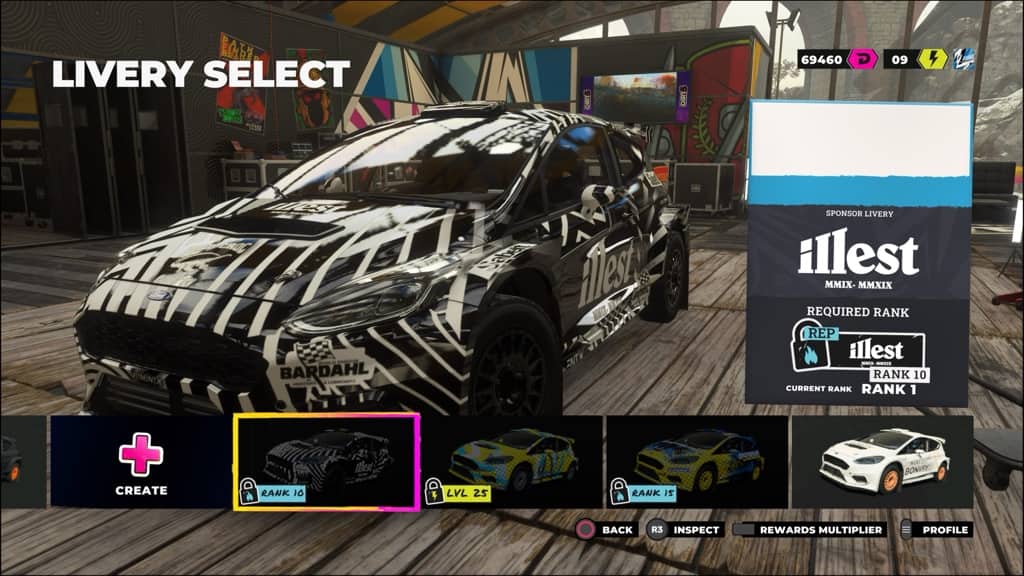
Moreover, the rewards for winning races are high. Soon, thanks to this, you will get considerable money that can only be spent on stickers and other cars. In both cases, this is a relatively small incentive. As I mentioned, the cars behave almost identically within their category. So there’s not much reason to replace the old ones with new ones. You won’t see a significant reward or deeper motivation for your efforts; race wins in your career. Vehicle upgrade options could be better. You can’t modify the performance of the cars. From a visual point of view, only stickers and body color combinations are offered. You can also remember team management. DiRT 5 replicates the all-too-easy career of recent GRIDs. We should stick purely to the single-player modes. In that case, only fast-paced racing or time trials are available apart from a truncated career. I expect more from such an ambitious game.

Multiplayer and Community Features

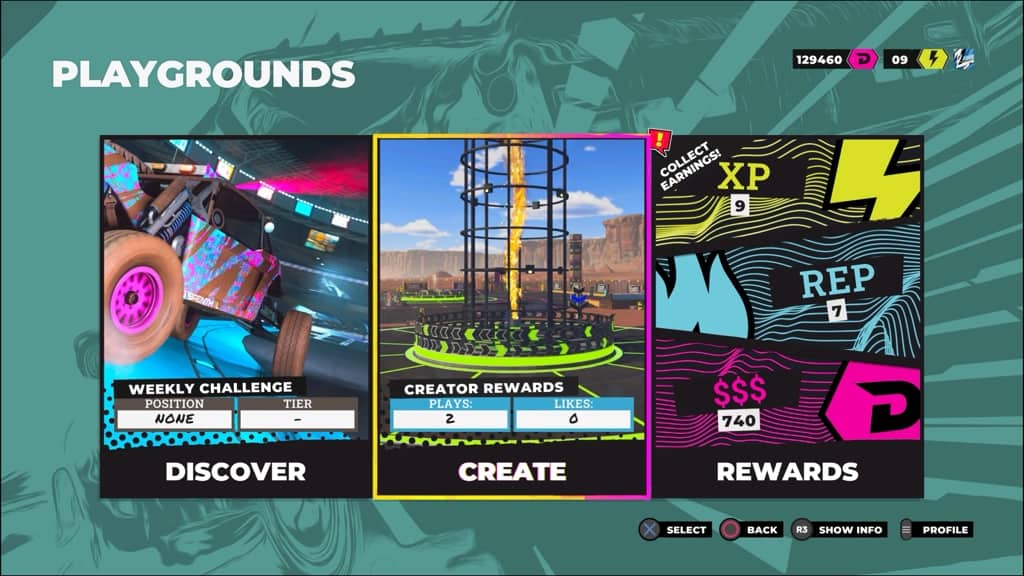
DiRT tries to compensate for this lack with multiplayer. For one thing, it features a split-screen for up to 4 players. Split-screen is available in both fast-paced races and careers. The online component provides classic races supplemented by special party modes Vampire, King, and Transporter. In Vampire, one player becomes a vampire and hunts down others who escape. In King mode, participants try to win the crown for as long as possible. In the final Transporter mode, the goal is to move as many items as possible to a designated location. Completely separate is the PlayGrounds mode. You can create and then share your own tracks. Players from all over the world can then run different times on them or earn points and rankings. You can make tracks for Gymkhana, time trial with checkpoints, or Smash Attack mode, where it is important to hit the desired targets accurately. The editor is quite clear and easy to navigate and control. Creating exciting and varied tracks should be fine. Here, too, you can see some similarities with the TrackMania brand, for which the track editor is an essential element. Ironically, multiplayer is the aspect of the game that contains richer content than single-player. While the single-player game relies on a weak career mode, the multiplayer brings split-screen, several online modes, and a track editor.

Final Lap

DiRT 5 is a pure arcade racing game for many players. The driving model is catchy, easy to learn, and fun despite the primitive physics. However, the leading ace up the game’s sleeve is the varied tracks with rapidly changing conditions, further enhanced by the fantastic audiovisual design. The biggest problem, on the other hand, is the weak career, offering only a series of consecutive and basically identical races. So, if you prefer a single-player, the fifth DiRT will offer little content and game modes. On the other hand, fans of multiplayer, community editors, and various online features will have plenty to keep them busy.

Where to Buy DiRT 5

Ready to hit the tracks? Purchase DiRT 5 on any of these platforms:

  • Steam: Jump into high-octane racing with DiRT 5 on Steam.
  • PlayStation Store: Rev your engines with DiRT 5 on the PlayStation Store.
  • Microsoft Store: Experience the thrill of DiRT 5 on the Microsoft Store.