If you’ve been following the rumors about Epic’s holiday giveaways, you’ve probably seen that one specific list everywhere. It promised Jurassic World Evolution 2 for today and ended with a massive Red Dead Redemption 2 finale.
I’ll admit, I was skeptical. Those lists usually pop up right after the first big game is announced to gain easy traction, and today proved it. Instead of dinosaurs, we got Jotunnslayer: Hordes of Hel.
The “leak” is officially debunked. It’s back to the guessing game, which, honestly, is more interesting than a fake spreadsheet.
Jotunnslayer Hordes of Hell Free on Epic Store
What is Jotunnslayer: Hordes of Hel?
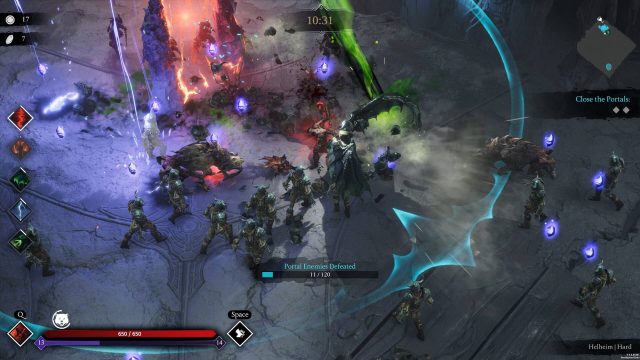
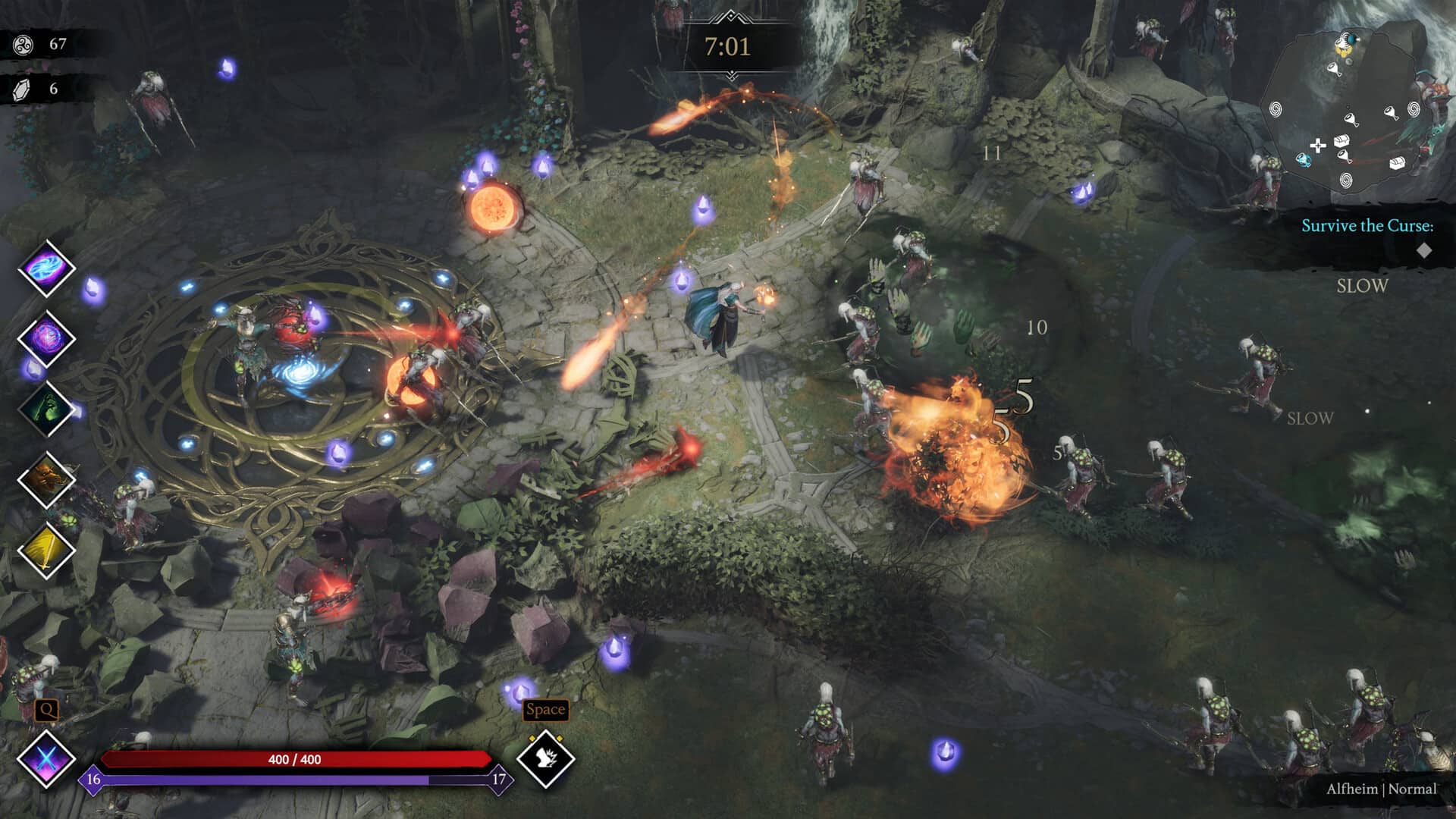
If you haven’t claimed it yet, you should. It’s a roguelike horde survival game (think Vampire Survivors or Halls of Torment) but with a much higher fidelity 3D look and a heavy Norse mythology theme.
The Core Loop:
Pick a Hero: You choose from a roster of cursed warriors, each with unique base stats and weapons.
Survive the Swarm: You’re dropped into realms like Helheim or Niflheim. Enemies come at you in waves, and you have to kite them while your abilities auto-fire.
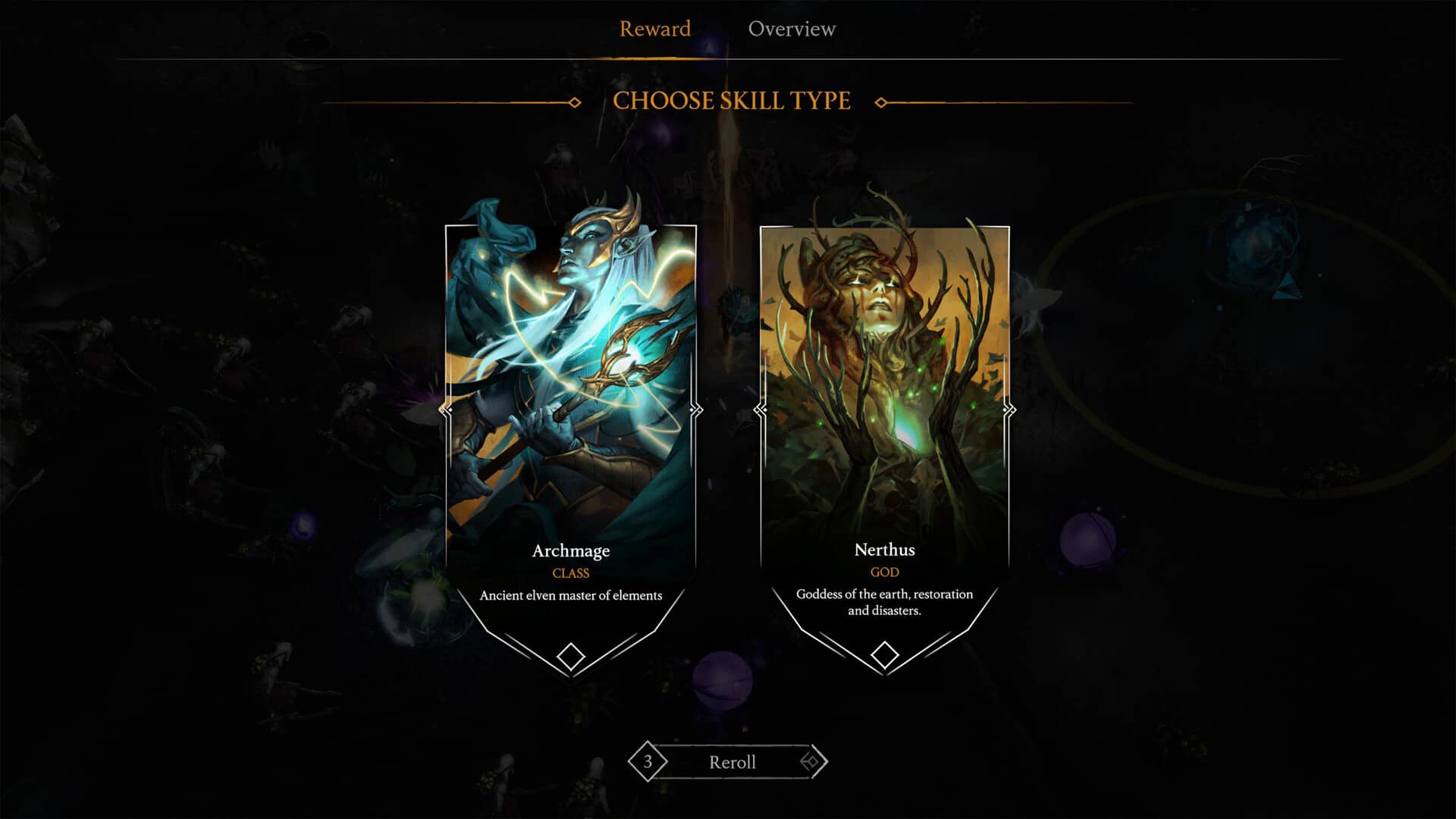
Divine Blessings: As you level up during a run, you pick “Blessings” from Norse gods. Thor gives you chain lightning, Loki adds poison/tricks, and Skadi handles the frost.
Meta-Progression: Even when you die (and you will), you earn resources to permanently upgrade your stats and unlock new perks for the next run.
Why It’s Worth the Download
Unlike some of the simpler games in this genre, Jotunnslayer actually has objective-based missions during the runs—like closing portals or collecting items—rather than just running out a timer. The boss fights are also more tactical than your average “bullet heaven” game.
It normally goes for around $15, so getting it for free right now is a solid deal for anyone who likes “just one more run” gameplay.
Jotunnslayer Hordes of Hel- Choose your skill type
The New Reality
With the fake list out of the way, we’re back to watching the wrapping paper teasers. Whoever made that list was clearly just chasing clicks. From here on out, don’t trust any “confirmed” leaks you see on Reddit or Twitter—Epic is clearly keeping their actual lineup under wraps.
Jotunnslayer: Hordes of Hel is free to claim until tomorrow December 19 at 11:00 AM ET.
Hogwarth Legacy - Harry Potter Game for free on Epic store
Estimated reading time: 3 minutes
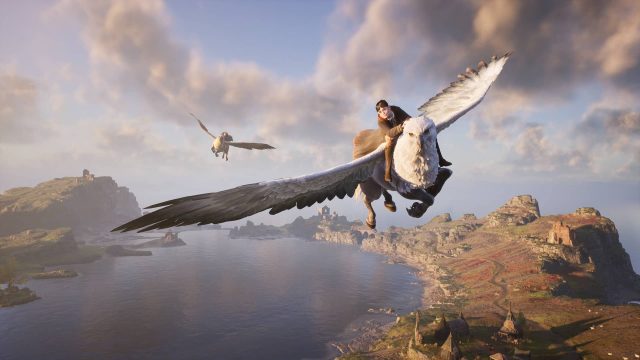
PC gamers, take note: Epic Games has kicked off its annual Holiday Sale with a stunning move, offering the full base version of Hogwarts Legacy for free to claim this week. This massive AAA title, which normally retails for $59.99, can be added permanently to your library at no cost.
This unexpected gift is available for a limited time, running from its announcement until Thursday, December 18th, 11 AM ET. If you’ve been waiting for the optimal moment to jump into the Wizarding World, this is it.
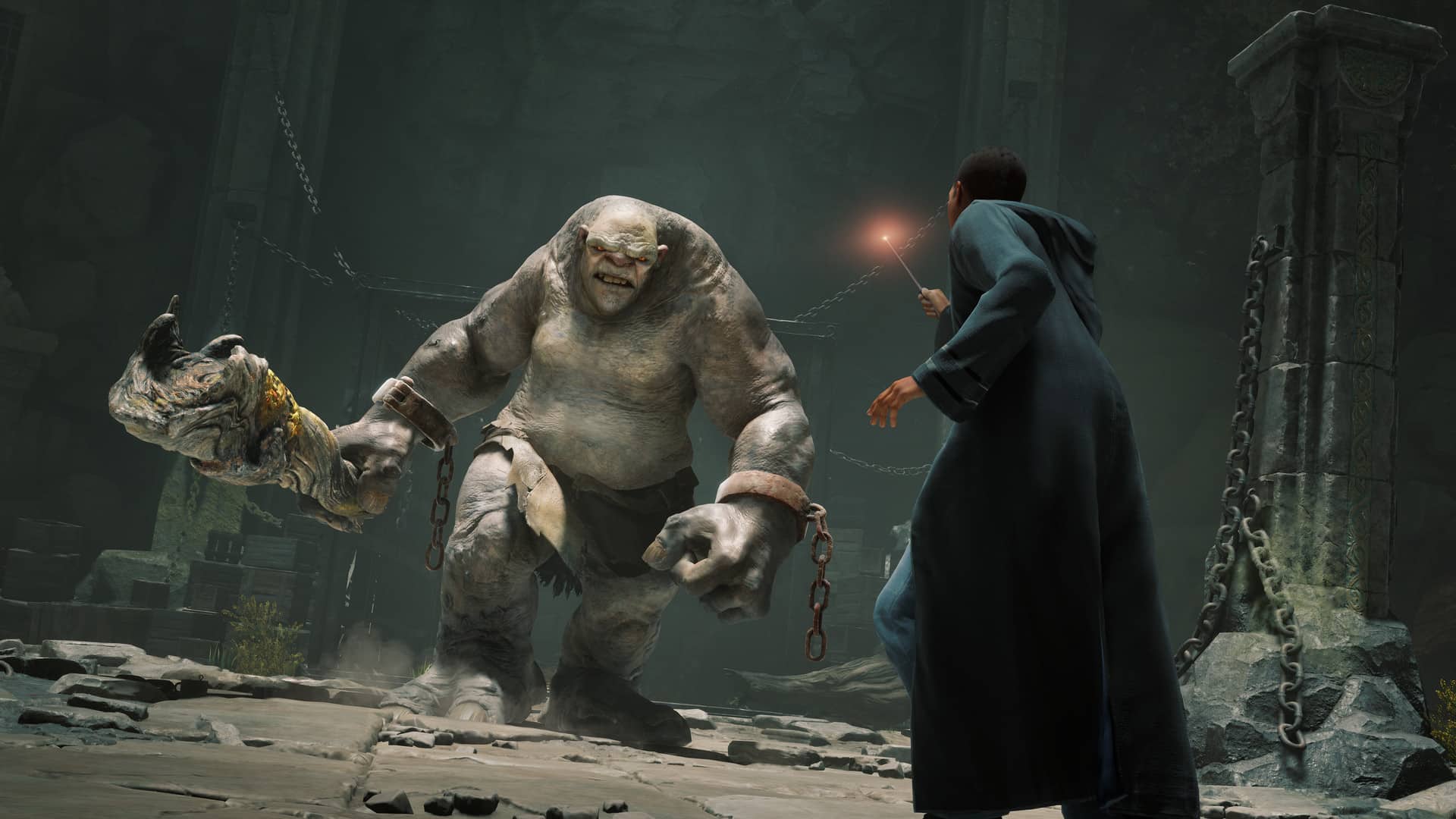
Hogwarth Legacy – Fighting troll
The Wizarding World ARPG
Developed by Avalanche Software, Hogwarts Legacy is an open-world action RPG set in the 1800s, long before the events of the famous book series. This means you get to experience an entirely new era of the magical school while still exploring familiar grounds.
As a late enrollee to the fifth year at Hogwarts, you create your own witch or wizard and define your own legacy. Players will:
Learn Spells and Potions: Attend classes, master a vast array of offensive and defensive magic, and mix essential concoctions.
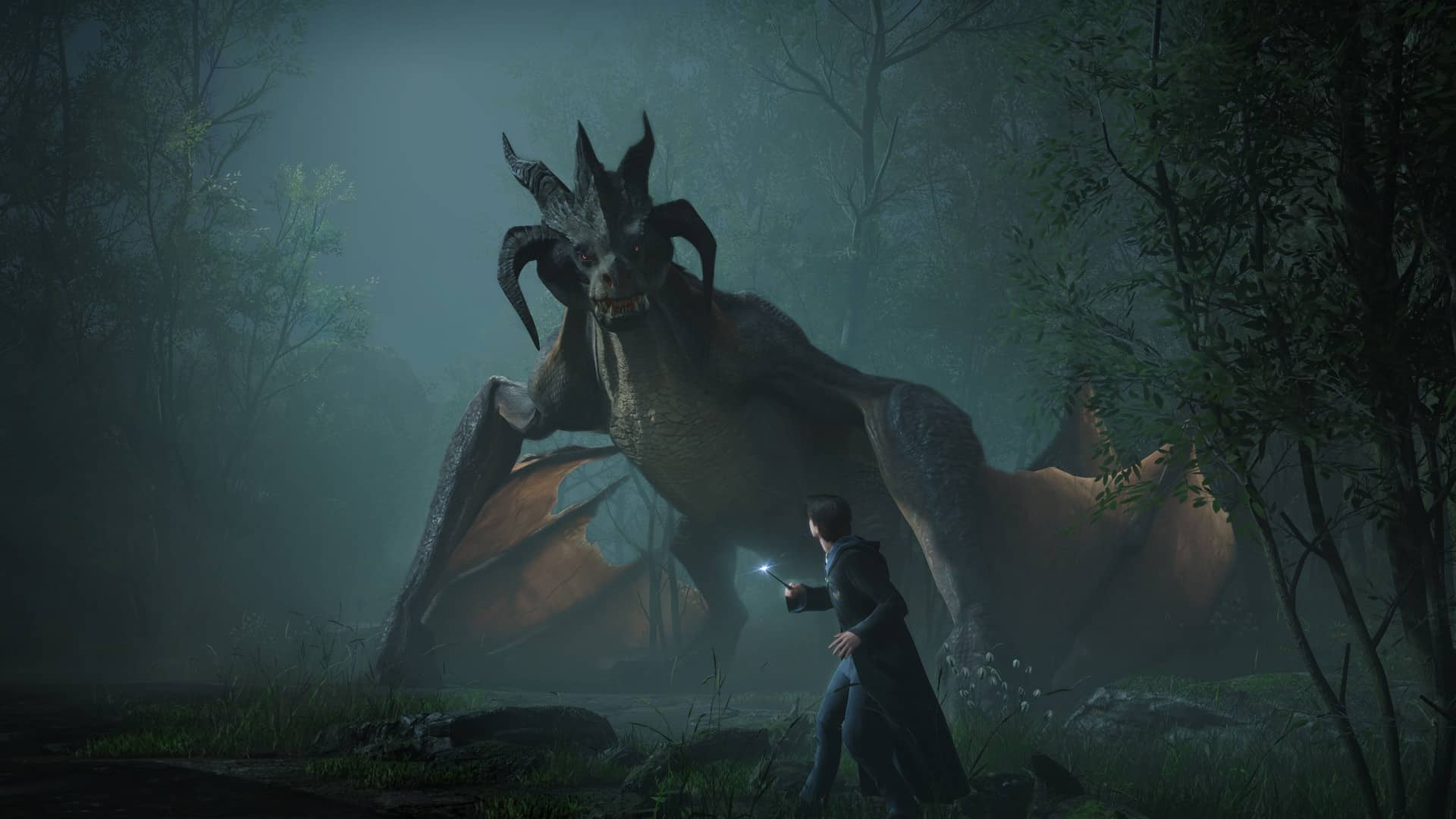
Explore a Massive World: Beyond the halls of Hogwarts, explore the Forbidden Forest, Hogsmeade Village, and the surrounding Highlands.
Uncover Ancient Secrets: Dive into a compelling original storyline that sees your character holding the key to an ancient secret tied to a dangerous Goblin Rebellion.
This title allows for unparalleled immersion, letting you sort into your preferred House (Gryffindor, Slytherin, Hufflepuff, or Ravenclaw) and make choices that determine your moral path—a truly expansive role-playing experience for any fantasy enthusiast.
Hogwarth Legacy – Fighting dragon
Pro Tip: Grab a Free Fortnite Cosmetic
As an added bonus for the Epic ecosystem user, playing at least two hours of Hogwarts Legacybefore the December 18th deadline will automatically earn you the Chocolate Frog Back Bling cosmetic in Fortnite. It’s a sweet piece of enchanted flair to wear on the island while you work on your magical studies.
Don’t let this massive giveaway pass you by. Claim your copy before the offer expires next week.
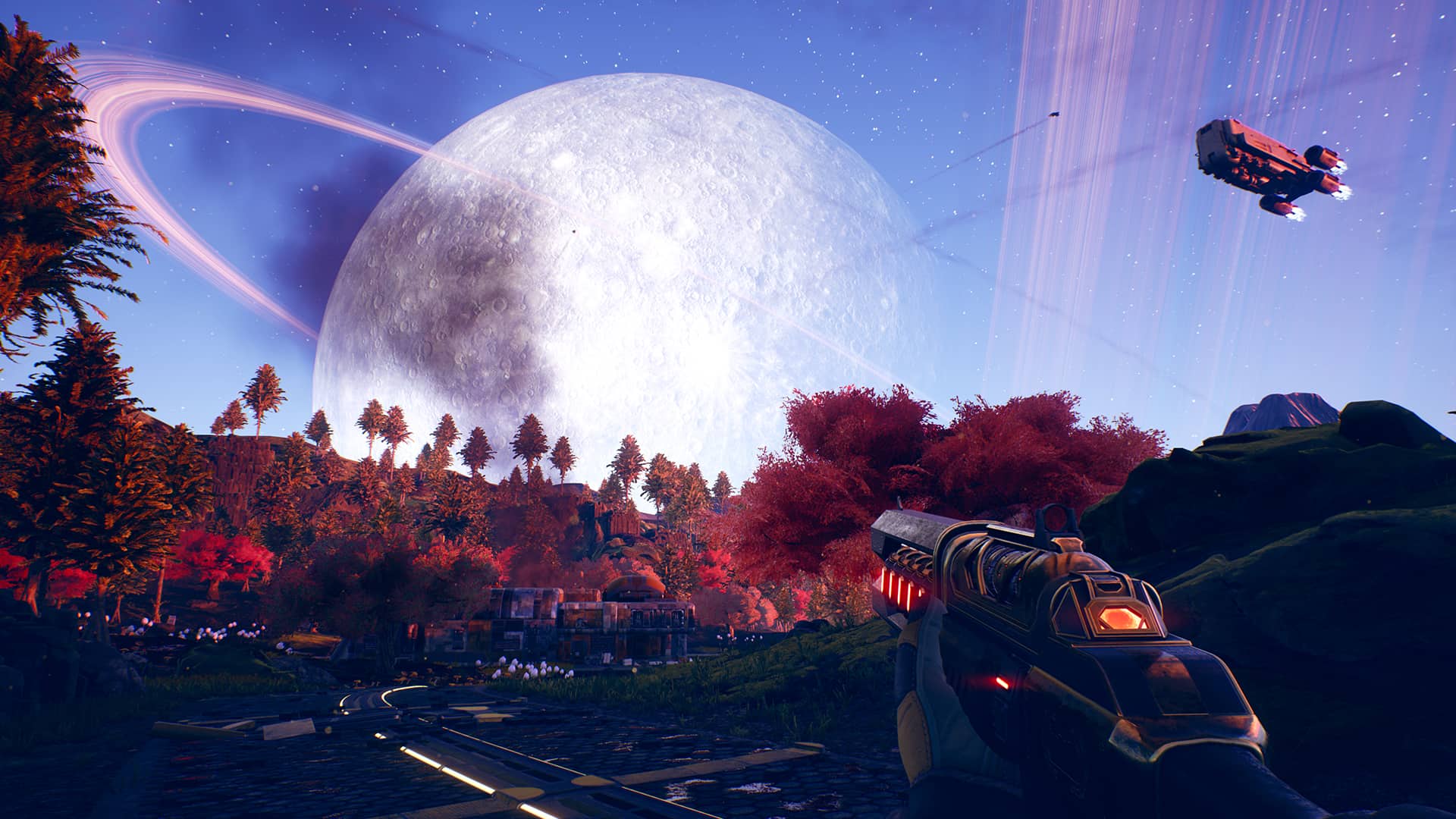
I came into The Outer Worlds 2 as a big fan of the first game, expecting a significant evolution or even a small revolution. What I found is mostly refinement rather than radical change. The game is undeniably prettier than its predecessor: graphics are sharper, lighting is richer, materials feel more detailed, and sound design is excellent.
The Outer Worlds 2 – Power of rift
All told, The Outer Worlds 2 feels like a “B-Movie” blockbuster. It doesn’t try to revolutionize the genre; it tries to perfect a specific 2010-era style of RPG design using 2025 technology. It sharpens what worked in the first game without reinventing the wheel.
World Building & Exploration: The “Anti-Starfield” Approach
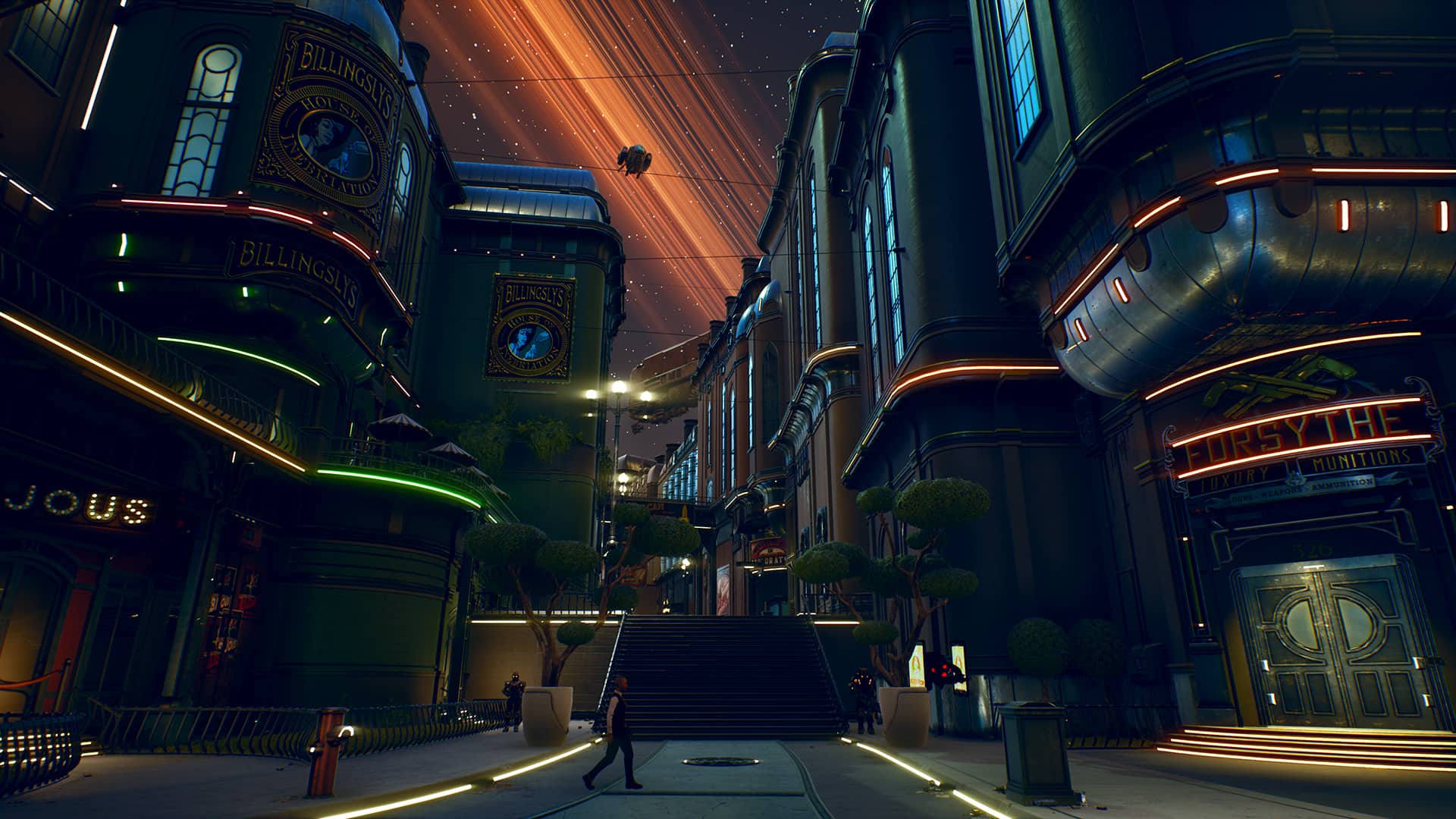
The locations in Outer Worlds 2 are very distinct from each other, both visually and in terms of exploration opportunities. You travel to planets like the lush and vibrant Eden, the harsh volcanic world Dorado, the icy and strategic Cloister, and the industrialized hub of Praetor. Each area feels unique, with diverse landscapes, enemy types, and environmental details.
There is a very deliberate design choice here that I grew to appreciate: the game effectively rejects the post-Starfield trend of procedural generation and infinite planets. It sticks to the “Hub and Spoke” design (segmented zones). This is a victory for lovers of “hand-crafted” worlds. In an era of infinite, empty content, TOW2 feels remarkably dense. Every terminal, trash can, and NPC placement in the Arcadia system feels intentional. The “crystalline planet” showcased in the mid-game is a masterclass in level design that guides you without invisible walls—something procedural generation simply cannot replicate.
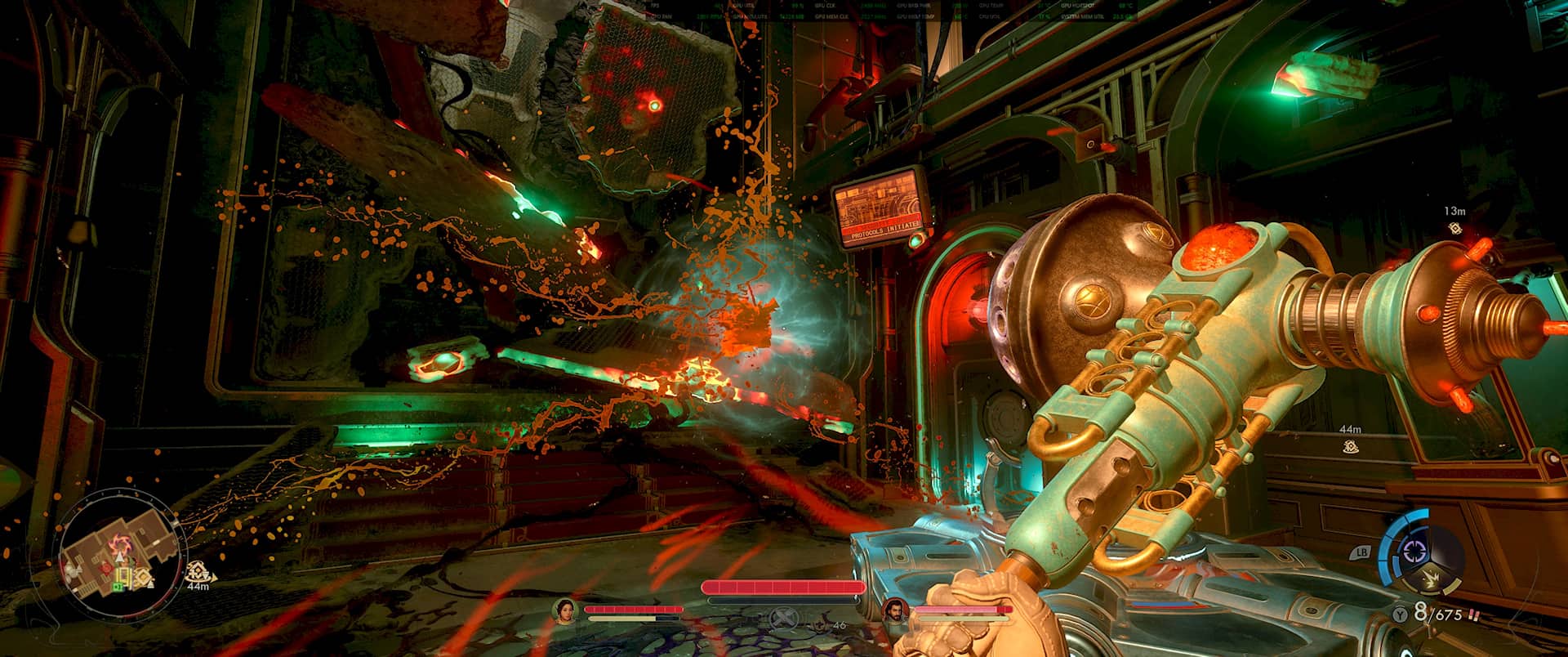
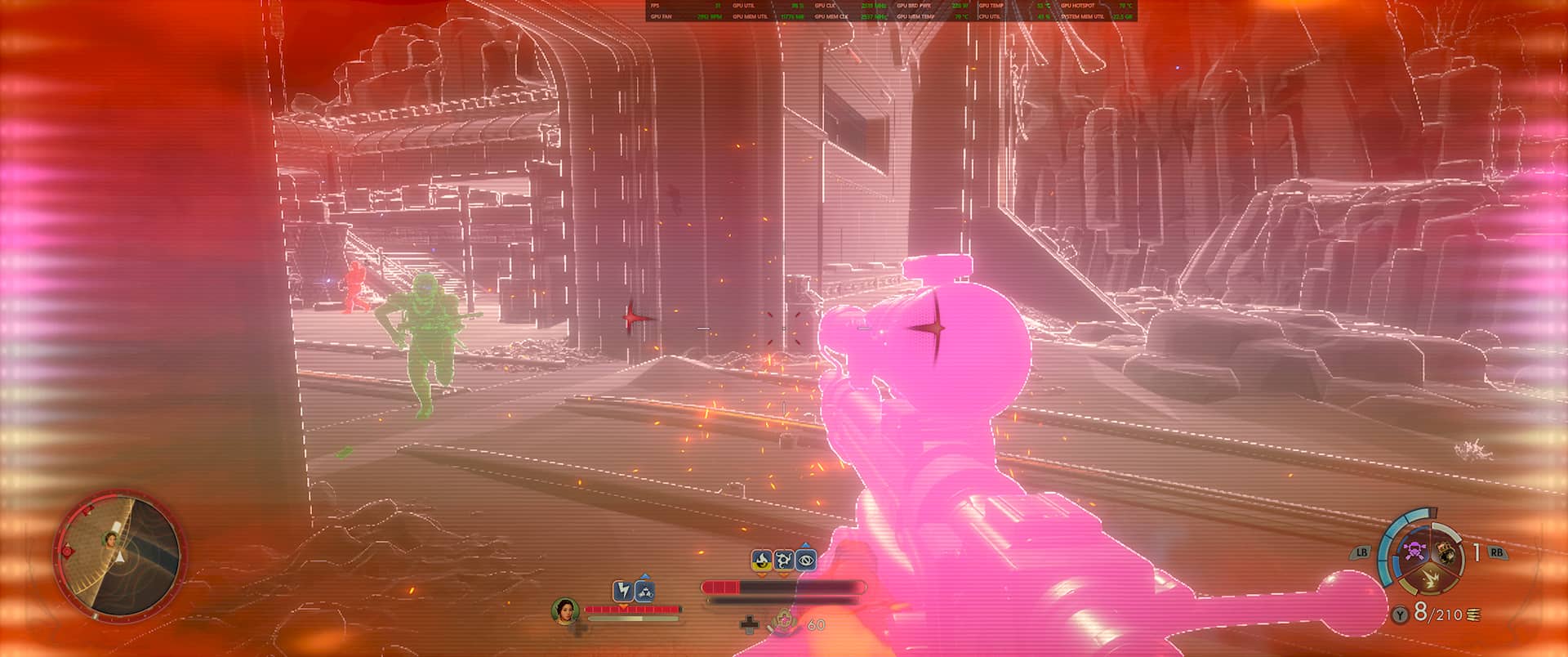
The Outer Worlds 2 – Another module is N-Ray exposing cable puzzle and enemy weakspots
Exploration is rewarding: hidden tunnels, shafts, lockpicking spots, and hacking opportunities encourage you to look around. That said, the story often pushes you forward, and sometimes I let it guide my path rather than exploring every nook and cranny. Even so, moving through these locations gave a strong sense of traveling across a lived-in galaxy, and the environmental variety helps keep the gameplay visually fresh.
However, I have to be critical about the environmental immersion. While visually the game is appealing, it lacks the depth and realism I expect from modern open-world RPGs. Interacting with the environment feels sterile: walking on surfaces, wading into water, or shooting into liquids produces no real visual feedback or consequences. Unlike games like Red Dead Redemption 2, where every interaction with the environment is detailed—footprints in mud, water splashes, debris reacting to bullets—Outer Worlds 2 often feels static. This makes the world less immersive than it could have been. These tiny details might seem minor, but they significantly affect how alive the environments feel. It’s something almost every YouTuber and reviewer notices, and honestly, it’s a big missed opportunity. Rockstar is famous for this kind of meticulous environmental realism, and Obsidian, while strong in storytelling and RPG systems, doesn’t emphasize these micro-details.
Narrative & Writing: Satire, Influence, and Companions
The story is easily the strongest part of the game. From the start, I was engaged by the mysteries and the choices presented to me. The narrative unfolds in a way that keeps you wanting to follow leads, uncover secrets, and see the consequences of your actions. Decisions have a subtle butterfly effect that can change outcomes in interesting ways.
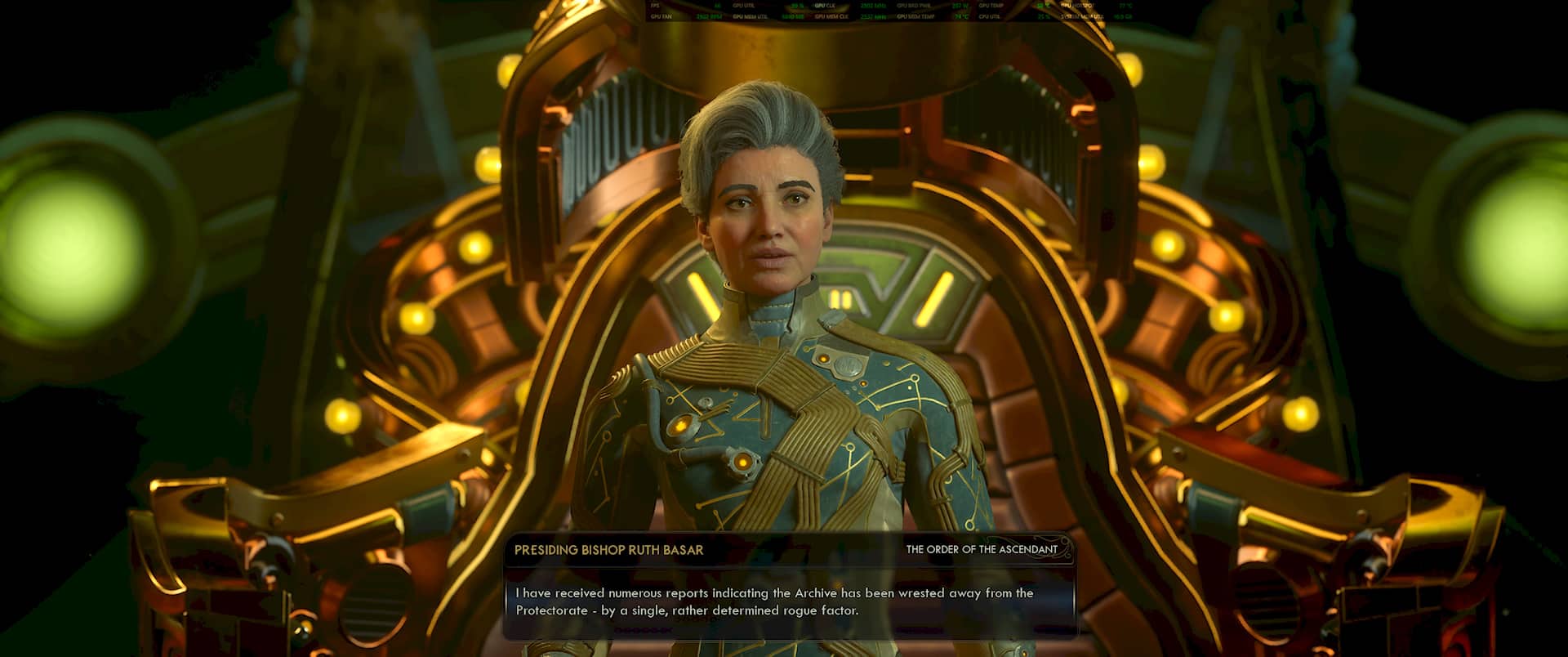
The Outer Worlds 2 – Presiding Bishop Ruth Basar leader of the Order faction
You can feel the influence of original creator Tim Cain here, but also the friction of “Microsoft Polish.” The game feels safer than New Vegas. It lets you be a jerk, but it rarely lets you be truly monstrous in a way that breaks the game world. It feels like a “Theme Park” RPG rather than a “Sandbox” RPG; polished, but lacking that jagged, chaotic edge where you could kill an essential NPC and the game would just deal with it.
The pace of the story is well-handled: early exploration is slower and more investigative, then action ramps up as you progress, with situational puzzles and decisions keeping things dynamic. There is a lot of dialogue—sometimes I even found myself skipping lines toward the end—but the writing remains compelling, and humor is sprinkled in effectively. Different factions, philosophies, and corporate agendas (from the Protectorate to the philosophical Order of the Ascendant, capitalist corporations, and cults) make the universe feel layered.
I did feel a bit of “Satire Fatigue” at times. The “Corporations are bad/stupid” humor was fresh in 2019, but hearing an NPC scream about “Auntie’s Choice” profit margins for the 50th time yields diminishing returns. While some jokes and references repeat, overall, the tone keeps things lively and the humor lands often enough to be enjoyable.
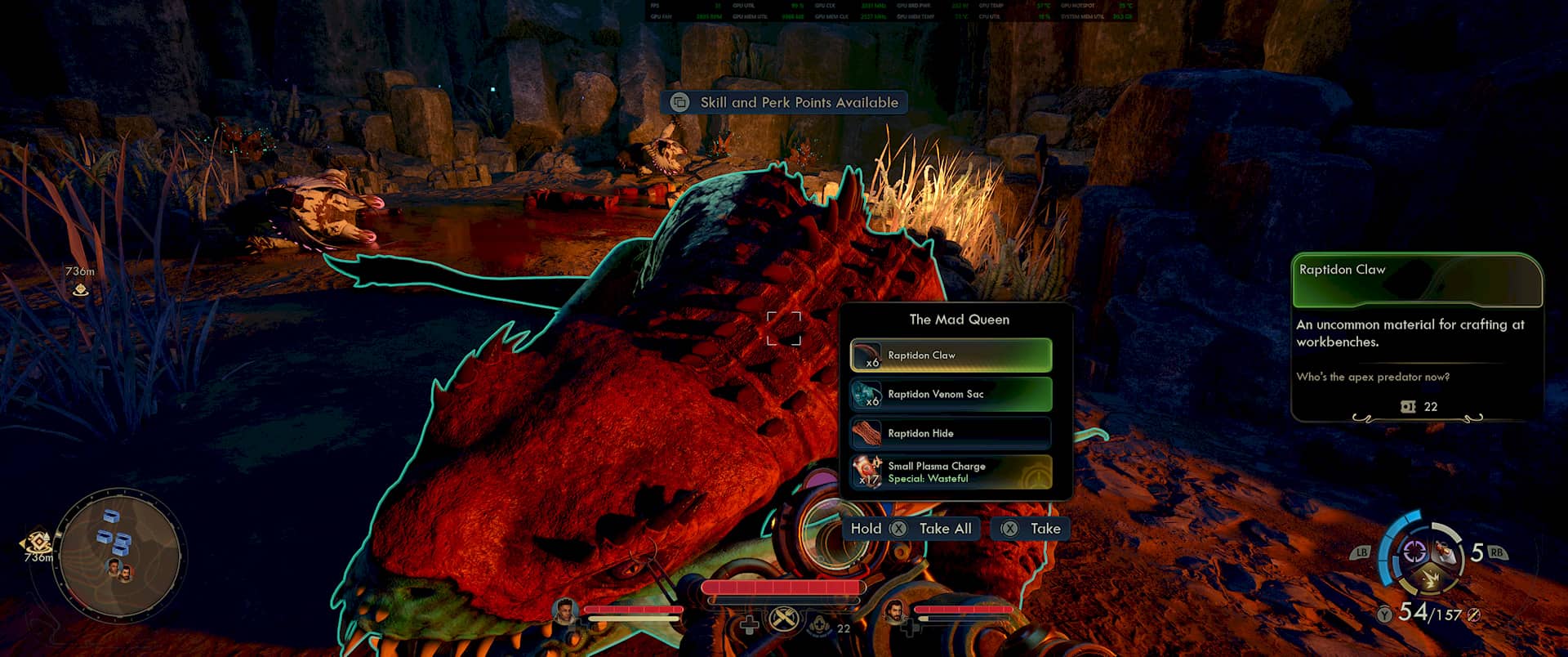
The Outer Worlds 2 – The Mad Queen Raption is down , now looting
The Companions—Niles, VALERIE, Inez, Aza, Tristan, and Marisol—save the tone. Companions in this game are well-crafted and have more depth than I initially expected. Each has a distinct personality, backstory, and questline. The writing for the crew has pivoted nicely from the first game. It feels less about them being victims of capitalism and more about how they find meaning despite it. The crew feels more like a found family and less like walking billboards for world-building. I liked them all, though I didn’t feel quite as emotionally attached to any of them as I did to Parvati in the first game. Still, their storylines are satisfying, and you can play a lot with each to conclude their personal arcs, which adds replayability.
Gameplay Loops: Streamlining the Experience
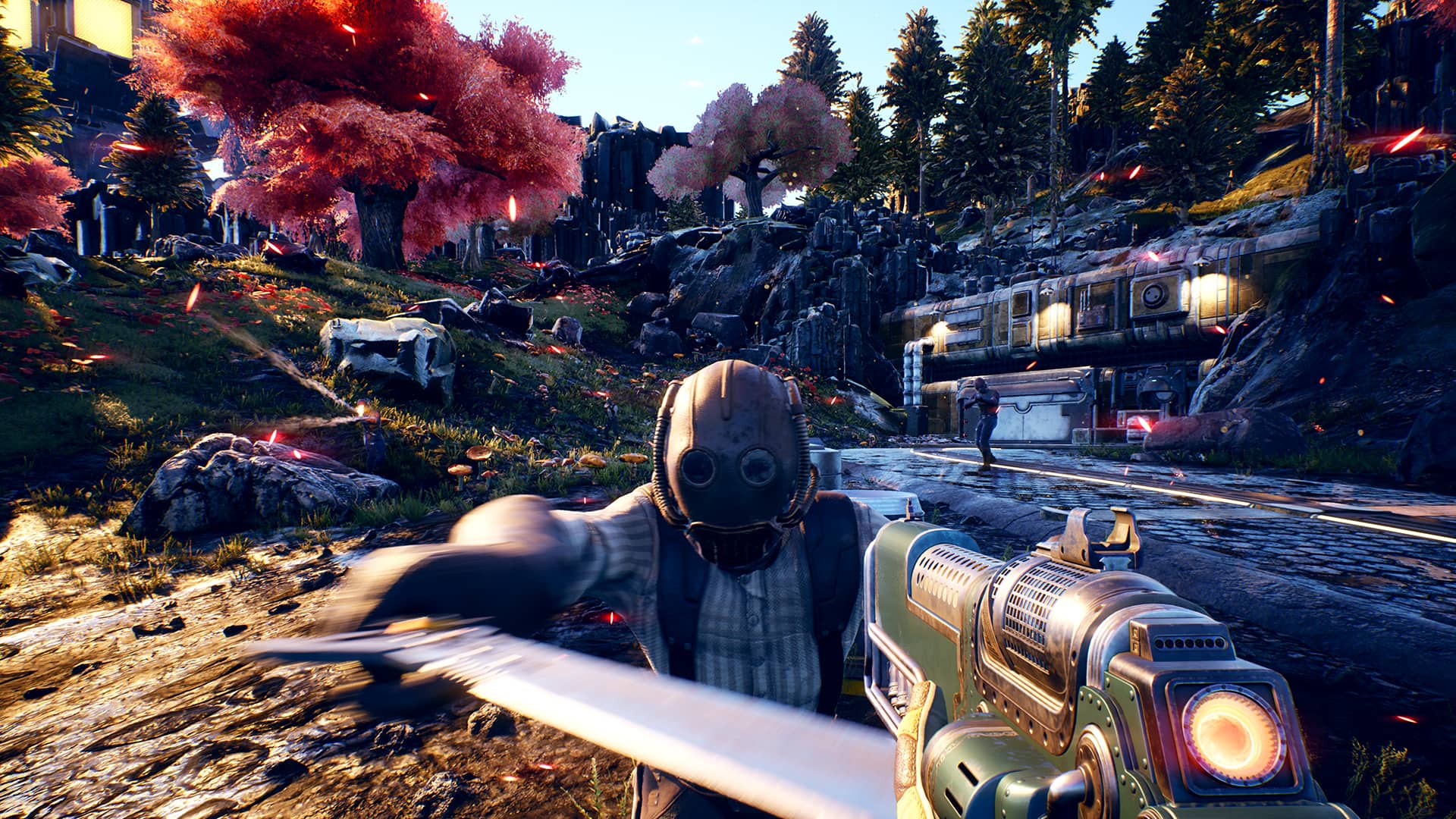
Gameplay mechanics feel very familiar, which can be both comforting and disappointing. Stealth is possible, but not especially deep; pickpocketing can make things easier, but it’s not revolutionary. Combat is enjoyable, with solid pacing, satisfying gunplay, and useful gadgets like the N-Ray to expose weak points.
A major shift that casual players might miss is the removal of base Attributes (Strength, Intelligence, etc.) in favor of a pure Skill/Perk system. Purists might hate this, but it actually fixed the “Jack of All Trades” problem from the first game where high Intelligence buffed too many things. Here, you have to commit. For example, the new “Shadow Build” viability—using specific perks like Ghost and Sleight of Hand—allows for a genuine stealth run that wasn’t fully possible before.
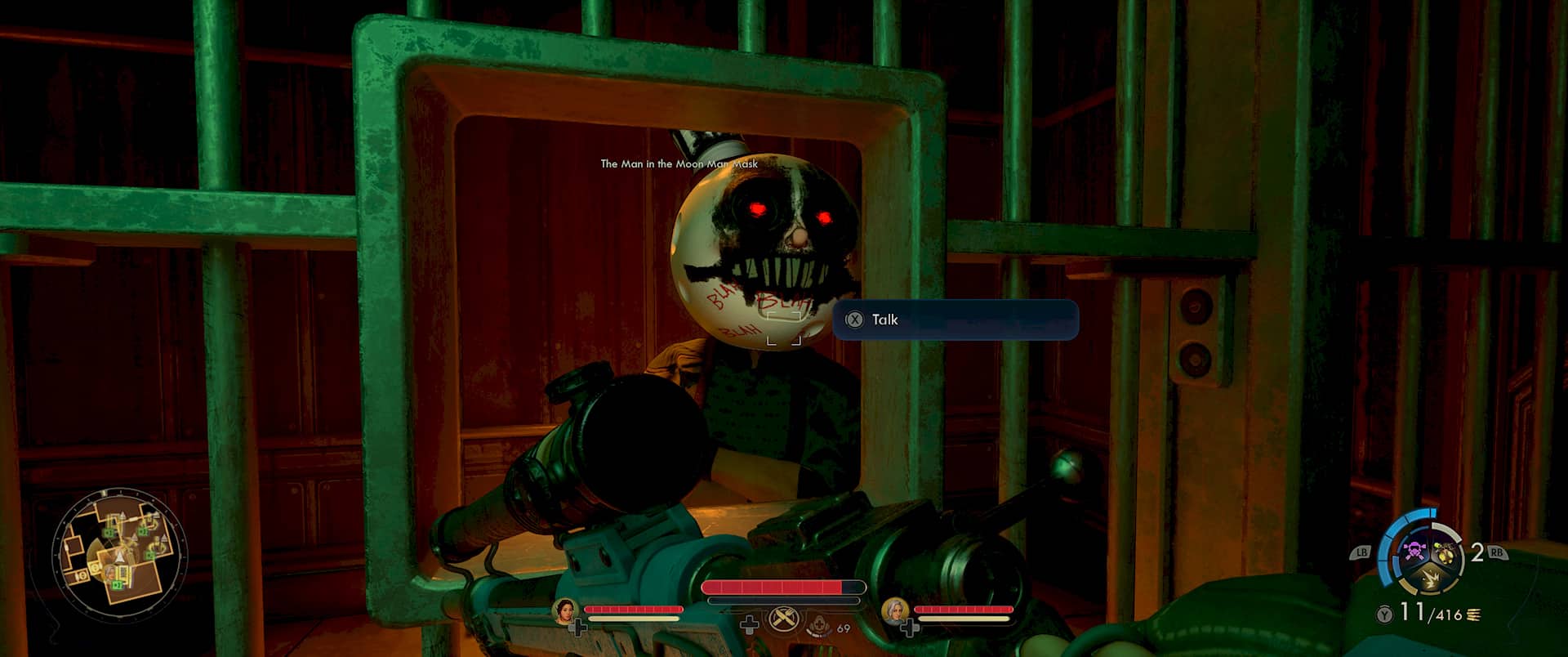
The Outer Worlds 2 – The Man in the Moon looks scary
I mostly played ranged combat to practice my FPS skills, but melee is viable too. You can customize weapons extensively, choose perks, and mod your gear, though in practice I stuck with a few favorites throughout. By the end, combat became easier due to leveling and perks, so I could breeze through encounters. The dynamic perk/flaw system exists, assigning trade-offs based on how I played, but I didn’t feel it strongly influence my choices—it’s subtle, and I may have missed some of the effects.
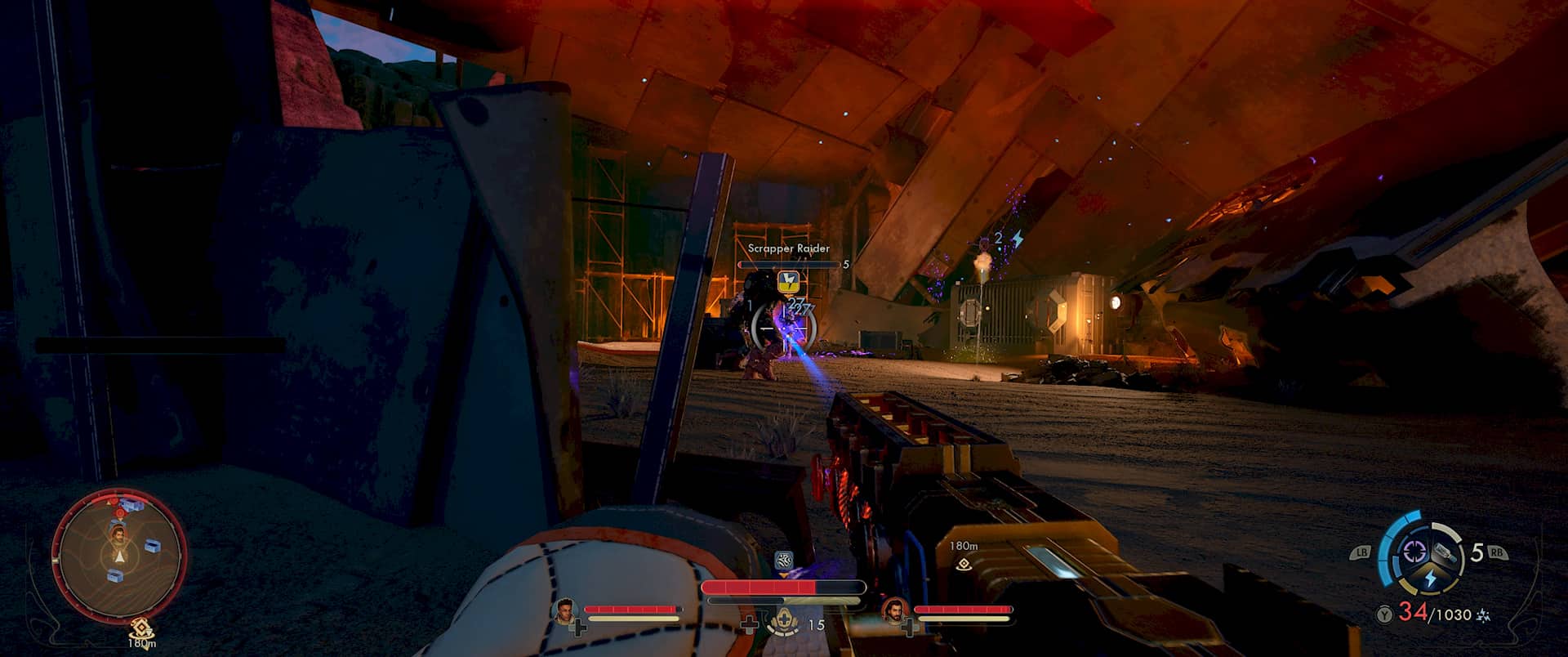
The Outer Worlds 2 – Fighting Scraper Raider
Crafting, inventory, and progression are deep, perhaps a little too deep. There are so many weapons, mods, and items that managing them can feel overwhelming. Still, when I settled on a few favorites, those tools felt powerful and reliable. The game’s leveling system is generous, but by the end, I realized combat became easier because I had stacked perks, weapon mods, and skill points. This reinforces that the game encourages you to “build tall” rather than “build wide.”
Technical Performance & Audio Design
I played on both Xbox and my mid-range PC (with a Radeon 7800 XT), and the game ran very smoothly at the highest settings. There were a few crashes along the way—Unreal Engine popped up its usual error message a couple of times—but nothing game‑breaking.
Moving to Unreal Engine 5 didn’t just make the game “prettier”; it changed the storytelling presentation. In the first game, conversations were static “shot-reverse-shot” camera angles. TOW2 utilizes dynamic blocking during dialogue. NPCs move, fidget, and interact with the environment while talking to you. It sounds minor, but for an RPG that is 60% talking, it kills the “talking head” fatigue that plagues Bethesda games. However, one thing I noticed is that characters sometimes blur or disappear when you get very close, a minor but slightly distracting visual glitch I’ve seen before in other Unreal Engine titles.
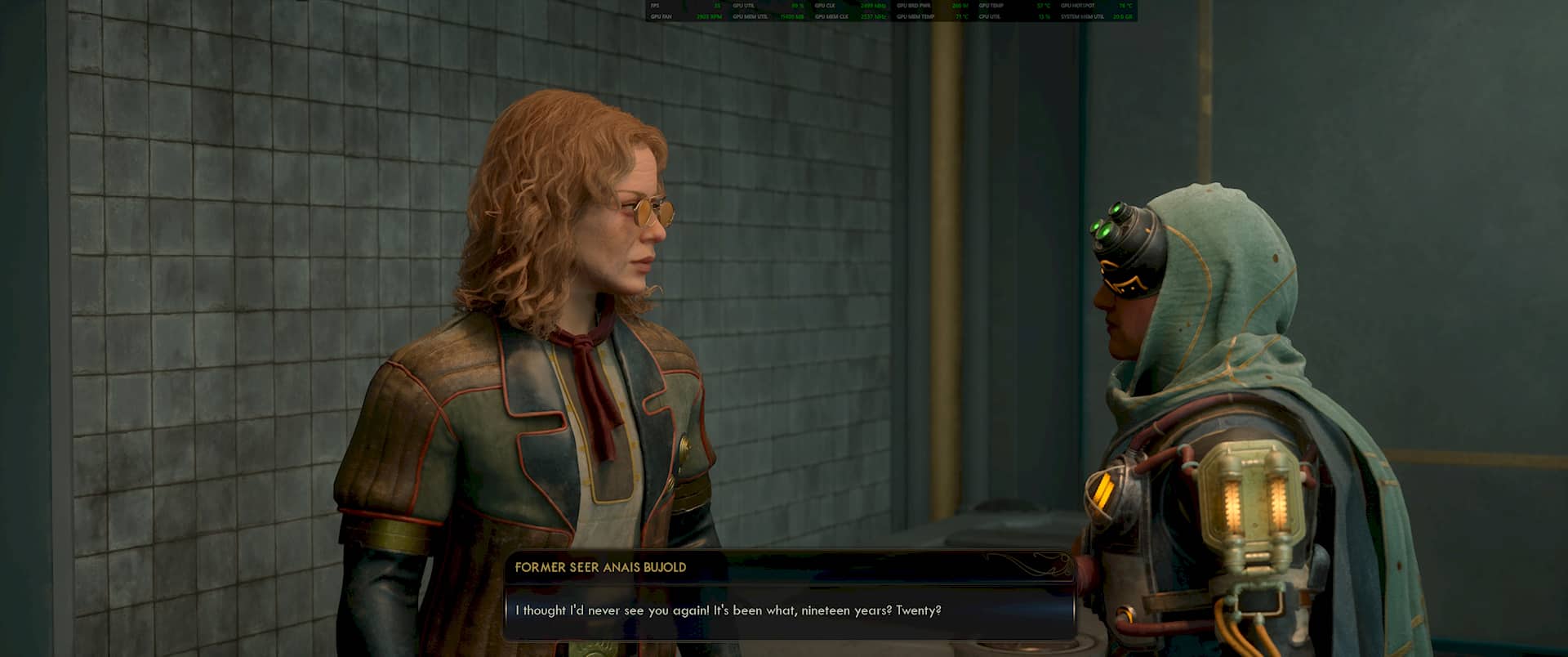
The Outer Worlds 2 – Former Seer Anais Bujold talking to old friend Marisol from my crew
One of the biggest highlights for me is the soundtrack and sound design. The music stayed with me long after playing—I even caught myself humming the main theme—and the sound effects, from weapon fire to environmental cues, are top-notch. These elements make the world feel immersive, and I often found myself connecting with it just through the audio.
Technically, the controls are solid. Fast travel works well, though aligning your cursor on the map or vending machines can be slightly finicky with a controller. Other than that, the interface is clear, and the experience is smooth.
Conclusion: A Solid, Polished RPG
The ending is immersive and satisfying. Without spoiling anything, the story wraps up in a way that feels earned and climactic. While the game doesn’t revolutionize the genre, the combination of narrative, humor, exploration, companions, and combat makes it a compelling RPG experience. Replayability is high: your choices matter, each companion has their own arc, and you can pursue different paths to see new outcomes.
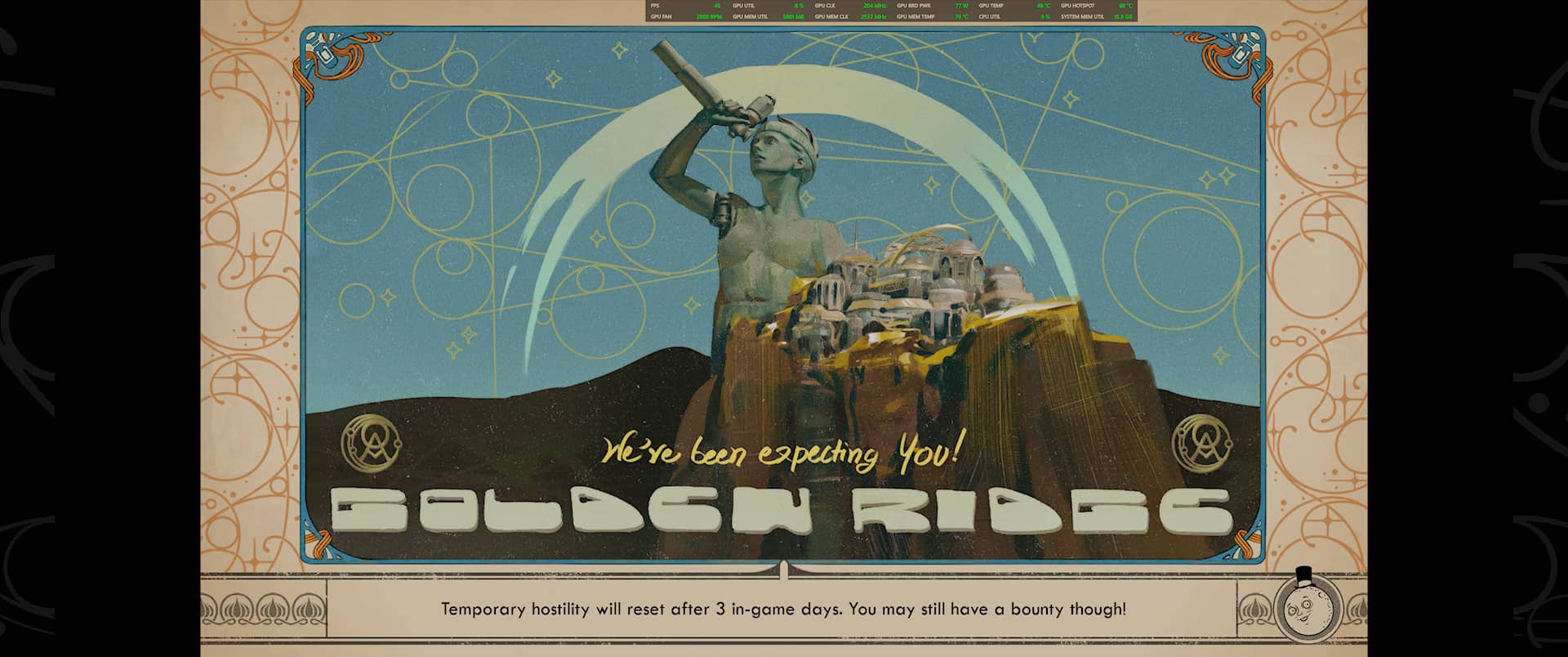
The Outer Worlds 2 – Loading screen this one about Golden Ridge you about to visit
My biggest criticism is the sterile environmental interactivity—the lack of detail in surfaces, water, and environmental feedback—makes the world feel less alive than it could have been. I’m a fan of the IP and where it’s going, and while I wish the developers had taken more bold risks, I still enjoyed my time in this universe. For me, it’s a thoughtful, well-made sequel that fans of the first game and RPG lovers in general will appreciate.
About the Game
Title: The Outer Worlds 2 Type of Game: Action FPS/RPG Developer: Obsidian Entertainment Publisher: Xbox Game Studios Release Date: October 29, 2025 Platforms: Xbox Series X|S, Windows Reviewed on: PC and Xbox
Hey gamers! Epic’s weekly giveaway is serving up an oddball combo this week, but next week’s lineup is where things get spicy. Let’s cut through the noise and talk about what’s actually worth your time.
The Current Haul (Ends Nov 13, 5:00 PM)
Felix The Reaperis one of those games that sounds absolutely bonkers on paper and somehow works. You’re playing as Death’s employee who literally cannot survive in sunlight, so you’re constantly manipulating shadows to stay alive while orchestrating elaborate death scenarios. Oh, and Felix dances everywhere he goes because he’s trying to impress a colleague from the Ministry of Life. It’s equal parts macabre puzzle game and romantic comedy, with 3D environmental puzzles that’ll genuinely make you think. You’re rotating the sun, creating shadow paths, and essentially playing the world’s darkest game of chess with human lives. It takes about six to eight hours to complete, and if you’re tired of the same old puzzle game formulas, this Tim Burton-esque weirdness is absolutely worth the download.
Felix The Reaper strange dancer
Idle Champions of the Forgotten Realms is technically free-to-play all the time, but here’s why you should care: Epic is giving away a bundle of premium items that you’d normally have to buy with real money. This isn’t just the base game, it’s starter packs and boosters that have actual cash value. The game itself is a D&D-themed idle RPG where you’re building parties of champions and watching them auto-battle through campaigns set in official Dungeons & Dragons locations. The big news here is it’s available on the Epic Mobile Store too, so you can actually sync your progress between PC and mobile. Even if idle games aren’t your thing, grab it for the free premium bundle alone. That’s like walking into a store and having them hand you the DLC for free.
Idle Champions Forgotten Realms Epic Free pack
What’s Coming That You Should Actually Get Hyped About
Starting November 13, Scourgebringer drops, and this is the real prize. If you’ve been sleeping on this game, wake up. This is a roguelite that’s consistently ranked among the best in the genre, and it normally costs seventeen bucks. The combat system is absolutely buttery smooth with a movement system that makes you feel like a god once it clicks. Think Dead Cells’ satisfying combat mixed with Celeste’s precise platforming and some bullet hell shooting thrown in for good measure. Every dash, every slash, every perfect dodge feels responsive and intentional. The pixel art is gorgeous, the electronic soundtrack slaps, and the difficulty curve is steep but never unfair. This is one of those games where you’ll die, immediately hit restart, and suddenly it’s three hours later and you’ve forgotten to eat dinner. Controller strongly recommended because this game deserves to be played with proper controls.
ScourgeBringer
Songs of Silence is also dropping next week, a fantasy strategy game that blends kingdom management with auto-battler elements. It’s been quietly building a solid reputation for doing strategy differently than the usual Civilization formula. If you’re into that genre, it’s worth checking out, but let’s be real: Scourgebringer is the headliner here.
Song Of Silence Strategy game
The Smart Play
Here’s your game plan: claim everything this week even if it doesn’t immediately grab you. Felix is genuinely clever if you give it a chance, and the Idle Champions bundle has real monetary value that’ll give you a massive head start if you ever decide to play it. Download the Epic Mobile Store app to try Idle Champions on your phone during downtime, coffee breaks, or wherever. Then set a reminder for November 13 at 5:00 PM sharp because you do not want to miss Scourgebringer. That game alone is worth more than most things Epic gives away, and it’s the kind of roguelite that’ll consume your gaming hours for weeks.
ScourgeBringer Upcoming Free on Epic Games Store
Storage isn’t an issue either. Felix sits under 5GB, Scourgebringer is barely 1GB, so there’s no excuse not to claim them. Once they’re in your library, they’re yours forever. No subscription nonsense, no rental periods, just permanent additions to your collection.
Bottom line: this week’s offerings are solid if niche, but next week is where Epic reminds everyone why these weekly freebies matter. Scourgebringer is legitimately excellent, the kind of game that shows up on year-end “best of” lists. Don’t sleep on it.
Song Of Silence Free on Epic
Now go claim your loot and get ready for next week’s roguelite masterpiece. Your backlog can handle a few more games.
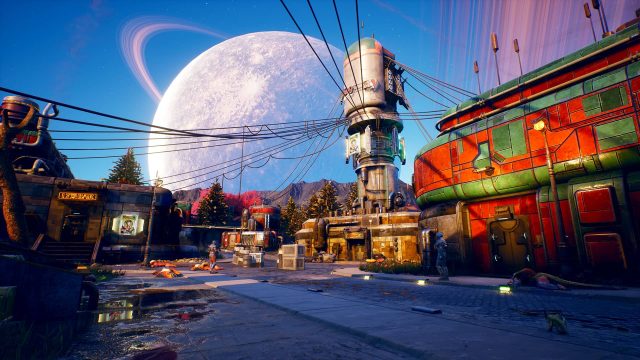
The Outer Worlds left me with an impression that is hard to put into numbers, but if I had to, I’d say it lands at a solid 89% in my book. It’s one of those games where, even though I played it around the time of Red Dead Redemption 2—a game that was operating on a completely different technical and graphical level—I still found myself deeply admiring what Obsidian managed to create. It doesn’t have the scope or sheer horsepower of Rockstar’s giant, but it has something uniquely its own: a world full of charm, artistic identity, and storytelling weight that really grabbed me as a sci-fi fan.
Outer Worlds city missions were interersting
World Design and Scale
What makes The Outer Worlds stand out is how well its smaller world is crafted. The planets and zones aren’t huge, but each has its own personality, mood, and challenges. It gives you enough space to explore, but not so much that you’re lost in endless emptiness. You land on a planet, get a map that’s maybe a few kilometers across, and within that frame you have missions, enemies, settlements, and little pieces of lore scattered around. It might sound small on paper, but it feels big enough because of how tightly designed it is. The density of story, humor, and environmental detail makes every location memorable.
Companions and Side Stories
The heart of the game for me was definitely the companions. Parvati, in particular, stood out as the most sympathetic and human side character. Her personal story felt genuine and well-written, and I cared about her outcome in a way I don’t usually in RPGs. But the same can be said, to a degree, about all companions. Each one had a story worth following, and I actually wanted to finish their quests to learn more about them, which is not always the case in these types of games. It’s rare that a game makes you feel connected to the whole cast like this, and Obsidian pulled it off despite not having the biggest budget in the industry.
Outer Worlds Inside Apart of monsters you have to deal with factions and marauders
Humor and Satire
The satire is another area where the game hits hard. The corporate dystopia, where democracy is absent and everything is run by faceless, greedy boards, is portrayed in a way that’s both dark and funny. Ads and propaganda push ideas like “fixing what nature caused,” and you run into characters who have literally reshaped themselves for corporate glory. It’s ridiculous, awful, and hilarious at the same time. The humor doesn’t make the game lighthearted, though—it enriches the story without undermining its seriousness. The balance between sharp satire and grounded narrative is excellent, and it makes the world feel uncomfortably believable.
Combat and Gameplay
Combat, while not groundbreaking, worked for me. I know people online often complain that it was too simple or underwhelming, but I didn’t mind. Early on, it felt challenging when I wasn’t prepared, but as I grew stronger and had the right arsenal, I could approach encounters in a smarter way and eventually wipe out enemies with ease. I experimented with most weapon types, and I enjoyed figuring out which ones worked best against certain enemies. It never reached the intensity of top-tier shooters, but as part of the RPG mix, it was good enough and satisfying to carry the adventure forward.
Outer Worlds Halcyon planet
Technical Performance and Style
Technically, on my old PlayStation 4 and PC, the game ran well. The graphics were never a “wow” factor, especially compared to something like Red Dead Redemption 2, but they were sufficient and, more importantly, consistent. The art design—robots, cyborgs, corporate propaganda, quirky settlements—often looked better than the actual environmental textures, but that was fine with me. It had a Fallout-like feeling at times, with that retro-futuristic style, but it never felt like a copy. It’s a different universe with its own rules, humor, and energy. Fans of Fallout will recognize the DNA, but this is its own thing.
Story and Choices
The story itself pulled me in. At first, I felt a little lost, but the threads quickly tied together, and I found myself engaged with the mysteries of the colony and the conflicts between factions. I can’t recall every detail of the factions now, but I do remember the sense that my decisions mattered. Some choices were subtle in their consequences, others more dramatic, but overall the game gave me the feeling that I was shaping the path of this world in a meaningful way.
Looking Back Few Years Since I Played
When I look back, I see The Outer Worlds as a very smartly built game. Obsidian worked within its budget and limitations but managed to deliver something rich, memorable, and charming. The characters, humor, and world design are what make it special. It’s not the biggest game, and it’s not the flashiest, but it has heart, and that’s what counts most.
Now, with The Outer Worlds 2 right around the corner, my expectations are high. I’m confident Obsidian will push things further, especially with what will surely be a larger budget and Microsoft’s backing. I hope they keep the focus on strong writing, memorable companions, and that sharp corporate satire, while maybe expanding the worlds and deepening the combat. If they manage to hold onto the spirit of the first game and scale it up smartly, I’m certain it will be a success.
For me, The Outer Worlds remains one of the most charming and rewarding sci-fi RPGs of the last decade, and I would absolutely recommend anyone who hasn’t played it yet to give it a shot before the sequel lands.
Title: The Outer Worlds Type of Game: Action FPS/RPG Developer: Obsidian Entertainment Publisher: Private Division Release Date: October 25, 2019 Platforms: PlayStation 4, PlayStation 5, Xbox One, Xbox Series X|S, Windows, Nintendo Switch Reviewed on: PlayStation 4 Pro