
Estimated reading time: 11 minutes
If you’ve opened the App Store lately and felt like you were drowning in a sea of games that all look suspiciously familiar, you aren’t crazy. You’re just living through the most aggressive, expensive, and weirdly automated era in gaming history. The latest industry autopsy—the State of Gaming for Marketers – 2026 Edition—paints a picture of an industry where the technical walls to making a game have effectively crumbled, leaving every developer on the planet fighting a high-speed, automated war for five minutes of your time. This isn’t your older brother’s mobile market. We are talking about a $25 billion ecosystem where the code is often written by bots and the ads are designed to sniff out your specific psychological triggers before you even finish your morning coffee. Whether you’re a casual player or an analyst tracking 2026 mobile gaming trends, the rules of the game just changed forever.

The AI Slop Tsunami: Why Everything Looks the Same
Let’s be real about the situation: AI has “solved” the problem of making games, but it created a massive headache for the people playing them. The 2026 report highlights a staggering paradox where ad impressions surged by 20% in 2025, while the actual share of paid installs only moved about 10%. The math is simple and brutal. It means companies are screaming 20% louder just to get a fraction of the same attention. This is the AI game development impact in full effect. Any small studio can now use generative tools to churn out code, art, and mechanics at a speed that used to require a team of a hundred people.
This isn’t a win for creativity; it’s a tidal wave of “microslop”—games that look flashy in a trailer but lack any real soul once you actually start playing. Because it’s now cheap to build a game, the real expense has shifted. It’s no longer about whether you can build a project. It’s about whether you can pay enough to make sure people look at it. The bottleneck has moved from the production studio to the marketing department. Success in 2026 belongs to the teams that can navigate this surplus of content, which is expanding way faster than player attention. We are seeing a world where “speed to market” has replaced “quality of craft” as the primary metric for success.
The Death of the Console Crown
For decades, Japan was the undisputed center of the gaming universe. Nintendo, Sony, and Sega built the foundation. They still hold the crown for prestige gaming and the hardware that defines our childhoods. But the 2026 data shows that the actual power—the money and the influence—has moved to the device in your pocket. Chinese mobile game publishers global growth is the real earthquake here. These companies now command 35% of the global marketing spend outside China, a massive 22% jump in a single year. While they don’t own a famous console like the Switch or the PlayStation, they’ve realized they don’t need to. Titans like Tencent, NetEase, and miHoYo are winning by owning the software and the systems that run on every phone.

We are witnessing a new phase of globalization. The Eastern model of gaming—highly social, constantly updated, and built around aggressive live-ops—is becoming the global standard. Whether it is the cinematic depth of Genshin Impact or the social dominance of Honor of Kings, these publishers are crushing it in markets that used to be Western strongholds. They recorded gains of 34% in France, 31% in Germany, and 26% in the UK. Even Japan, arguably the toughest market in the world for outsiders, saw Chinese publishers expand their footprint by 25%. This is a “cultural confidence” shift. They aren’t just making games; they are exporting a way of life that demands your daily attendance.

The Epic Marriage: Western Tech Meets Eastern Strategy
You can’t talk about this shift without talking about the bridge between these two worlds: Epic Games. While Epic is a quintessential American company, its DNA is heavily influenced by the East. Tencent holds a massive stake in the company, a partnership that essentially married Western engine technology like Unreal Engine with the Eastern playbook for games-as-a-service. This connection is why Fortnite doesn’t feel like a simple shooter; it feels like a persistent social ecosystem, much like the hits coming out of Shenzhen.
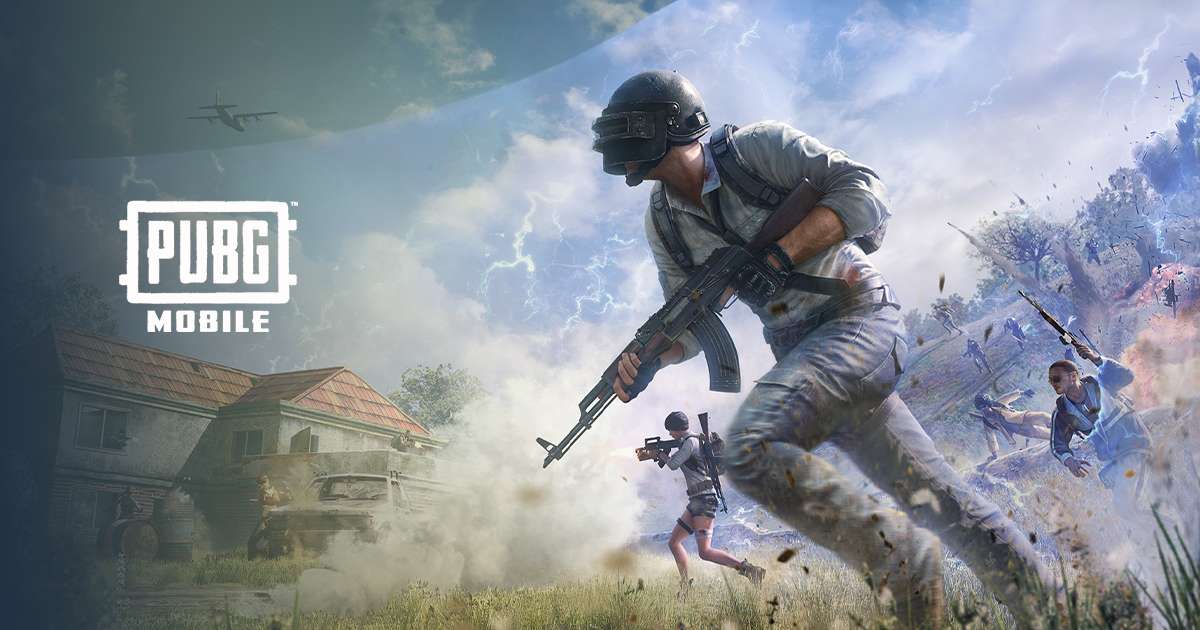
But this partnership is leading the direct-to-consumer rebellion. Epic is leading the charge to bypass the 30% tax charged by Apple and Google. They are betting that they can use their own marketplace to bypass the gatekeepers, a move that could completely rewire how mobile games are distributed in the West. It is a strategic move to own the relationship with the player, much like how PUBG Mobile or Honkai: Star Rail maintain massive, direct fanbases across multiple platforms. This is the new reality: companies want to own your wallet, and they are tired of paying rent to the platform holders.
The Creative Arms Race: 2,600 Ads a Quarter
The sheer scale of the marketing machine in 2026 is hard to wrap your head around. The top-spending gaming companies—the ones behind massive hits like Monopoly Go! or PUBG Mobile—are now pushing out between 2,400 and 2,600 different ad variations every single quarter. This is an industrialized creative factory. They aren’t just making a commercial; they are using algorithms to test thousands of different hooks on you.
Maybe you see an ad for Last War: Survival with a blue knight while your friend sees the same game disguised as a puzzle mechanic. They are throwing everything at the wall to see what sticks. Small advertisers are being forced to scale their output by 40% just to avoid being drowned out. If the games you see lately feel samey, it’s because they’re all being optimized by the same types of AI to find the exact same psychological triggers. Creative performance is no longer an art; it is a numbers game where testing velocity determines who survives and who disappears.
Following the Money: US Fatigue vs. Emerging Energy
The US is still the heavyweight champ of spending, accounting for 45% of total iOS revenue, but growth is stalling. Mobile user acquisition costs 2026 have become so high in the US that spending actually dropped 5% last year. High media costs and intense competition make it hard to justify pouring more money into a market that is already saturated. Instead, the industry is looking at emerging markets like Turkey and India, where spending jumped 29% and 19% respectively.

These regions are the new front lines. In these markets, the game is different. It’s not necessarily about getting you to buy a $99 pack of gems in a game like Genshin Impact; it’s about getting millions of people to watch ads. This creates a polarized world: Western players are being squeezed for big in-app purchases, where 66% of iOS revenue still lives, while the rest of the world is being fed a constant stream of in-app advertising to keep the engine running. We are seeing a market split between high-spending Western IAP hubs and ad-supported non-Western powerhouses.
The Data Split: Speed vs. Depth
The Eastern influence is no longer a slow creep; it is a full-on sprint into mature markets that were previously dominated by local players. This success is tied directly to how these teams use data. The report reveals a deep split in how different genres are surviving this war. Hypercasual is the most dependent on paid traffic, sitting at 83% on Android. It’s all about speed. Hypercasual teams dedicate over 50% of their AI usage to reporting because they need to know right now if a game is a flop so they can kill it and move on.
Meanwhile, midcore and casino genres go deeper. Only 15% of their AI queries are about simple reporting. The rest are for anomaly diagnosis and explaining changes. When you have high-value players in games like Honkai: Star Rail, you don’t just want to know what happened. You need to know why they stopped spending. This level of sophistication is what separates the winners from the “slop” makers. They aren’t just watching the numbers; they are interpreting the behavior of the “whales” to ensure long-term monetization.
The Hybrid-Casual Meta: Survival of the Fittest
If you’re wondering why every game feels like it’s trying to do ten things at once, it’s because of the hybrid-casual monetization strategy. In 2025, 7% more apps shifted to a hybrid model. The goal is simple: monetize the casual players with ads while hooking the whales with deep, complex purchase loops. Games like Whiteout Survival are the masters of this. They lure you in with a simple ad, but once you’re inside, you find a massive, social, competitive machine that wants your time as much as your wallet.

Fewer than 30% of games are hybrid right now, but that number is climbing as pure ad-supported or purchase-only models struggle to survive the rising costs of user acquisition. This is the industry “middle ground” where studios are trying to find a resilient monetization mix. By blending simple mechanics with deeper layers, they maximize the average revenue per daily active user across their entire base.
Robots in the War Room: AI as the Ultimate Snitch
One of the most telling stats in the report is that 46% of AI assistant queries from gaming teams focus on reporting. Despite the hype about AI creating the next big thing, the industry is actually using it as a high-speed analytics assistant. Teams are using AI to keep pace with the massive volume of data they’ve created.
In a world with 24.8 billion installs and 2,600 ad variations, a human can’t possibly keep track of what’s working. The machines are now the ones telling the humans which creative hook is actually paying the bills. It’s a closed loop where AI makes the ads and AI tells you which ones to keep. The production problem is solved, but the attention problem has intensified. Success in 2026 belongs to teams who can stitch data from multiple sources together, making sense of the noise and fragmentation that AI-driven scale creates.
The Zero-Sum Reality
At the end of the day, we’ve reached a zero-sum state. There are only 24 hours in a day, and the audience isn’t growing as fast as the content is. For you to play a new game, you have to quit something old. The production problem is dead. Anyone can make a game in 2026. The attention problem is the new war, and the battlefield is increasingly dominated by those who can master unified data and aggressive marketing scale.
Whether it’s a massive studio in Beijing or a scrappy team in the US, everyone is using the same AI tools to hunt for your attention. In this era, your time isn’t just a metric. It’s the most valuable currency on the planet, and the Eastern influence is simply proving that they are currently the most efficient at collecting it. 2026 isn’t about the hardware you own. It’s about the software that owns your time.